Owner’s manual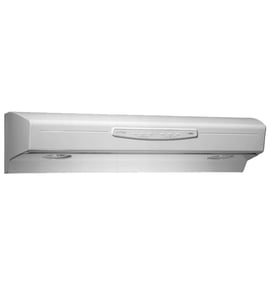



How do I know what model range hood I have?
To identify your KitchenAid range hood model, look for the model/serial rating plate inside the hood. On model KXU4230YSS2, the rating plate is typically on the left interior wall or behind the filter on the rear wall; the exact location depends on the configuration shown in the KXU4230YSS2 owner's manual.
Where to look on a KXU4230YSS2 hood
Check these common spots (power off and the hood cool):
- Inside the hood on the left interior wall
- Behind the grease filter on the rear wall
- Along the underside of the hood near the filter opening
- Near the wiring/terminal box area (inside the hood)
Quick steps to find it
- Turn the hood off; let lights cool.
- Remove the grease filter(s) using the filter handle.
- Use a flashlight to scan the left wall and rear wall for a sticker or metal plate.
- Write down the model number and serial number exactly as shown.
What the label usually includes
| Item on label | What it’s used for |
|---|---|
| Model number (example: KXU4230YSS2) | Matching the correct parts and diagrams |
| Serial number | Identifying production details for service |
| Electrical rating | Confirming wiring and circuit requirements |
Why it matters
We use the model number to match the correct range hood parts (like a control board, damper, or light bulb) and to follow the right installation and wiring requirements. For example, KXU4230YSS2 documentation references the rating plate location and electrical specs tied to that exact unit.
Last updated: February 2026
How to remove KitchenAid range hood filter?
To remove the filter on your KitchenAid KXU4230YSS2 range hood, pull the spring release handle, then pull the filter down and out. Reinstall by lifting the filter into place and releasing the handle so it locks. See the steps in the KXU4230YSS2 owner's manual.
Steps to remove and reinstall the grease filter
- Turn the hood off; let the area cool if you were cooking.
- Support the filter with one hand.
- Pull the spring release handle.
- Pull the filter down, then out of the hood.
- To reinstall, hook the back edge first (if applicable), lift the filter up, then release the handle to latch.
- Run the fan briefly to confirm the filter is seated and not rattling.
Cleaning and replacement tips
Grease filters on this hood are washable and should be cleaned regularly to keep airflow strong and reduce noise.
- Wash metal grease filters frequently (many owners use a dishwasher).
- Let filters dry completely before reinstalling.
- If the display shows a “Clean Grease Filter” reminder after extended fan use, wash the filters.
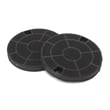
- For recirculating (non-vented) setups, replace the charcoal filters about every 6 months with the range hood charcoal filter kit W10272068.
Which filter is which?
| Filter type | What it does | Washable | Typical service interval |
|---|---|---|---|
| Metal grease filter | Catches grease from cooking vapors | Yes | Clean as needed (often monthly) |
| Charcoal filter (recirculating) | Reduces odors when not vented outside | No | Replace about every 6 months |
Why it matters
A clean, properly latched filter helps your blower move air efficiently, keeps cooking odors under control, and prevents vibration or rattling during higher fan speeds.
Last updated: February 2026
What are the parts of a range hood called?
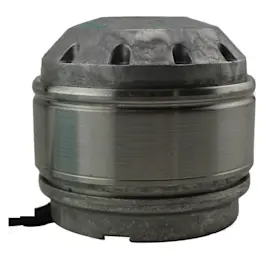
On the KitchenAid KXU4230YSS2 under-cabinet range hood, the main parts are the hood canopy (housing), blower (fan) system, grease filters, controls, lighting, and the venting pieces (damper and duct connection). These names match what you will see in the parts list and diagrams in the KXU4230YSS2 owner's manual.
Common range hood part names (and what they do)
- Hood canopy (hood body): the metal housing that captures smoke and vapors
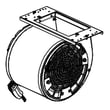
- Blower and blower wheel (fan): pulls air through the hood and pushes it into the duct (or through charcoal filters in recirculating mode)
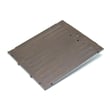
- Grease filters: washable filters that trap grease before air reaches the blower
- Control panel / electronic control: buttons and display for fan speed, light, and timer
- Lights / lamp housings: illuminate the cooktop area
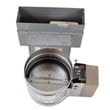
- Damper / exhaust adapter: helps prevent outside air from backdrafting into the kitchen
Parts you will commonly replace on KXU4230YSS2
| Part you notice | What it usually means | Example part for this model |
|---|---|---|
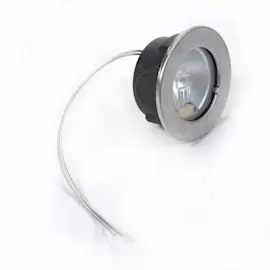
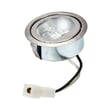
| Light is out | Bulb failed | Range hood light bulb WPW10571723 |
| “Clean Grease Filter” message | Grease filter saturation alarm after extended fan use | Wash the grease filters (not a part purchase) |
| Weak airflow or odors linger (recirculating) | Charcoal filter is loaded | Range hood charcoal filter kit W10272068 |
| Rattling or poor vent flap movement | Damper sticking or damaged | Range hood damper WPW10291572 |
Why the names matter when ordering parts
Using the correct part name helps you match the symptom to the right section of the parts diagram (lighting, controls, blower, or venting). It also prevents ordering a similar-looking part that will not fit your KitchenAid model.
Quick tip: vented vs. recirculating terminology
| Setup | Key parts you will hear about |
|---|---|
| Vented (ducted) | Vent transition, ductwork, wall/roof cap, damper |
| Recirculating (non-vented) | Charcoal filters (recirculation filtering) |
Last updated: February 2026
Why would a range hood fan stop working?
On the KitchenAid KXU4230YSS2 range hood, the fan commonly stops working because power to the hood is interrupted (tripped breaker or blown fuse), a wiring connection is loose, or airflow restriction and heat protection behavior affects operation. Use the checks in the KXU4230YSS2 owner's manual to confirm the exact control and safety features.
Quick checks we recommend first
- Verify the kitchen circuit breaker is ON and any household fuse is not blown.
- Turn the hood OFF, then ON; confirm the display and buttons respond.
- If the hood has been running hot, allow it to cool; the heat sensor can force blower operation and limit speed changes.
- Remove and wash the metal grease filters; heavy grease buildup can restrict airflow and reduce performance.
- If the display shows Clean Grease Filter or Replace Charcoal Filter, service the filters and reset the reminder.
Filter and airflow issues (very common)
Grease and charcoal filters that are loaded up can reduce airflow so much that the fan seems weak or “not working.” The KXU4230YSS2 also tracks fan run time and prompts filter maintenance.
| What you notice | Likely cause | What to do |
|---|---|---|
| Fan runs but airflow is poor | Grease filters clogged | Wash metal grease filters, dry fully, reinstall |
| “Clean Grease Filter” message | 30-hour reminder | Clean filters; message clears after reset steps in manual |
| “Replace Charcoal Filter” message | 120-hour reminder (recirculating setups) | Replace charcoal filters; reset reminder |
Electrical and control causes
If the fan does not run at all, focus on power and controls.
- Check for a tripped breaker or blown fuse first.
- With power disconnected, inspect wiring connections in the hood’s terminal box.
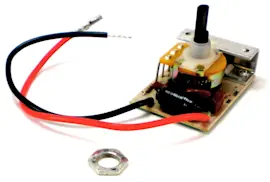
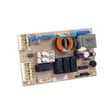
- If the control panel responds but the blower never starts, the electronic control can be the failure point; the model uses an electronic control board such as the range hood electronic control WPW10291604 (match by model before ordering).
Why it matters
A non-working hood fan can be a simple power issue, but restricted airflow and overdue filter maintenance can also cause poor ventilation, more smoke and odors, and extra heat buildup around the cooktop.
Last updated: February 2026