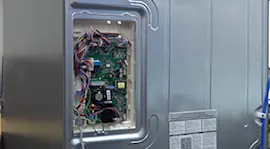
Error Codes


What is the most common problem with Maytag washers?
The most common Maytag washer problems are “won’t spin” or “won’t drain” symptoms. On the Maytag LAT9734AAE, the most frequent root causes are a failed lid switch, a worn drive belt, or a drain restriction (hose or pump path), all of which stop the cycle from finishing.
- Confirm the lid closes firmly and the lid strike lines up with the switch.
- Redistribute the load; a heavy, off-balance load can stop or slow spin.
- Check the drain hose for kinks, clogs, or a crushed section behind the washer.
- Listen for the motor: running but no spin often points to a belt or drive issue.
- If it fills slowly or not at all, suspect a water supply or inlet valve problem.
| Symptom | Most likely cause | What you can do next |
|---|---|---|
| Won’t spin | Lid switch not closing | Inspect and test the lid switch W10820036 |
| Won’t spin or agitates weakly | Belt slipping or broken | Check the washer drive belt 12112425 for cracks/glazing |
| Won’t drain | Drain path restriction | Inspect drain hose routing and internal hose clamps |
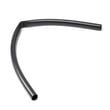
| Overfills or water level acts wrong | Pressure hose issue | Inspect the pressure hose for pinholes or loose fit |
| Won’t fill or fills slowly | Water supply or inlet valve | Verify hot/cold faucets fully open; clean inlet screens |
- Lid switch W10820036 (cycle safety interlock; a failure often stops spin)
- Washer lid switch WP207166 (alternate lid switch option used on some builds)
- Washer drive belt 12112425 (transfers motor power to the drive system)
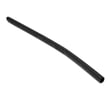
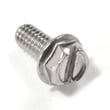
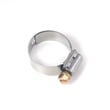
- Hose clamps such as WP285655 or WP3367052 (help stop leaks after hose service)
A washer that cannot spin or drain leaves clothes soaking wet and can strain the motor and drive system. Catching a lid switch or belt problem early typically prevents bigger, more expensive mechanical damage.
Last updated: February 2026
What's the average lifespan of a Maytag washer?
A Maytag washer typically lasts 10 to 13 years. For your Maytag LAT9734AAE, lifespan depends most on load size, how often you run cycles, and whether wear items (like the lid switch, belts, and hoses) are replaced when symptoms first show up.
Most top-load Maytag washers of this style land in these ranges:
| Usage pattern | Typical lifespan | What shortens life fastest |
|---|---|---|
| Light (1 to 3 loads/week) | 12 to 15 years | Long periods of non-use, corrosion |
| Average (4 to 7 loads/week) | 10 to 13 years | Overloading, unbalanced spins |
| Heavy (8+ loads/week) | 7 to 10 years | Frequent overloads, poor leveling |
- Keep loads balanced; stop and redistribute if it bangs during spin.
- Avoid overfilling; heavy, packed loads strain the drive system.
- Level the washer; replace worn feet such as the leg, adjusta 22003428 if it will not stay steady.
- Check fill and drain hoses for seepage; replace clamps like hose clamp WP285655 when connections drip.
- If the washer will not spin or stops mid-cycle, test the lid switch; a failing lid switch W10820036 is a common wear item.
- Address squealing or burning-rubber smells early; the washer drive belt 12112425 is a typical maintenance replacement.
- Loud roaring or grinding during spin (bearing or tub support wear)
- Repeated leaks from the tub area or pump hoses
- Frequent no-spin, no-agitate, or intermittent stopping
- Persistent vibration even after leveling and load balancing
Washer lifespan is mostly about mechanical wear and water exposure. Replacing common wear parts early (lid switch, belt, clamps, leveling leg) prevents secondary damage to the drive system and tub components, which is what usually turns a repair into a replacement decision.
Last updated: February 2026
Is it worth fixing a Maytag washer?
Yes, it’s usually worth fixing a Maytag washer like model LAT9734AAE when the problem is a common, lower-cost failure (lid switch, belt, valve, hose clamp) and the total repair stays under about half the cost of a comparable replacement washer.
We use these practical checkpoints:
- Repair cost target: keep parts plus labor under ~50% of replacement cost
- Failure type: intermittent no-start, no-spin, or no-drain issues are often economical
- Condition: no heavy rust, no chronic leaks, no repeated breakdowns
- DIY ability: simple mechanical/electrical checks can cut cost significantly
- Downtime: if you need it running today, a quick part swap often wins
These are frequent, relatively straightforward repairs on many Maytag top-load designs:
| Symptom | Likely area | Example part for this model |
|---|---|---|
| Won’t start or stops when lid opens | Lid safety circuit | Lid switch W10820036 |
| Won’t spin or weak spin | Drive system | Washer drive belt 12112425 |
| Overfills or won’t fill correctly | Water inlet | Washer water inlet valve WP22001274 |
| Leaks at internal hoses | Clamps/hoses | Hose clamp WP285655 |
Replacement is the better value when you’re facing repeated major failures or expensive internal wear.
- Loud roaring or grinding that points to bearing or tub wear
- Significant gearcase/transmission issues (high labor, high parts cost)
- Multiple problems at once (leak plus no-spin plus electrical)
- The washer has become unreliable for weekly use
A solid repair on a dependable Maytag platform can restore safe operation and extend service life for years, but chasing multiple big-ticket failures usually costs more than it returns in reliability.
Last updated: February 2026