Owner’s manual
 Error Codes


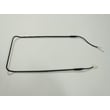
What does ef mean on a freezer?
On Kenmore refrigerator model 10651729410, an EF code typically points to an airflow or fan-related problem in the freezer cooling system (often the evaporator fan area). When EF is active, you can see uneven temperatures, weak airflow, or frost buildup that restricts cooling; check the 10651729410 owner's manual for the exact code definition and reset steps.
What to check first (quick triage)
- Make sure freezer vents are not blocked by food packages
- Listen for the evaporator fan running (a steady fan sound when the door switch is held closed)
- Look for heavy frost on the rear freezer panel (a sign of a defrost issue)
- Confirm the freezer door closes tightly and the gasket seals all the way around
- Power-cycle the refrigerator for 5 minutes to see if the code clears and returns
Common causes and the parts that often relate
EF is most often triggered by restricted airflow or a fan that is not moving air across the evaporator.
| Symptom you notice | Most likely area | What it usually means |
|---|---|---|
| Freezer cold, fresh food warm | Airflow from freezer | Fan not moving air or vents blocked |
| Frost/ice on back freezer wall | Defrost system | Defrost heater or airflow restriction |
| No fan sound from freezer | Evaporator fan | Fan blade jammed, iced up, or fan motor issue |
If you find ice buildup or a damaged fan blade, the refrigerator evaporator fan blade WP2169142 is a common related replacement part for this model.
Why it matters
When airflow drops, the freezer may still look “cold enough” while the refrigerator side warms up. Fixing the airflow or defrost root cause prevents food spoilage, recurring error codes, and extra compressor run time.
Helpful DIY guidance
- Use our Kenmore 106 model refrigerator error codes guide to compare EF with other display codes and symptoms.
- If you suspect a fan issue, follow the troubleshooting steps in how to fix your evaporator cooling fan to confirm whether the problem is ice blockage, wiring, or a failed component.
Last updated: February 2026
Where is the model number on a Kenmore side by side refrigerator?
On a Kenmore side-by-side refrigerator like model 10651729410, the model number is printed on the appliance identification label. You will typically find that label inside the fresh food (refrigerator) compartment, along the side wall near the top, or around the door opening.
Most common places to check
Look for a white or silver sticker or plate that lists both MODEL and SERIAL information. Check these spots first:
- Inside the refrigerator compartment on the left or right side wall
- On the ceiling of the refrigerator compartment near the light housing
- Around the front frame (cabinet) where the refrigerator door seals
- Inside the freezer compartment on a side wall (less common)
- Behind the toe grille or lower kickplate area (occasionally)
What the label looks like (and what to copy)
The label usually includes several fields. For parts lookup and manuals, we use the model number.
| Label field | What it means | What to write down |
|---|---|---|
| Model | Identifies the exact refrigerator version | 10651729410 |
| Serial | Identifies the specific unit built | Full serial number |
| Type/Code | Manufacturing or engineering info | Optional |
Why it matters
Kenmore model numbers can look very similar, and even small differences can change which parts fit (for example, an ice maker assembly, water inlet valve, or door bin). Using the exact model number helps us match the correct Kenmore refrigerator parts the first time.
Quick tip before you order parts
- Copy the model number exactly as printed (all digits)
- Take a clear photo of the label for reference
- Use the model number when checking diagrams and instructions in the 10651729410 owner's manual
Last updated: February 2026
What causes a side-by-side refrigerator to stop cooling?
A Kenmore side-by-side refrigerator like model 10651729410 usually stops cooling because airflow or heat removal is blocked, a fan is not running, or the defrost system is iced over. Start with power and temperature settings, then check for frost buildup and fan operation using the 10651729410 owner's manual.
Quick checks (fastest fixes first)
- Confirm the refrigerator has power and the interior lights turn on.
- Make sure the temperature controls were not accidentally set too warm.
- Verify air vents inside both compartments are not blocked by food packages.
- Check that the doors close fully and the gaskets seal all the way around.
- Listen for the evaporator fan in the freezer; it should run when the compressor is running.
Common causes and what you will notice
| Likely cause | Typical symptoms | What to do next |
|---|---|---|
| Dirty condenser area or poor airflow around cabinet | Warm temps, compressor runs a lot | Clean dust from the condenser area and improve clearance |
| Evaporator fan problem | Freezer warms, fridge warms, weak airflow | Inspect fan area for ice; follow steps in how to fix your evaporator cooling fan |
| Defrost system icing up | Freezer back wall frosted, airflow drops over time | Manually defrost to restore airflow; then troubleshoot defrost heater and controls |
| Control or sensor issue | Temps drift, odd cycling | Check settings and diagnostics in the manual; consider control board testing |
Parts that often relate to “not cooling” symptoms
If you find heavy frost on the freezer back panel or no airflow, these model-matched parts are commonly involved:
- Refrigerator heater WP2323198 (defrost heater)
- Refrigerator electronic control board WPW10366605 (manages cooling and defrost)
- Refrigerator evaporator fan blade WP2169142 (air movement across the evaporator)
Why it matters
Cooling depends on steady airflow across the evaporator and the ability to dump heat at the condenser. When vents are blocked, frost builds up, or a fan stops, temperatures rise quickly even though the refrigerator may still sound like it is running.
Last updated: February 2026
What are the most common problems with Kenmore refrigerators?
The most common problems we see on Kenmore refrigerators like model 10651729410 are cooling issues, water leaks, ice maker or dispenser failures, and unusual noises. These usually trace back to airflow restrictions (dirty coils or a failed fan), defrost system trouble, or worn water and door-seal components; use the 10651729410 owner's manual for model-specific checks.
Most common symptoms and what they usually mean
- Not cooling or weak cooling: dirty condenser coil, evaporator fan problem, frost buildup from a defrost failure
- Water under the refrigerator: clogged defrost drain, cracked water line, leaking inlet valve
- Ice maker not making ice: water supply issue, inlet valve problem, ice maker assembly failure
- Noisy operation: fan blade rubbing ice, worn fan motor, vibration from the cabinet or condenser area
- Dim or no interior lights: failed LED/light control board
Quick checks we recommend first (no parts needed)
- Set temps to typical targets: 37°F fresh food and 0°F freezer.
- Clean the condenser area (dust buildup is a top cause of warm temps).
- Confirm strong airflow in the freezer; weak airflow often points to an evaporator fan or frost blockage.
- Inspect door sealing; a poor seal causes frost, moisture, and long run times.
- For ice and water issues, verify the household shutoff valve is fully open and the supply line is not kinked.
Parts that commonly fix these problems on model 10651729410
| Problem area | Common fix | Example part on this model |
|---|---|---|
| Ice maker not working | Replace ice maker assembly | Refrigerator ice maker assembly WPW10300022 |
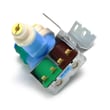
| No water to ice maker/dispenser | Replace inlet valve | Refrigerator water inlet valve WPW10179146 |
| Frost buildup, warm temps | Check/replace defrost heater | Refrigerator heater WP2323198 |
| Lights out or flickering | Replace light board | Refrigerator light board WPW10515057 |
Why it matters
Catching airflow, defrost, and water-supply problems early helps prevent food spoilage, ice buildup that blocks vents, and leaks that can damage flooring. It also reduces compressor run time and improves temperature stability.
Last updated: February 2026
How wide is a Kenmore side by side refrigerator?
Most Kenmore side-by-side refrigerators measure about 32 to 36 inches wide. For your Kenmore model 10651729410, use the dimension diagram and installation clearances in the 10651729410 owner's manual to confirm the exact width for your kitchen opening.
Typical widths you will see
Kenmore side-by-side models commonly fall into these width groups:
- 32 to 33 inches: narrower cabinets for tighter spaces
- 35 to 36 inches: most full-size side-by-side refrigerators
- 36 inches: very common “standard” width (depth varies by model)
How we recommend measuring (so you get the right fit)
Measure both the refrigerator and the space; small differences matter for door swing and trim.
- Measure cabinet width (the main box) at the widest point
- Measure door-to-door width (doors closed) if doors sit proud of the cabinet
- Measure handle-to-handle width if handles project
- Measure the opening width between cabinets or panels
- Plan for clearance on the hinge side so doors can open fully
Quick reference: width measurements
| Measurement | Includes | Use it for |
|---|---|---|
| Cabinet width | Main refrigerator box | Basic fit between cabinets |
| Door/trim width | Doors and exterior trim | Prevent rubbing and binding |
| Handle-to-handle | Handles | Tight pass-throughs and islands |
Why it matters
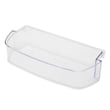
Width affects whether the refrigerator fits the cutout, whether doors open without hitting cabinets, and whether door-mounted parts align correctly. If you are replacing a broken bin, matching by model is key; the refrigerator door bin WPW10710203 is one example of a door-mounted part used on this model.
Last updated: February 2026