Installation guide
 Owner’s manual


What's the average lifespan of a KitchenAid dishwasher?
Most KitchenAid dishwashers, including model KUDS03FTPA0, typically last 10 to 14 years with normal household use. Lifespan depends most on water quality, loading habits, and keeping the wash system clean; following the care steps in the KUDS03FTPA0 owner's manual helps you get the full service life.
What affects lifespan the most
- Hard water and scale buildup (can strain the heater and wash system)
- Drain performance (slow draining makes the unit work harder and can leave residue)
- Overloading or poor loading (blocks spray and increases wear)
- Detergent and rinse aid use (too much or the wrong type can cause buildup)
- Small objects in the wash module (can cause grinding noises and damage over time)
Quick maintenance that extends life
We recommend these habits for KUDS03FTPA0-STYLE KitchenAid dishwashers:
- Run hot water at the sink before starting a cycle (improves wash performance)
- Clean the interior and check for debris regularly
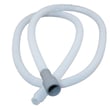
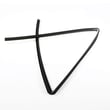
- Keep the drain path clear; replace a cracked or kinked hose such as the dishwasher drain hose 8269144A when needed
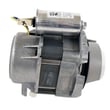
- Address “not draining” symptoms early; a weak or noisy pump like the dishwasher drain pump WPW10348269 is a common wear item
- Use the correct cycle for the load; avoid running heavy cycles for light soil
Typical lifespan expectations (what to plan for)
| Item | Typical timing | What you may notice |
|---|---|---|
| Overall dishwasher lifespan | 10 to 14 years | More frequent leaks, noise, or poor cleaning |
| Wear items (pumps, valves, seals) | 5 to 10 years | Draining issues, filling issues, seepage |
| Racks and moving parts | 7 to 12 years | Rusting, broken tines, rough rolling |
Why it matters
A dishwasher that is draining, filling, and heating correctly cleans better and puts less stress on major components. Catching early symptoms (noise, slow drain, weak cleaning) often prevents a small part issue from turning into a larger repair.
Last updated: February 2026
What is the most common problem with a KitchenAid dishwasher?
For KitchenAid dishwasher model KUDS03FTPA0, the most common problems we see are poor cleaning (from clogged filters or spray-arm issues) and drainage trouble (standing water from a restriction in the drain path). Leaks at the door seal and occasional control or heating issues are also common; use the KUDS03FTPA0 owner's manual to match symptoms to the right checks.
Most common issues (and what they usually point to)
- Dirty dishes or grit left behind: restricted wash circulation, clogged filter area, blocked spray-arm holes, or overloading
- Standing water in the tub: drain hose restriction, air gap or disposer plug issue, or a weak drain pump
- Not drying well: heater or venting problem, rinse aid issue, or cycle settings (energy-saving/air-dry)
- Leaks at the front/bottom: worn door seal, misaligned door, or debris on the sealing surfaces
- Dead or erratic controls: blown thermal fuse or failing electronic control
Quick checks we recommend first
- Confirm the cycle and options: energy-saving and air-dry options reduce heat and can reduce drying.
- Check the drain path: look for kinks, clogs, or a high loop in the drain hose.
- Clean for performance: remove debris from the sump area and clear spray-arm holes.
- Inspect door sealing surfaces: wipe the tub lip and door gasket area clean.
- Use the built-in troubleshooting: follow the troubleshooting section in the manual for symptom-based steps.
Parts that commonly solve these symptoms on KUDS03FTPA0
| Symptom | Common suspect | Example part for this model |
|---|---|---|
| Won’t drain, water left in tub | Drain pump or drain restriction | Dishwasher drain pump WPW10348269 or dishwasher drain hose 8269144A |
| No power or shuts off | Thermal fuse | Fuse W10258275 |
| Not filling or fills slowly | Water inlet valve | Dishwasher water inlet valve WPW10158389 |
| Leaks at the door | Door seal | Dishwasher door seal W11196317 |
| Poor drying | Heater circuit or airflow | Heater element WPW10082892 or dishwasher vent gasket WP8269259 |
Why it matters
These symptoms overlap; for example, a partial clog can look like a bad pump, and low water fill can look like poor cleaning. Using the model-specific troubleshooting steps helps you avoid replacing the wrong part and gets the dishwasher back to normal wash and drain performance faster.
Last updated: February 2026
What are the commonly replaced parts in a dishwasher?
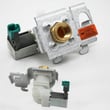
In the KitchenAid KUDS03FTPA0 dishwasher, the most commonly replaced parts are the drain and wash components (pumps, motor assemblies), water fill parts (inlet valve), heating and drying parts (heater), door sealing parts (door seal, vent gasket), and electronic controls. These parts typically fail from wear, clogs, leaks, or electrical faults.
Commonly replaced parts (and what they affect)
- Drain system: drain pump, drain hose; fixes standing water and slow draining
- Wash circulation: pump motor or sump and motor assembly; fixes weak spray and poor cleaning
- Water fill: water inlet valve; fixes no-fill or underfilling
- Heating/drying: heater element; fixes poor drying and cool wash water
- Door sealing/venting: door seal, vent gasket; fixes leaks and excess moisture
- Controls/power: electronic control, fuse; fixes dead unit or erratic operation
Model-matched examples for KUDS03FTPA0
These are parts we often see replaced on this model when symptoms match:
| Symptom | Likely part category | Example part for this model |
|---|---|---|
| Won’t drain, water left in tub | Drain system | Dishwasher drain pump WPW10348269 |
| Not filling or fills slowly | Water fill | Dishwasher water inlet valve WPW10158389 |
| Not drying, water stays cool | Heating | Heater element WPW10082892 |
| Leaks at the door | Sealing | Dishwasher door seal W11196317 |
| No response, intermittent power | Controls/power | Fuse W10258275 or dishwasher electronic control WPW10084141 |
Quick checks before replacing parts
- Clean the tub area and check for debris that can block draining.
- Confirm the sink drain and garbage disposer inlet are clear (a common drain restriction).
- Verify the water supply valve to the dishwasher is fully open.
- Look for obvious door seal damage, gaps, or hardened sections.
- If the unit is installed recently, confirm it is level and secured correctly using the installation guide.
Why it matters
Replacing the correct part saves time and prevents repeat failures. For example, a “not draining” complaint can be a clogged hose, a failing drain pump, or an installation issue; matching the symptom to the system (drain, fill, heat, seal, control) leads to the right fix.
Last updated: February 2026
How do I tell what model KitchenAid dishwasher I have?
Your KitchenAid dishwasher’s model number is printed on the model and serial number label inside the door area. For KitchenAid model KUDS03FTPA0, you’ll use that label to confirm the exact model number and record the serial number for parts and service; see the KUDS03FTPA0 owner’s manual for label details.
Where to look for the model label
Check these common label locations first:
- Open the dishwasher door and look along the inner door frame
- Check the left or right side of the tub opening near the front
- Look along the top edge of the door opening (near the latch area)
- Wipe the area clean; soap film can hide the print
What to write down (and why)
Record the information exactly as shown:
- Model number (example: KUDS03FTPA0)
- Serial number
- Purchase or installation date (helpful for service history)
Quick reference table
| Item | What it’s used for | Why it matters |
|---|---|---|
| Model number | Matching parts diagrams and fit | Prevents ordering the wrong part |
| Serial number | Production details and service identification | Helps narrow down variations |
| Install date | Maintenance and service records | Speeds up troubleshooting |
Why it matters
KitchenAid dishwashers can look similar across multiple model families, but parts like the electronic control, pump motor, or door seal can vary by model. Using the exact model number helps us match the correct replacement part the first time.
If the label is hard to read
- Take a clear photo with the door open and good lighting
- Copy the characters exactly (letters and numbers)
- If you’re ordering parts, match the model number before selecting items like the dishwasher electronic control WPW10084141
Last updated: February 2026