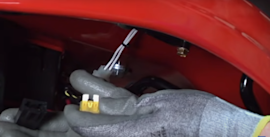
Installation guide
 Owner’s manual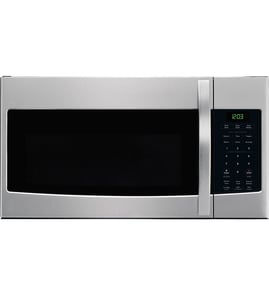




What is the average lifespan of a GE microwave?
Most GE microwaves, including over-the-range models like GE JVM1870SF02, typically last 8 to 10 years with normal household use. Keeping the cavity clean, using proper cookware, and avoiding overheating situations helps you reach the upper end of that range; see the JVM1870SF02 owner’s manual for care and cleaning guidance.
What affects microwave lifespan the most
A microwave’s life is usually determined by heat stress, door safety switch wear, and ventilation.
- Heavy daily use (multiple long cook cycles per day) shortens lifespan
- Poor airflow (blocked vents or greasy filters) increases heat buildup
- Slamming the door can wear door latches and interlock components
- Running the microwave empty can damage internal components
- Grease and food splatter left inside can cause odors, arcing, and corrosion
Quick care habits that help it last longer
We recommend these simple habits for GE over-the-range microwaves:
- Wipe the interior regularly; avoid abrasive cleaners and never use oven cleaner
- Let steam loosen splatters, then wipe with a soft cloth
- Keep the turntable and support clean so the load rotates smoothly
- Use the exhaust fan when cooking on the range to reduce heat and grease exposure
- Replace worn door-interlock parts promptly if the door stops closing smoothly
Common “end-of-life” symptoms and likely areas
| Symptom | Common area involved | Typical next step |
|---|---|---|
| Runs but does not heat | High-voltage system | Professional diagnosis recommended |
| Dead display/no power | Fuse, wiring, control | Check power supply and internal protection devices |
| Starts then stops | Overheating protection | Clean airflow path and filters |
| Intermittent running when door moves | Door interlock circuit | Inspect/replace interlock switch components |
If you suspect a door interlock issue, a common related part is the micro-switch WB24X830.
Why it matters
A microwave/hood combo like the JVM1870SF02 also handles cooking vapors from the range. Good cleaning and ventilation reduce heat and grease exposure, which helps protect the magnetron, wiring, and safety interlocks over time.
Last updated: January 2026
Is GE Profile considered high end?
Yes. GE Profile is generally considered GE’s higher-end appliance line, positioned above standard GE models with more premium features, styling, and performance options. For your GE microwave/hood combo model JVM1870SF02, “GE Profile” refers to the product line, not a required part type.
What “high end” usually means for GE Profile
GE Profile models typically focus on upgrades you notice day to day:
- More advanced cooking features and sensor options (varies by model)
- More premium exterior finishes and design details
- More robust venting and convenience features on over-the-range units
- More electronic controls and feature sets than basic lines
- A broader set of optional accessories and trim pieces
How this affects parts and repairs for JVM1870SF02
When you’re shopping parts for a GE Profile microwave/hood combo, the key is matching the exact model number (JVM1870SF02) and the exact part ID.
Common repair-related parts on this model include:
- Door safety and interlock components such as the micro-switch WB24X830
- Turntable drive components such as the microwave turntable motor WB26X10038
- Venting and recirculation items such as the microwave charcoal filter WB02X10733
Quick comparison: GE vs GE Profile (typical)
| Feature area | Standard GE (typical) | GE Profile (typical) |
|---|---|---|
| Controls | Basic | More feature-rich |
| Design | Simple | More premium styling |
| Options | Fewer | More cooking and convenience options |
Why it matters
Knowing whether your unit is GE Profile helps set expectations for features and pricing, but it does not change the most important repair rule: always use the exact model number and part ID to ensure fit and safe operation. For operating features and normal sounds, use the JVM1870SF02 owner’s manual.
Last updated: January 2026
What are common problems with GE Profile microwaves?
Common problems we see with GE Profile over-the-range microwaves like model JVM1870SF02 include not heating, not starting, sparking/arcing, loud or failed vent fan, and door-latch issues. Many symptoms trace back to door interlock parts, power supply protection, or high-voltage components.
Most common symptoms and likely causes
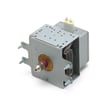
- Microwave runs but does not heat: high-voltage circuit issue (often the magnetron, capacitor, or diode)
- Microwave will not start: door not fully latched, outlet/house fuse or breaker, or a control lock condition
- Sparking/arcing inside: food splatter or grease buildup, damaged interior surface, or metal contact (rack/foil)
- Turntable not turning: failed turntable motor or coupler/support issue
- Vent fan problems (noisy, weak, or runs on its own): grease buildup, fan motor/capacitor issues, or automatic fan operation under heat
Quick checks you can do first (safe, no disassembly)
- Confirm the door closes firmly; open and close it again to ensure it latches securely.
- Check your home breaker or fuse; this model’s troubleshooting tips call out a blown fuse/tripped breaker as a common “won’t start” cause.
- Unplug the microwave for 60 seconds, then plug it back in to clear a minor power surge condition.
- Clean grease from the underside and filters; the manual warns against letting grease build up around the venting area.
- If the display shows LOCKED, press and hold CLEAR/OFF for about 3 seconds to unlock (per the troubleshooting section in the manual).
Parts that commonly fix these issues
If symptoms point to a specific failure, these model-compatible parts are often involved:
| Symptom | Common part involved | Example model-compatible part |
|---|---|---|
| Won’t start, intermittent start, door error behavior | Door interlock switch/lever | Micro-switch WB24X830 |
| Runs but no heat | Magnetron or high-voltage components | Magnetron WB27X10735 |
| Turntable not rotating | Turntable motor | Microwave turntable motor WB26X10038 |
| Poor recirculating vent odor control | Charcoal filter (recirculating setups) | Microwave charcoal filter WB02X10733 |
Why it matters
Microwave/hood combos combine cooking and ventilation, so grease buildup, door-latch alignment, and electrical protection issues can show up as “no heat,” “won’t start,” or vent fan complaints. Addressing the simple checks first prevents unnecessary parts replacement.
For operating, cleaning, venting, and troubleshooting details specific to JVM1870SF02, use the JVM1870SF02 owner’s manual.
Last updated: January 2026
Should a 20 year old microwave be replaced?
Yes. A 20-year-old GE microwave/hood combo like model JVM1870SF02 is past the typical microwave lifespan (about 9 to 10 years), so replacement is the practical choice for reliability, performance, and updated safety features.
Quick replace vs. repair checklist
- Replace if it heats inconsistently, takes longer to cook, or stops heating
- Replace if the door does not close firmly or the latch feels loose
- Replace if the unit repeatedly blows a house fuse or trips the breaker
- Replace if you see arcing or burn marks inside the cavity
- Consider repair only if the issue is minor (turntable not rotating, noisy fan) and the unit is otherwise solid
What “20 years old” usually means for a microwave
Most over-the-range microwaves are designed for a much shorter service life than 20 years. At this age, common wear points include door interlock components, the high-voltage heating circuit, and venting parts.
| Factor | Repair makes sense when | Replace makes sense when |
|---|---|---|
| Heating performance | Simple issue found early | No heat or weak heat returns after repair |
| Electrical reliability | One-time, clearly identified fault | Repeated power issues or intermittent operation |
| Parts cost | Low-cost part and quick access | High-voltage parts or multiple parts needed |
| Downtime | You can wait for parts | You need dependable daily use |
If you are deciding based on a specific symptom
These are common “repairable” items on JVM1870SF02, but we recommend a professional for any high-voltage diagnosis.
- Door won’t start or stops when closing: check the micro-switch WB24X830 and door latch hardware
- Turntable not rotating: check the microwave turntable motor WB26X10038
- No heat: often involves high-voltage components (capacitor, diode, magnetron)
Why it matters
A microwave/hood combo is both a cooking appliance and a vent system. When it is 20 years old, reliability drops and the chance of repeat failures rises, so replacement typically saves time and avoids stacking repair costs.
For installation planning (ducting, recirculating setup, electrical requirements), use the installation guide.
Last updated: January 2026