Owner’s manual
 Error Codes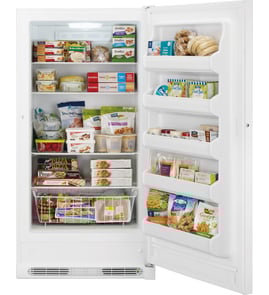


Where is the model number on a Kenmore upright freezer?
On the Kenmore upright freezer model 25328432803, the model and serial number plate is typically located on the upper left wall inside the freezer compartment. Use that label to match parts correctly and to reference the right operating instructions in the 25328432803 owner's manual.
Common places to check on upright freezers
We recommend checking these spots in order:
- Upper left interior wall (most common for upright models)
- Inside the cabinet near the top front opening (just inside the door)
- Behind the lower kick plate or base panel area
- Exterior back of the cabinet (less common, but possible)
What the label looks like and what to write down
The plate lists both a model number and a serial number. Record both so you can order the correct Kenmore freezer parts and confirm compatibility.
| What to record | Example format | Why you need it |
|---|---|---|
| Model number | 253.XXXXXXXX | Identifies the exact freezer design |
| Serial number | Letters and numbers | Helps confirm production details |
Why it matters
Kenmore model numbers often share similar prefixes, and small differences can change the correct fit for parts like a defrost heater, evaporator fan motor, or electronic control board. Using the exact model number from the data plate prevents ordering the wrong replacement.
Quick tips if you cannot find it immediately
- Open the door fully and scan the upper left interior wall first
- Use a flashlight; the print can be small
- Wipe condensation or frost off the area so the numbers are readable
- Take a clear photo of the plate before you start shopping for parts
Last updated: February 2026
How many cubic feet is Kenmore freezer Model 25328432803?
The exact cubic-foot capacity for Kenmore upright freezer model 25328432803 is listed on the model’s rating information and in the product literature; use the 25328432803 owner's manual to confirm the precise capacity for your unit.
How to find the exact capacity on your freezer
Capacity is typically printed on the model and serial number label or in the specifications section of the manual.
- Check the model and serial number plate inside the cabinet (often on the upper left wall on upright models).
- Look for a “Capacity” or “Total capacity” line in the specifications.
- Confirm you are reading 25328432803 (not a similar 253. or 970. model).
- If the label is hard to read, take a clear photo and zoom in.
- Use the manual’s “Record Serial/Model Numbers” section to match what you see on the plate.
Typical capacity range for this style of Kenmore upright freezer
Most Kenmore upright freezers in this family commonly fall in a mid-size range. Use this only as a planning estimate until you confirm the exact spec.
| What you need | Best source | What you’ll get |
|---|---|---|
| Exact cubic feet | 25328432803 owner's manual | Model-specific capacity |
| Quick estimate for space planning | Freezer label and cabinet size | Approximate capacity range |
Why it matters
Knowing the true cubic-foot capacity helps us match shelves, baskets, and airflow-related parts correctly, and it also helps you follow loading guidance (for example, freezing only a limited amount of fresh food per cubic foot at one time).
Last updated: February 2026
How to clean coils on Kenmore upright freezer?
For your Kenmore upright freezer model 25328432803, we clean the condenser coils by unplugging the freezer, accessing the coil area (often behind a lower front grille or rear cover), then brushing and vacuuming dust until airflow is clear. This helps the compressor run cooler and more efficiently.
Steps to clean the condenser coils
- Turn the temperature control to OFF and unplug the power cord.
- Move food away from vents inside so airflow is not restricted while you work.
- Pull the freezer away from the wall to get safe access to the back and bottom.
- Remove the lower front grille or rear access panel (whichever your unit uses).
- Use a coil brush to loosen dust, then vacuum it up (a crevice tool works well).
- Wipe the surrounding floor area so dust does not get pulled back into the coil.
- Reinstall the panel/grille, plug the freezer back in, then return the control to your normal setting.
What to use (and what to avoid)
| Item | Recommended? | Why |
|---|---|---|
| Coil brush | Yes | Reaches between coil fins without bending them |
| Vacuum with crevice tool | Yes | Removes loosened dust fast |
| Soft paintbrush | Yes | Good for tight spots around the compressor area |
| Compressed air | Sometimes | Can blow dust deeper into the cabinet if used carelessly |
| Water or wet rags on electrical parts | No | Increases shock risk and can damage components |
Why it matters
Dirty coils trap heat, which makes the sealed system work harder. That can lead to warmer cabinet temperatures, longer run times, and higher energy use. Keeping coils clean supports steady freezing and helps protect major components like the compressor.
If you still have cooling problems after cleaning
- Confirm the door is sealing well and the gasket is not torn or warped.
- Listen for the evaporator fan; if it is not running, cooling will suffer.
- Check for heavy frost buildup on the back interior panel (a defrost issue).
For model-specific safety and access details, follow the cleaning and electrical safety guidance in the 25328432803 owner's manual.
Last updated: February 2026
Why is my upright freezer leaking water from the bottom?
On the Kenmore 25328432803 upright freezer, water leaking from the bottom most often happens when defrost water cannot drain correctly, so it overflows and runs down to the floor. Clearing the drain path and making sure the unit is level typically stops the leak.
Most common causes (and what to check first)
- Drain plug left out or not seated after defrosting; warm air enters, creates excess frost, and meltwater can spill.
- Ice blocking the drain opening on the inside floor; meltwater has nowhere to go.
- External drain tube not routed into a pan during manual defrost; the pan overflows.
- Freezer not level; the door may not seal well, causing moisture and frost that later melts.
- Door not sealing; humid air enters and creates heavy frost and meltwater.
How to clear the defrost drain safely
Use the steps in the 25328432803 owner's manual for defrosting and drain use.
- Unplug the freezer.
- Remove food and leave the door open.
- Pull the drain plug straight out from the inside floor (upright models with a defrost drain).
- If your model has a base panel, remove it and place a shallow pan under the drain tube; check it often so it does not overflow.
- Clear ice at the drain opening using warm water (a turkey baster works well) until water flows freely.
Leveling and door seal quick test
The manual notes leveling is important because a misaligned door can cause sealing, frost, and moisture problems.
- Confirm all bottom corners rest firmly on the floor.
- Adjust the front leveling feet so the door closes easily when left halfway open.
- Do the “paper test”: close the door on a sheet of paper; it should drag evenly when you pull it out.
| Symptom | Most likely issue | Best next step |
|---|---|---|
| Water appears after a defrost | Drain plug/tube setup | Re-seat drain plug; verify pan placement |
| Heavy frost, then puddles | Door not sealing or not level | Level freezer; check gasket contact |
| Water only at front edge | Door left ajar | Check hinge alignment and closing |
Why it matters
When defrost water cannot drain, it can refreeze into a larger blockage, increase frost buildup, and reduce airflow and cooling performance. Fixing the drain and leveling helps prevent repeat leaks and temperature swings.
Last updated: February 2026
Is there a reset button on a Kenmore upright freezer?
Yes. On Kenmore upright freezer model 25328432803, the reset you will use most often is the ALARM RESET button on the temperature control; it silences the “Hi TEMP” buzzer after a warm-up or temperature rise (it is not a master power reset). See the 25328432803 owner's manual for the exact control layout.
What the ALARM RESET button actually does
When the freezer is first plugged in, or if the inside temperature rises above about 23°F, the Hi TEMP light can turn on and an alarm can sound. Pressing ALARM RESET stops the buzzer; the indicator stays on until the freezer cools back down.
Quick checks before you “reset” anything
- Confirm the freezer is plugged in and the outlet has power.
- Make sure the temperature control is not set to OFF.
- Close the door firmly and check for gaps at the gasket.
- Allow time to recover after loading warm food or after a power outage.
- If the alarm returns every hour, focus on why the freezer is warming (airflow, frost, door seal).
If you need a true power reset
A power reset clears some control glitches:
- Unplug the freezer (or switch off the breaker).
- Wait 5 minutes.
- Plug back in and let it run.
If the display shows an “E” error, the manual directs you to service; at that point, use the error code guidance in Kenmore electronic control module freezer error codes.
Common causes of repeated alarms (and what to check)
| Symptom | Most likely cause | What to do next |
|---|---|---|
| Hi TEMP light on after restart | Normal warm-up | Wait for temperature to drop below ~23°F |
| Alarm keeps coming back | Door not sealing | Inspect/clean gasket, confirm door closes square |
| Poor cooling, warm spots | Airflow issue | Check for blocked vents, listen for fan |
| Heavy frost buildup | Defrost system issue | Defrost and inspect heater/thermostat |
If you suspect the evaporator fan is not moving air, the freezer evaporator fan motor 297309000 is a common related part for this model.
Why it matters
Using the correct “reset” prevents unnecessary part replacement. The ALARM RESET button is designed to manage the Hi TEMP alarm, while repeated alarms usually point to cooling, airflow, or defrost problems that need attention.
Last updated: February 2026
Why does my upright freezer ice up at the bottom?
Ice at the bottom of your Kenmore 25328432803 upright freezer almost always happens when warm, humid air gets into the cabinet and then refreezes, or when defrost water cannot drain out and refreezes on the floor. A door that is slightly out of alignment from poor leveling is a common trigger.
Quick checks that fix most bottom-ice problems
- Make sure the freezer is level so the door closes easily and seals evenly (the manual recommends adjusting the front leveling feet so the door closes when left halfway open); see the 25328432803 owner's manual.
- Confirm the door closes fully every time (no bins, packages, or shelves holding it open).
- Inspect the door gasket for gaps, folds, or hardened areas; warm air leaks create frost and ice.
- If your model has a defrost drain, verify the internal drain plug is installed after defrosting; an open drain lets warm air enter.
- If you recently defrosted, check that meltwater had a clear path to the drain pan and did not overflow and refreeze.
Defrost drain and meltwater: what to look for
If the ice is a solid sheet on the floor, it often starts as defrost water that refreezes.
| Symptom | Most likely cause | What we do next |
|---|---|---|
| Ice slab on bottom, little frost elsewhere | Drain path restricted or drain left open | Defrost, clear drain, reinstall drain plug |
| Heavy frost plus bottom ice | Door not sealing or not closing | Level cabinet, check gasket, reduce door openings |
| Water then ice after loading warm food | Excess humidity from frequent openings | Cool food first, organize to shorten door-open time |
Why leveling and sealing matter
Your freezer relies on a tight door seal to keep humid room air out. The manual notes that if the freezer is not leveled during installation, the door can be misaligned and not close or seal properly, which leads to frost and moisture problems.
When a part is likely involved
If the door seal is torn or won’t sit flat, replacing the gasket is the lasting fix. For this model, the correct door seal is the freezer door gasket 5304507201.
Last updated: February 2026
How long does a Kenmore upright freezer last?
A Kenmore upright freezer typically lasts 10 to 15 years. With steady temperatures, good airflow, and basic care (cleaning and minimizing door openings), many Kenmore model 25328432803 freezers reach the high end of that range.
What affects lifespan the most
- Heat and airflow: Hot rooms and blocked vents make the compressor run longer.
- Door seal condition: A leaking gasket forces longer run times and adds frost.
- Defrost system health: Failed defrost parts can cause heavy frost and poor cooling.
- How often the door is opened: Frequent openings add moisture and warm air.
- Cleaning and moving habits: Proper cleaning and upright transport prevent damage.
Simple care steps that help it last longer
Use the care and operating guidance in the 25328432803 owner's manual.
- Keep the freezer organized so the door stays open for less time.
- Do not line shelves with foil or paper; it restricts cold-air circulation.
- Allow a full cool-down period before loading unfrozen food (the manual notes about 4 hours for safe storage).
- During long storage or moves, unplug, clean, dry, and secure shelves and baskets.
- Keep the door closed during power failures; the manual notes food can stay frozen at least 24 hours if kept closed.
When a “short lifespan” is really a repairable issue
If your freezer is under 10 years old but struggling, these symptoms often point to a fixable part rather than end-of-life:
| Symptom | Common cause | Example part for this model |
|---|---|---|
| Warm freezer, fan not running | Evaporator fan motor failure | Freezer evaporator fan motor 297309000 |
| Heavy frost, weak cooling | Defrost heater or defrost thermostat issue | Defrost heater 5304496687 |
| Runs constantly, frost near door | Door gasket leak | Freezer door gasket 5304507201 |
Why it matters
A freezer that runs longer than normal uses more electricity and can lead to temperature swings that shorten food storage life. Catching airflow, gasket, and defrost problems early helps protect the compressor and keeps temperatures stable.
Last updated: February 2026
Why is my Kenmore upright freezer not freezing?
If your Kenmore upright freezer model 25328432803 is running but not freezing, the most common causes are incorrect temperature control settings, poor airflow from a door that is not sealing, heavy frost buildup on the evaporator, or a failed cooling component such as the evaporator fan motor or electronic control board. Start with the checks in the 25328432803 owner's manual.
Quick checks we recommend first
- Confirm the temperature control is not set to OFF and is set colder (then allow 24 hours to stabilize).
- Make sure the freezer is plugged in firmly and the outlet has power (check the breaker/fuse).
- Verify the door closes and seals fully; a slightly open door can cause warm air intrusion and poor freezing.
- Look for excessive frost on the back interior panel; heavy frost points to a defrost system problem.
- Listen for the evaporator fan; if it is not running, cold air will not circulate.
What to check based on what you see
| Symptom | Most likely area | What we do next |
|---|---|---|
| Freezer does not run at all | Power, control setting | Check outlet power, breaker/fuse, control not set to OFF |
| Runs “too much” but still warm | Door seal, airflow, frost | Check gasket seal, leveling, frost buildup |
| Frost/ice buildup inside | Defrost system | Test defrost heater and defrost thermostat |
| Runs but little to no airflow | Evaporator fan | Inspect fan blade and test fan motor |
Parts that commonly fix “not freezing” on this model
These are model-matched parts we often see involved in no-cool or weak-cool complaints:
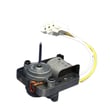
- Freezer evaporator fan motor 297309000 (moves cold air through the cabinet)
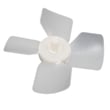
- Blade 5308000010 (damaged blades reduce airflow and can cause noise)
- Refrigeration appliance defrost bi-metal thermostat 297216600 (helps control defrost cycling)
- Defrost heater 5304496687 (melts frost off the evaporator)
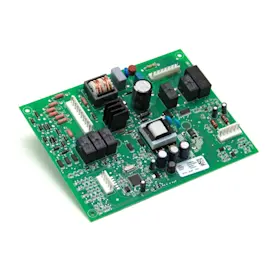
- Freezer electronic control board (if the unit is not controlling cooling correctly)
Why it matters
A freezer that is not level or not sealing can pull in warm, moist air; that leads to frost, longer run times, and warmer temperatures. The manual also notes the cabinet can feel warm as the system transfers heat, so airflow space around the freezer is important for proper cooling.
When to stop and get service
If the freezer is warm and you suspect a sealed-system issue (compressor or refrigerant problem), professional service is the right next step.
Last updated: February 2026