Owner’s manual

What is the average lifespan of an air compressor?
For a consumer-grade air compressor like the Craftsman 921165720, the typical lifespan is about 5 to 10 years with normal use and routine maintenance. The pump can last longer with proper duty cycle and upkeep, but the air tank does not have an infinite life and must be removed from service by the date on its warning label (see the owner's manual).
Typical lifespan ranges (what most owners see)
Lifespan depends most on duty cycle, moisture control, and operating conditions.
- DIY/consumer portable compressors: 5 to 10 years
- Prosumer/shop use (well maintained): 8 to 15 years
- Industrial systems (different designs): 10 to 20+ years
| What wears out first | What it affects | What helps it last longer |
|---|---|---|
| Air tank (internal corrosion) | Safety and ability to hold pressure | Drain moisture daily, store dry |
| Pump (piston/cylinder, seals) | Build time, max pressure, noise | Keep intake filter clean, avoid overheating |
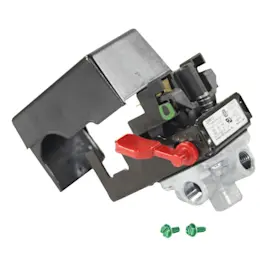
| Pressure switch/regulator | Starts/stops, pressure control | Keep vents clear, avoid dirty/wet environments |
| Gauges/valves/fittings | Accuracy, leaks | Fix leaks early, don’t overtighten fittings |
Maintenance that extends life the most
The manual calls out moisture as a major tank-life killer; draining after each use is one of the biggest life-extenders.
- Drain the tank daily or after each use to reduce internal rust
- Stay within a 50% to 75% average duty cycle (about 30 to 45 minutes run time per hour)
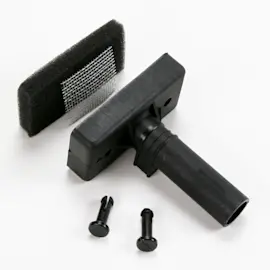
- Keep the air intake filter clean so the pump runs cooler and more efficiently
- Check for air leaks at fittings, drain valve, and regulator; repair promptly
- Use accessories rated for the compressor (hoses, couplers, tools) to avoid overload
Why it matters
Most “compressor lifespan” problems are really tank corrosion or overheating from long run times. Managing condensation and keeping the pump from running continuously helps your Craftsman 921165720 build pressure reliably and reduces the risk of sudden tank failure.
When to replace vs. repair
Use this quick guide to decide your next step.
- Replace (or retire) the unit if the tank leaks, shows severe rust, or is past the tank label’s end-of-service year
- Repair/maintain if it runs but is slow to build pressure, cycles oddly, or leaks at fittings
- For step-by-step troubleshooting, use air compressor won't build tank pressure and air compressor air leaks
For model-specific operating limits, safety notes, and the maintenance schedule, follow the owner's manual. For parts and diagrams, start with the model parts list, or search by model number on Sears PartsDirect.
Last updated: February 2026
What is the most common cause of air compressor failure?
The most common cause of failure on a Craftsman 921165720 air compressor is inadequate maintenance that leads to restricted airflow, overheating, and accelerated wear. Daily tank draining and keeping the intake path clean prevent rust, leaks, and performance loss (see the 921165720 owner's manual).
What “lack of maintenance” usually means on this model
These are the failure patterns we see most often with portable air compressors like the Craftsman 921165720:
- Restricted air intake from a dirty or clogged intake filter element
- Overheating from poor ventilation or operating too close to walls or obstructions
- Internal tank corrosion from not draining condensed water after use
- Air leaks at fittings, hoses, regulator, or valves (often found with soapy water)
- Electrical issues tied to improper grounding, incorrect voltage, or inadequate fuse protection
Quick prevention checklist (high impact)
Use this routine to reduce breakdowns and extend service life:
- Operate in a clean, dry, well-ventilated area with about 12 inches of clearance around ventilation openings
- Drain the tank daily or after each use to remove moisture that causes rust
- Check fittings with soapy water; tighten or reseal leaks (do not overtighten)
- Clean or replace the intake filter element when airflow is restricted
- Before servicing: unplug power, bleed tank pressure, and let the unit cool
Symptoms and the most likely root cause
| What you notice | Most common cause | What to check first |
|---|---|---|
| Runs hot, shuts off, or struggles | Restricted airflow or poor ventilation | Intake filter, clearance, ventilation openings |
| Low pressure or won’t keep up | Leaks or restricted intake | Soapy-water leak test, filter element |
| Tank won’t hold air | Tank leak or valve issue | Drain valve closed, fittings, tank condition |
| Won’t start or trips power | Electrical supply problem | Grounding, correct voltage, fuse protection |
Why it matters
Most “sudden” air compressor failures are preventable. Restricted intake and poor ventilation drive heat up, while moisture left in the tank drives corrosion and leaks. A simple maintenance routine protects the pump, valves, regulator, and air tank.
For model-specific operating and safety details, use the 921165720 owner's manual. For parts and diagrams, start with the model parts list, or search by model on Sears PartsDirect.
Last updated: February 2026
Is it worth it to repair a compressor?
Yes, it’s worth repairing a Craftsman air compressor model 921165720 when the problem is limited to common service items (like a pressure switch, regulator, check valve, or intake filter) and the tank is sound; if the tank is leaking or badly corroded, replacement is the right choice. Use the owner's manual to match symptoms to the correct fix and safety steps.
Quick decision checklist
- Repair when the unit runs but has control issues (won’t shut off, won’t regulate, hard starting) or minor air leaks at fittings.
- Repair when performance problems point to serviceable components (restricted intake, leaking check valve, worn seals).
- Replace when the tank leaks or shows severe internal corrosion risk (water left in the tank accelerates corrosion).
- Replace when repair cost approaches the price of a comparable new compressor, especially if multiple parts are failing.
- Replace when the motor repeatedly trips the thermal overload under normal use (often signals deeper electrical or motor wear).
What the manual says that affects the decision
The manual’s troubleshooting guidance highlights several fixable causes (leaking fittings, restricted air intake, valve leaks, worn piston/seals). It also calls out a key non-repair situation: a leaking tank should be replaced, not repaired.
Common “worth repairing” symptoms and likely causes
| Symptom | Common cause | Typical fix type |
|---|---|---|
| Compressor runs a lot or won’t stop | Fittings leak, air demand too high, restricted intake | Reseal/tighten fittings, clean/replace filter, right-size tool use |
| Won’t build tank pressure | Valve leaks, blown seals, worn piston | Component rebuild/replace |
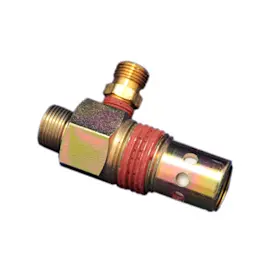
| Won’t start with pressure in tank | Check valve or pressure switch issue | Replace service part |
| Regulator won’t control output | Regulator internal wear | Replace regulator/internal parts |
Why it matters
A good repair restores safe pressure control and reliable cut-in/cut-out operation. Skipping repairs can lead to constant running, overheating (thermal overload trips), and faster wear. Proper maintenance also protects the tank; draining condensation after use reduces corrosion and extends compressor life.
Safety steps we follow before any repair
- Shut off and unplug the compressor.
- Bleed all air pressure from the system.
- Let hot components cool before touching.
- Keep guards/covers in place during operation.
- Use eye and ear protection when draining the tank.
For parts and diagrams for model 921165720, start with the model’s parts list; for broader model searches and ordering, use Sears PartsDirect.
Last updated: February 2026
What does 4.0 SCFM at 90 PSI mean?
It means the air compressor can deliver 4.0 standard cubic feet of air per minute while maintaining 90 PSI at the outlet. For your Craftsman 921165720, the manual lists 5.1 SCFM @ 90 PSI (tested per ISO 1217), which helps you match the compressor to air tool demand. See the 921165720 owner's manual for the full spec table and glossary.
How to use SCFM @ 90 PSI when choosing tools
Most air tools list an air requirement in SCFM at a specific PSI (often 90 PSI). Your compressor must meet or exceed that number to keep the tool running without frequent pressure drops.
- Compare the tool’s required SCFM @ 90 PSI to the compressor’s SCFM @ 90 PSI rating
- If the tool requires more SCFM than the compressor can supply, the tank pressure will fall and the motor will run more often
- For continuous-use tools (DA sanders, grinders), plan extra margin above the tool’s SCFM requirement
- For intermittent tools (brad nailers, inflators), tank size and recovery time matter more than peak SCFM
- Keep hose and fittings sized correctly; restrictions reduce real airflow at the tool
What “standard” means in SCFM
SCFM is a standardized airflow measurement so you can compare compressors more fairly than raw CFM.
Quick glossary
| Term | What it tells you | Why it matters |
|---|---|---|
| PSI | Air pressure | Determines tool force/torque and regulator setting |
| SCFM | Airflow at standard conditions | Determines whether the compressor can keep up |
| Tank pressure | Stored air in the tank | Affects run time between cycles |
Model-specific numbers for Craftsman 921165720
The Craftsman 921165720 manual lists these delivery ratings:
- 6.8 SCFM @ 40 PSI
- 5.1 SCFM @ 90 PSI
It also lists an approximate cut-in pressure of 135 PSIG and cut-out pressure of 165 PSIG, which explains when the pressure switch restarts and stops the motor.
Why it matters
SCFM @ 90 PSI is the best single number for predicting real-world performance with common pneumatic tools. If your tool demand is close to the compressor rating, you will see more cycling, slower recovery, and more noticeable pressure sag at the regulator.
For troubleshooting low airflow or pressure issues, we recommend our DIY guide: air compressor won't build tank pressure. For parts and diagrams for this model, start with the model parts list, or search by model number on Sears PartsDirect.
Last updated: February 2026