Owner’s manual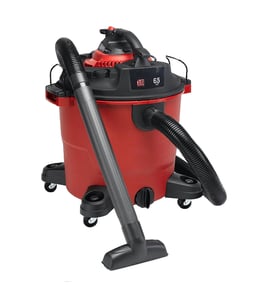

Is a wet and dry vacuum cleaner worth it?
Yes, a wet/dry vacuum is worth it when you want one machine that can handle dry debris and liquid pickup for fast cleanups in a garage, basement, shop area, or busy home. For Craftsman model 113177135, it is designed for household use and can also be used as a blower; using it correctly is what makes it pay off. See the 113177135 owner's manual for safe use and wet-pickup setup.
When it is most worth it
A wet/dry vacuum earns its keep when you regularly deal with mixed messes and want strong suction without switching tools.
- Picks up wet spills and dry dirt with one unit
- Works well for garage and workshop cleanup (sawdust, grit, tracked-in debris)
- Helps with basement water cleanup (small incidents, not flooding)
- Can be used as a blower for light clearing tasks
- Saves storage space versus owning separate specialty tools
Tradeoffs to expect (so you are not surprised)
Wet/dry vacs are practical, but they do require a little more hands-on maintenance than a basic carpet vacuum.
- Bulkier than many upright vacuums
- You may need to empty the drum more often with fine dust
- Filters need attention; a dry filter is required for dry pickup
- Wet pickup often works best with the filter removed (as the manual recommends)
What matters most: wet vs. dry setup
For model 113177135, the manual guidance is clear: setup changes depending on what you are picking up.
| Task | Recommended setup | What you will notice |
|---|---|---|
| Dry pickup (dust, debris) | Use a dry filter | Better airflow and filtration; less clogging |
| Wet pickup (liquids) | Remove the filter (highly recommended) | Better liquid handling; less filter damage |
| Drum fills with liquid | Float rises and cuts off airflow | Suction stops; motor pitch gets higher |
Why it matters
Using the right configuration prevents clogs, protects the motor, and keeps dust from blowing back into the room. The manual also warns not to vacuum flammable liquids, burning items, or very fine fireplace ash/soot; following those limits is part of getting long-term value.
If you are shopping for accessories or replacement items for Craftsman 113177135, start with the model’s parts list, or search by model number on Sears PartsDirect.
Last updated: February 2026
Why did shop vac stop working?
A Craftsman wet/dry vacuum like model 113177135 usually “stops working” because airflow is blocked (clogged filter or hose), the float shutoff has lifted during wet pickup, or the vac is not getting power. We follow the troubleshooting steps in the 113177135 owner's manual to pinpoint the cause safely.
Quick checks (most common fixes)
- Unplug the vac before inspecting or cleaning the filter.
- Check the filter: clean it or replace it if it is packed with dust.
- Inspect the hose and inlet port: remove the hose and clear debris.
- Confirm the power head is seated: make sure the power head is securely attached to the drum to prevent air leaks.
- If you were vacuuming liquid: empty the drum and reset the float shutoff (suction stops and motor pitch rises when the float lifts).
If the motor runs but there is little or no suction
The manual’s troubleshooting points to three main causes: a clogged filter, a clogged hose, or an air leak at the drum/power head connection.
| Symptom | Likely cause | What to do |
|---|---|---|
| Motor runs, weak suction | Clogged filter | Clean or replace the filter |
| Motor runs, no pickup | Clogged hose | Remove hose; clear blockage |
| Motor runs, suction varies | Air leak | Reseat power head; check drum seal area |
If the vac will not run at all
- Verify the outlet has power (try a different outlet or reset the breaker).
- Check the cord and plug for damage; do not use the vac with damaged electrical parts.
- If any power head parts are detached or broken and internal electrical components are exposed, stop using the vac until it is repaired.
Why it matters
A wet/dry vacuum depends on sealed airflow. A clogged filter or hose reduces performance, and a raised float during wet pickup intentionally stops suction to prevent overfilling and motor damage.
For replacement parts, use the parts list for model 113177135; for broader model searches and ordering, use Sears PartsDirect.
Last updated: February 2026
Are wet dry vac filters universal?
Wet/dry vac filters are not universal. For a Craftsman 113177135 wet/dry vacuum, the filter must match the vac’s filter cage size, seal style, and whether you’re doing dry pickup or wet pickup (many wet pickups are done with the filter removed). Use the 113177135 owner's manual to confirm the correct filter setup for your job.
What “not universal” means for fit and performance
Even when two filters look similar, small differences can cause air leaks, poor suction, or dust blow-by.
- Mounting and seal: The filter must seal to the cage without gaps or tears.
- Diameter and height: The cartridge has to match the filter cage dimensions.
- Media type: Fine-dust filters clog faster; general-purpose filters handle everyday debris.
- Wet vs. dry use: A dry filter is needed for dry pickup; a wet filter clogs quickly.
- Accessory compatibility: Using recommended accessories helps protect the vac and maintain performance.
Dry pickup vs. wet pickup (quick guide)
The manual guidance is clear: filter use changes depending on what you are vacuuming.
| Task | Filter installed? | Key tip |
|---|---|---|
| Dry debris (sawdust, dirt) | Yes | Keep the filter dry for best airflow. |
| Very fine dust (drywall, cement-like dust) | Yes | Empty the drum and clean or replace the filter more often. |
| Liquid pickup | Usually no | Filter removal is highly recommended for wet pickups. |
| Suction suddenly stops during wet pickup | N/A | Float may have shut off airflow; turn off, unplug, and empty drum. |
Why it matters
A mismatched or leaking filter can let dust escape through the blower port and reduce suction. The right filter fit also helps prevent clogs and keeps the motor airflow where it should be.
Getting the right replacement filter
- Confirm your model number is 113177135.
- Match the filter to the cage and seal style shown in the manual.
- If you mainly vacuum fine dust, plan on more frequent filter cleaning or replacement.
- For parts lookup beyond the model parts list, search by model number on Sears PartsDirect.
Last updated: February 2026
What is the list of vacuum cleaner parts?
For the Craftsman 113177135 wet/dry vacuum, the parts list is the set of assemblies that create suction, route airflow, and safely collect debris. Core items include the motor (power head), filter system, drum (tank), hose, and cord; your 113177135 owner's manual shows the feature layout and safe-use details.
Common wet/dry vacuum parts you will see
- Power head (motor housing and switch)
- Filter and filter cage (for dry pickup; remove filter for wet pickup as recommended)
- Dust drum or tank (collection container)
- Float mechanism (shuts off airflow when liquid reaches a set level)
- Hose and hose storage recesses
- Power cord and cord storage
- Blower port (for blower mode)
What each part does (quick reference)
| Part or assembly | What it does | When it usually needs attention |
|---|---|---|
| Filter system | Captures dust during dry pickup | Clogs, tears, or gets wet and won’t clean well |
| Hose | Carries debris and airflow | Clogs, cracks, or leaks |
| Float mechanism | Stops suction when tank is too full of liquid | Sticks, or you keep running with float raised |
| Power head (motor) | Creates suction and airflow | Won’t start, runs hot, or sounds abnormal |
Why it matters
Knowing the parts list helps you troubleshoot faster. For example, the manual’s troubleshooting points to a clogged filter, clogged hose, or an air leak (power head not seated on the drum) when the vac will not pick up dirt.
Safety notes tied to key parts
- Keep the filter installed for dry pickup; a torn filter can leak dust back out the blower port.
- For wet pickup, removing the filter is strongly recommended; stop and empty the drum when suction stops and motor pitch rises (float shutoff).
- Do not vacuum flammable liquids, explosive dust, or hot ashes; the motor can ignite vapors or dust.
Finding the right replacement parts
Use the model number 113177135 when searching diagrams and part descriptions. If you do not see what you need in the model’s parts list, search by model number on Sears PartsDirect.
Last updated: February 2026
How do you determine the size of a shop vac hose?
For a Craftsman wet/dry vacuum model 113177135, we determine hose size by measuring the inside diameter (ID) of the vacuum port the hose plugs into, then matching that to a hose ID. The owner's manual indicates this model uses a 1-1/4 inch hose, so 1-1/4 inch accessories are the correct fit.
What to measure (and how)
- Unplug the vacuum before handling the power head or ports.
- Measure the vacuum port opening (the inlet where the hose connects):
- Measure the inside diameter across the opening.
- Measure in two directions (90 degrees apart) to confirm it is round.
- Measure your existing hose (if you have it):
- Hose ID: inside diameter of the hose end.
- Hose end style: friction fit vs. locking style (common on some shop vacs).
Quick fit guide (common shop vac sizes)
| Port or hose size (ID) | Typical use | Notes |
|---|---|---|
| 1-1/4 inch | Small wet/dry vacs, detail cleanup | Matches this model’s hose size per manual |
| 1-7/8 inch | Medium-duty cleanup | Less common than 1-1/4 and 2-1/2 |
| 2-1/2 inch | High airflow, larger debris | Common on larger shop vacs |
Model-specific details for Craftsman 113177135
The manual describes a 4 foot x 1-1/4 inch flexible hose with dual swivel ends, and it also notes that 1-1/4 inch non-mechanical cleaning accessories are compatible. Use that 1-1/4 inch size as your baseline when selecting hoses, extension wands, and nozzles for this vacuum.
Why it matters
Using the correct hose diameter prevents air leaks and restrictions. That keeps suction strong, helps avoid clogs, and improves pickup performance, especially when vacuuming fine dust that can load the filter quickly.
If you are shopping for a replacement hose
- Match 1-1/4 inch ID for best fit and performance
- Confirm the hose end will fit the vacuum port snugly
- Choose a hose length that fits your workspace (longer hoses can reduce airflow)
- If suction is weak after replacing the hose, check for a clogged filter or clogged hose per the manual’s troubleshooting
- For additional parts and accessories, start with the model parts list, or search by model on Sears PartsDirect
Last updated: February 2026