Owner’s manual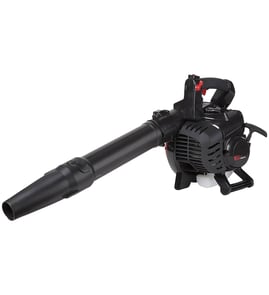







What is the best gas-powered leaf blower on the market?
The “best” gas-powered leaf blower depends on your job size and how you want to carry it. For most homeowners, we recommend choosing by performance (CFM/MPH), comfort, and serviceability; your Craftsman model 358794760 is rated 450 CFM and 210 MPH, which is a strong benchmark for handheld power.
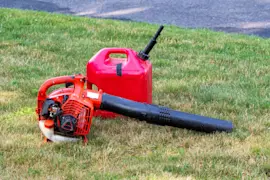
- Handheld: best for driveways, patios, and smaller yards; lighter and easier to store.
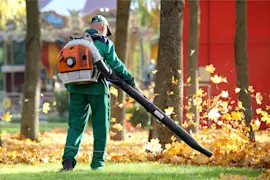
- Backpack: best for large lots and heavy leaf volume; less arm fatigue, higher sustained output.
- Vacuum-capable units (like many blower/vacs): helpful for picking up dry leaves and small debris, but can clog in wet material.
| Spec | What it tells you | What to look for |
|---|---|---|
| CFM | Air volume moved | Higher for moving piles fast |
| MPH | Air speed | Higher for lifting stuck debris |
| Weight | Fatigue factor | Lower for handheld, balanced for backpack |
| Fuel system | Starting and reliability | Easy priming, stable fuel lines |
- Best handheld for most yards: a pro-grade handheld from Echo, Stihl, or Husqvarna with strong CFM and manageable weight.
- Best backpack for big cleanups: a high-output backpack model with a comfortable harness and vibration control.
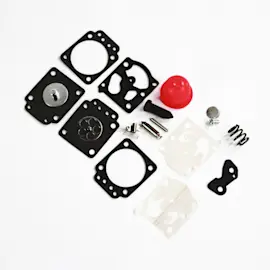
- Best value: a mid-range handheld that still has readily available wear parts (air filter, fuel line, switch).
Matching the blower to your workload prevents fatigue, reduces run time, and helps avoid common issues like hard starting and rough running. Keeping up with maintenance (clean air filter, fresh fuel mix, good fuel lines) protects performance over time; see the fuel mix and operating guidance in the 358794760 operator’s manual.
Last updated: January 2026
What is the life expectancy of a gas leaf blower?
A Craftsman gas leaf blower like model 358794760 typically lasts about 8 to 10 years with normal homeowner use and routine maintenance. The biggest life-limiters are fuel-system issues, dirty air filtration, and running with clogged cooling or airflow passages.
- Fuel quality and storage habits (old gas and ethanol-related varnish shorten carburetor life)
- Air filter condition (a clogged filter can cause rich running and poor performance)
- Cooling and airflow cleanliness (debris buildup increases heat and wear)
- Operating habits (running wide-open constantly vs. using the lowest throttle that does the job)
- Basic upkeep (periodic inspection of fuel lines, fasteners, and intake areas)
Use this as a practical baseline; follow the exact intervals and procedures in the 358794760 operator's manual.
| Task | Good routine | Why it helps |
|---|---|---|
| Check/clean air filter | Every few uses; replace when damaged | Protects engine from dirt ingestion |
| Inspect fuel lines and primer area | Monthly in season | Prevents leaks, air leaks, and hard starting |
| Use fresh, properly mixed fuel | Every fill | Reduces deposits and carburetor problems |
| Clean debris from intake and housing | After dusty jobs | Keeps temps down and airflow strong |
These are normal wear items; replacing them on time often restores performance and prevents bigger failures.
- Leaf blower air filter 545146501 (dirty or torn filter)
- Ayp lawn & garden equipment fuel line, large 530069216 (cracked or soft fuel line)
- Spark plug (misfire and hard starting when worn)
A gas blower that is maintained runs cooler, starts easier, and avoids fuel-system damage that can make the unit feel “worn out” long before the engine actually is. Good storage practices and clean filtration are usually the difference between a 3 to 5 year tool and a 10 year tool.
Last updated: January 2026
What is better, cfm or mph for a leaf blower?
For the Craftsman 358794760 gas blower, neither CFM nor MPH is “better”; they measure different performance. CFM tells us how much air the blower moves (volume), while MPH tells us how fast that air exits (force). The best choice depends on the debris and the job.
- CFM (cubic feet per minute): moves more material at once; best for gathering and pushing piles across open areas.
- MPH (miles per hour): breaks loose stuck debris; best for wet leaves, matted grass, and debris in cracks.
- Balanced ratings: gives the most versatile real-world performance.
For reference, the operator manual for this model lists 210 MPH / 450 CFM, which is a strong “balanced” setup for both dislodging and moving debris. See the 358794760 owner's manual.
| Task | Prioritize | Why |
|---|---|---|
| Clearing a driveway or patio | Higher CFM | Moves larger volumes efficiently |
| Wet leaves, heavy clumps | Higher MPH | Adds punch to break debris free |
| Mulch beds, tight corners | Higher MPH (plus control) | Helps lift debris without needing to get too close |
| General yard cleanup | Balance | Handles mixed debris without constant repositioning |
Even with great CFM/MPH, technique and setup change results.
- Use the full nozzle extension so airflow works close to the ground.
- Work in one direction and build piles; avoid “chasing” debris.
- In dusty conditions, lightly dampen surfaces first.
- Run at the lowest throttle that still does the job to reduce noise.
- Keep bystanders at least 30 feet away; debris can be thrown.
CFM and MPH are often marketed like a single “power” score, but they solve different problems. Matching the spec to your debris type helps you finish faster, reduce clogging during vacuum use, and avoid unnecessary wear from running wide open all the time.
Last updated: January 2026