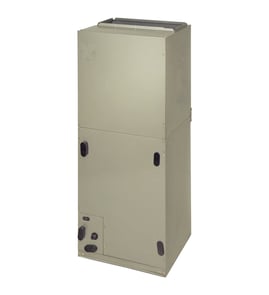

How to find air handlers?
For a York air handler like model N-VSB1206, we typically find it where the indoor blower and evaporator coil live: a utility closet, basement, garage, crawlspace, or attic near the return-air duct. Follow the largest return grille path and the refrigerant line set to the cabinet.
Common places to look first
- Attic: often on a platform with a secondary drain pan under it
- Hall/bedroom closet: behind a louvered door or access panel
- Basement or mechanical room: near the furnace area or duct trunk
- Garage: mounted on a stand or hung from framing
- Crawlspace: suspended or set on blocks near ductwork
Quick identification checklist (what you are looking for)
An air handler is usually a tall metal cabinet connected to ductwork. Look for:
- A filter slot or filter door near the return duct
- A condensate drain line (often PVC) leaving the cabinet
- A refrigerant line set (two copper lines) heading to the outdoor unit
- A data plate with the model number (for example, N-VSB1206)
- An electrical disconnect or service switch nearby
Follow-the-clues guide
| Clue you can find | What it usually points to | Where to go next |
|---|---|---|
| Large return grille(s) | Return duct path | Trace duct to the cabinet location |
| Copper refrigerant lines | Indoor coil location | Follow lines from outdoor unit into the home |
| Condensate drain outlet | Air handler/coil area | Look for a nearby access door or closet |
| Thermostat wiring bundle | Control location | Check mechanical spaces near main duct runs |
Why it matters
Finding the air handler cabinet is the fastest way to confirm the exact model number, check the filter size and airflow direction, and identify service items like the blower motor, control board, and condensate drain that affect comfort and humidity.
For help confirming the correct model number before ordering, use how to find your appliance model number (and what it means for parts).
Last updated: February 2026
How to tell if an air handler is bad?
A York air handler like model N-VSB1206 is likely “bad” when it can’t move air reliably or it repeatedly trips a safety or electrical condition. The most common signs are weak or no airflow, abnormal noises, water around the unit, and frequent on and off cycling.
Quick signs your N-VSB1206 air handler is failing
- No or weak airflow at multiple vents (even with a clean filter)
- Unusual noises: grinding, squealing, rattling, or banging (often blower wheel or motor related)
- Musty or burning smell from the supply vents or air handler cabinet
- Water leaks or an overflowing drain pan (can lead to shutdowns)
- Short cycling: blower starts and stops frequently, or runs briefly then quits
- Frozen evaporator coil or ice on refrigerant lines (often airflow or control issues)
- Sudden jump in energy use with worse comfort
What to check first (safe homeowner checks)
Turn off power at the breaker before opening any panels.
- Replace or clean the air filter; a clogged filter is the most common airflow killer
- Confirm supply and return vents are open and not blocked
- Check the thermostat settings (fan set to Auto vs On) and replace thermostat batteries if used
- Look for standing water in the secondary pan and a clogged condensate drain line
- Reset a tripped breaker once; if it trips again, stop and diagnose the cause
What the symptoms usually point to
| Symptom | Most common cause | What it affects |
|---|---|---|
| Weak airflow | Dirty filter, blower wheel buildup, failing blower motor/capacitor | Comfort, coil icing |
| Grinding/squeal | Worn motor bearings, blower wheel rubbing | Reliability, noise |
| Water around unit | Clogged drain, cracked pan, improper slope | Shutdowns, water damage |
| Short cycling | Overheating, control issue, blower problem | Comfort, energy use |
Why it matters
An air handler that is struggling to move air can cause coil freeze-ups, higher utility bills, and repeated shutdowns. Catching airflow, drainage, and electrical issues early helps prevent bigger HVAC damage.
When to stop DIY and use a technician
If you see burnt wiring, repeated breaker trips, or the blower will not run even with correct thermostat calls, schedule service. For electrical testing, we use a meter and follow safe diagnostic steps like those shown in how to use a multimeter to test electrical parts video.
Last updated: February 2026
What are the components of an air handler?
A York air handler such as model N-VSB1206 typically includes a blower (fan) assembly to move air, an evaporator (cooling) coil, and a condensate drain system; many setups also include electric heat strips or a hydronic heat coil, plus controls and safety switches.
Core components you’ll usually find
- Blower assembly (blower wheel and motor): circulates air through the ductwork
- Evaporator coil: removes heat and humidity during cooling
- Air filter rack or filter slot: protects the coil and blower from dust
- Condensate drain pan and drain line: collects and routes away moisture from the coil
- Control board and/or relay controls: manages blower speeds and calls from the thermostat
- Limit switches and safeties: helps prevent overheating or unsafe operation
Common “options” that may be installed (depends on your system)
Some air handlers are configured differently based on the home’s HVAC design. Here are common add-ons:
| Option | What it does | When it’s used |
|---|---|---|
| Electric heat kit (heat strips) | Adds heat using electric elements | Heat pump systems, or when no furnace is present |
| Hydronic heat coil | Adds heat using hot water | Boiler-based heating systems |
| UV light / air cleaner | Helps reduce biological growth on surfaces | Homes with allergy or odor concerns |
| Float switch | Shuts system down if the drain backs up | Attics, closets, or any overflow-risk install |
Why it matters
Knowing the main air handler components helps you troubleshoot symptoms faster. For example, weak airflow often points to the filter, blower, or coil; water around the unit points to the drain pan or drain line; no fan operation often points to controls, wiring, or the motor.
Quick checks we recommend before troubleshooting deeper
- Turn off power at the breaker before opening panels
- Check the filter for heavy dust buildup
- Look for ice on the coil or refrigerant lines
- Inspect the drain pan and drain line for clogs
- Listen for blower motor humming, scraping, or rattling
- If you’re testing electrical circuits, use safe meter practices (see how to use a multimeter to test electrical parts video)
Last updated: February 2026
What does multi-position air handler mean?
A multi-position air handler (like the York N-VSB1206) is designed to be installed in more than one orientation, typically vertical upflow, vertical downflow, or horizontal. This flexibility helps it fit different closets, attics, basements, and mechanical rooms without changing the core blower and coil setup.
Common installation positions (what “multi-position” covers)
Most multi-position air handlers support several of these configurations (your exact options depend on the cabinet and coil arrangement):
- Upflow: air enters the bottom and exits the top
- Downflow: air enters the top and exits the bottom
- Horizontal left: unit lies on its side with airflow left-to-right
- Horizontal right: unit lies on its side with airflow right-to-left
- Closet or attic installs: chosen based on duct routing and service access
What usually changes when you change positions
The air handler’s main job stays the same, but the install details often change:
- Condensate drain routing (primary and secondary drain connections)
- Condensate pan orientation and overflow protection
- Refrigerant line routing to the evaporator coil
- Filter location (return grille vs. filter rack, if used)
- Electrical access and service clearance
Quick comparison: why multi-position matters
| Feature | Multi-position air handler | Single-position air handler |
|---|---|---|
| Install flexibility | High | Limited |
| Ductwork options | More layouts possible | Fewer layouts possible |
| Risk of condensate issues | Depends on correct drain/pan setup | Often simpler |
| Best for | Remodels, tight spaces, varied layouts | Straightforward replacements |
Why it matters
Choosing the right position affects airflow performance, condensate management, and serviceability. A correct orientation helps prevent water leaks, reduces airflow restrictions, and makes future blower motor or control board service easier.
Practical tips before installing or re-positioning
- Confirm the return and supply duct direction before setting the cabinet
- Plan the trap and slope for the condensate drain line
- Keep the unit level side-to-side (and follow the intended pitch for drainage if specified)
- Verify clearance for the blower door and electrical compartment
- If you are unsure about drain pan or coil orientation, use a qualified HVAC technician
For help identifying the exact model tag and matching the correct parts list for your unit, use how to find your appliance model number (and what it means for parts).
Last updated: February 2026
