Owner’s manual


How to hard reset a Kenmore dryer?
To hard reset Kenmore dryer model 11072952100, we unplug the dryer (or switch the breaker off) for 1 to 5 minutes, then restore power and try a timed cycle. If it still will not run, the issue is usually power, door closure, or airflow safety devices, not a reset.
Hard reset steps (safe and effective)
- Turn the Cycle Selector (timer) to OFF.
- Unplug the dryer (or turn the circuit breaker OFF).
- Wait 1 to 5 minutes.
- Restore power.
- Close the door firmly.
- Select a timed dry cycle and press PUSH TO START.
For control locations and normal start behavior, use the 11072952100 owner's manual.
If the dryer still will not start after a reset
These checks solve most “won’t start” complaints on this Kenmore gas dryer:
- Power supply: Replace a blown fuse or reset a tripped breaker; use a time-delay fuse where required.
- Door not fully closed: The dryer will not run with the door unlatched.
- Start not engaged: Press PUSH TO START again with the timer set to a cycle.
- Airflow restriction: Clean the lint screen and confirm strong airflow at the outside vent.
- Overheat protection tripped: A failed thermal fuse commonly stops the dryer from running.
Quick symptom guide
| What you see | Most likely cause | What we do next |
|---|---|---|
| No lights, no response | House power issue | Check breaker, outlet, cord |
| Timer runs but no start | Door/start circuit issue | Confirm door closes, press start firmly |
| Runs briefly then stops | Overheat/airflow issue | Clean venting, inspect safety devices |
Parts that commonly relate to “won’t run”
If airflow was restricted or the dryer overheated, we often replace the safety device that opened:
Why it matters
A hard reset only clears a temporary control or state issue. If the dryer is not starting because a safety circuit opened (often from poor venting), resetting power will not restore operation until the underlying airflow problem and failed part are corrected.
Last updated: January 2026
How to tell if a dryer gas valve is bad?
On Kenmore dryer model 11072952100, a “bad” gas valve is most likely when the dryer tumbles and ignites briefly (or not at all), then stops heating even though gas supply and venting are correct. Confirm basics first, then test the valve circuit and related ignition parts.
Quick checks first (most common causes)
- Make sure the gas shutoff valve handle is parallel to the gas pipe (open position).
- Run a full heat cycle (not Air) and check for heat after about 5 minutes.
- If there’s no heat, turn the dryer off, wait 5 minutes, then repeat the 5-minute heat check.
- Verify the vent is not crushed or kinked and the exhaust is vented outdoors with 4-inch heavy metal vent.
- Confirm the dryer is plugged into a grounded outlet and the door fully closes.
What “bad gas valve” symptoms look like
A failing gas valve assembly or its coils often shows up as one of these patterns:
- Igniter glows, burner lights, then flame drops out and won’t relight until the dryer cools.
- Dryer heats intermittently; clothes take much longer to dry.
- You hear normal clicking, but the burner does not stay on.
Symptom-to-part guide
| What you observe | Most likely area | Common next step |
|---|---|---|
| Igniter never glows | Ignition circuit, safety devices | Check thermal fuse, door switch, wiring |
| Igniter glows, no flame | Gas valve coils, gas supply | Test coils; confirm shutoff valve open |
| Flame starts then quits | Gas valve coils overheating | Replace coil kit |
How we test the gas valve side safely
- Unplug the dryer.
- Shut off the gas supply.
- Access the burner assembly area.
- Check wiring connections for looseness or heat damage.
- Use a multimeter to check coil resistance and continuity; compare readings between coils and look for an open coil.
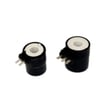
If the symptoms match intermittent heating, replacing the coil kit is the most common fix: dryer gas valve coil kit 279834.
Why it matters
A weak gas valve coil can let the dryer ignite once, then fail as it warms up, causing long dry times and repeated no-heat cycles. Confirming venting and gas shutoff position first prevents unnecessary parts replacement.
For model-specific operating and installation checks (including the 5-minute heat test and venting requirements), use the 11072952100 owner's manual.
Last updated: January 2026
What model number is the Kenmore 11072952100 dryer?
The model number for this Kenmore dryer is 11072952100. You can also confirm it on the model and serial number plate on the dryer cabinet; the 11072952100 owner's manual explains where to find and record that information.
Where to find the model number on the dryer
Most Kenmore dryers, including model 11072952100, list the model and serial number on a dedicated identification plate. Check these common locations:
- Inside the door opening on the front panel
- On the door frame or inner door area
- On the cabinet near the lint screen housing
- On the rear panel of the dryer cabinet
- On the lower front area behind the toe panel (on some builds)
Why the exact model number matters
Kenmore model numbers are the key to matching the correct parts and service information. Even small differences (like a different series or revision) can change the correct fit for items such as a thermal fuse, igniter, or gas valve coils.
| What you need | What it’s used for | Example for this dryer |
|---|---|---|
| Model number | Identifies the exact dryer design | 11072952100 |
| Serial number | Identifies production run details | Found on the same plate |
| Part ID | Identifies the exact replacement part listing | WP3390719 |
Quick tip when ordering parts
When you look up parts for Kenmore 11072952100, match the part by both name and ID to avoid mix-ups.
Why it matters
Using the correct model number helps ensure the part fits, the wiring connections match, and the repair procedure in the manual applies to your exact dryer.
Last updated: January 2026
What is the lifespan of a Kenmore dryer?
Most Kenmore dryers like model 11072952100 last 10 to 13 years with normal household use. With consistent vent and lint maintenance, many run 15 years or longer; heavy use, restricted airflow, and overheating shorten life.
Typical lifespan and what changes it
A dryer’s life is mostly determined by heat stress, airflow, and wear on moving parts.
- Usage frequency: multiple loads per day wears rollers, belt, and motor faster
- Airflow/venting: clogged venting overheats the burner and safety thermostats
- Maintenance habits: lint screen and vent cleaning reduce strain and cycle time
- Load size: overloading stresses the drum support system and idler pulley
- Environment: humid or dusty laundry rooms accelerate corrosion and lint buildup
Maintenance that extends dryer life
The 11072952100 owner’s manual recommends cleaning lint from the exhaust vent and notes that lint inside the dryer should be removed about every 2 years (more often with heavy use). Use the steps in the 11072952100 owner's manual to stay on schedule.
| Task | Good routine | Why it helps |
|---|---|---|
| Clean lint screen | Every load | Improves airflow and drying performance |
| Clean exhaust vent run | Every 6 to 12 months | Prevents overheating and long dry times |
| Deep clean inside cabinet | About every 2 years | Reduces lint near burner and motor |
| Check vent material and routing | When you move the dryer | Avoids restrictions that trap lint |
Parts that commonly wear out first
If the dryer is noisy, slow to start, or takes longer to dry, these wear items are common culprits:
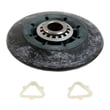
- Drum support rollers and shafts: support kit WPW10314173
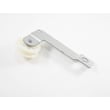
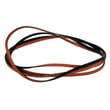
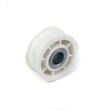
- Belt tension system: dryer idler pulley 279640
- Overheat protection (often triggered by poor airflow): dryer thermal fuse WP3390719
- Temperature sensing (can affect cycling and dry time): dryer thermistor WP8577274
Why it matters
A dryer that runs hot or runs too long uses more gas, increases wear on the drive system, and can trip safety devices like the thermal fuse. Keeping airflow strong is the simplest way to protect the motor, drum, and burner system.
Last updated: January 2026