Installation guide
 Owner’s manual
 Error Codes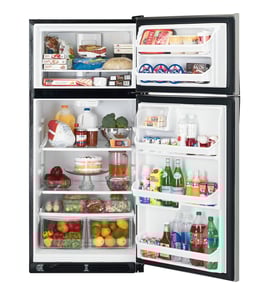


What are the disadvantages of a top mount fridge?
A top-mount refrigerator like the Frigidaire FFHT1831QS3 is usually affordable and reliable, but its main disadvantages are convenience and organization: fresh-food items sit lower (more bending), freezer access is higher, and you typically get fewer built-in storage and dispenser features than many bottom-freezer designs.
Common drawbacks you may notice
- More bending for daily use: the refrigerator compartment is below the freezer, so you reach down more often for fresh food.
- Less flexible organization: many top-mount models have fewer premium storage features than some bottom-mount styles.
- Fewer “built-in” features: water and ice dispensers are less common on basic top-mount designs.
- Door swing clearance matters: you may need extra side clearance if the hinge side is near a wall.
- Garage and hot/cold location limits: performance drops if the room is too cold or too hot.
Installation and space considerations (FFHT1831QS3)
Our installation guidance for this model calls for clearances that help airflow and door operation. See the installation guide.
| Clearance area | Typical guidance for this model |
|---|---|
| Sides and top | 3/8 inch |
| Back | 1 inch |
| Door hinge side near a wall | Allow extra space to open wider |
Why it matters
Most “disadvantages” show up in day-to-day ergonomics and airflow needs. If you shop or cook often, bending for produce drawers and lower shelves can be the biggest annoyance. If your refrigerator sits tight to cabinetry, the clearance and door swing can be the deciding factor.
Tips to reduce the downsides
- Keep everyday items at eye level on the main shelves.
- Use the crispers for produce only; wrap high-moisture or strong-odor foods.
- Level the cabinet and keep a slight tilt back so doors close and seal well.
- Do not block the toe grille; airflow helps cooling performance.
- If your model has an ice maker but no water hookup, keep the ice maker turned off.
Last updated: February 2026
Is a top mount or bottom mount fridge better?
A top-mount refrigerator like the Frigidaire FFHT1831QS3 is better when you use the freezer often and want the lowest purchase and repair complexity; a bottom-mount is better when you want the fresh-food section at eye level and bend less for everyday items.
Quick comparison
| Feature | Top-mount (freezer on top) | Bottom-mount (freezer on bottom) |
|---|---|---|
| Best for | Frequent freezer use | Frequent fresh-food use |
| Everyday bending | More bending for fridge items | Less bending for fridge items |
| Freezer access | Easy, eye-level | Often a pull-out drawer |
| Typical cost and complexity | Lower | Higher |
| Organization style | Shelves in freezer | Drawer-style freezer storage |
How to choose for your kitchen and habits
- Choose top-mount if you grab frozen foods daily, want simpler mechanics, and prefer a lighter freezer door.
- Choose bottom-mount if you cook with fresh ingredients often and want the refrigerator shelves and crispers higher.
- If you have a tight space, compare door swing and clearance needs before deciding.
- If you are placing the refrigerator in a garage or warm area, confirm the allowed temperature range for reliable cooling.
- If you are sensitive to noise, remember high-efficiency refrigerators can sound different even when operating normally.
Installation and clearance notes (often overlooked)
Proper airflow and leveling affect performance on either style. For FFHT1831QS3, we follow the setup guidance in the installation guide:
- Keep the toe grille area clear for airflow.
- Plan for typical clearances of 3/8 inch at the sides and top and 1 inch at the back.
- Level the cabinet so all corners sit firmly on the floor.
- Tilt the cabinet slightly back (about 1/4 inch) so doors close and seal correctly.
Why it matters
The “better” fridge is the one that matches how you reach for food. Layout drives convenience, but clearances, door sealing, and airflow drive temperature stability and energy use.
Last updated: February 2026
Why is my Frigidaire top mount freezer not freezing?
If your Frigidaire FFHT1831QS3 top-mount freezer is not freezing, the most common causes are an incorrect control setting (including being set to “0/OFF”), blocked air vents, or a fan or defrost problem that prevents cold air from circulating. Start with the control and airflow checks in the owner's manual.
Quick checks (fastest fixes first)
- Make sure the refrigerator/freezer control is not set to “0” or “OFF”; that setting stops the compressor (the unit will not cool).
- After any temperature change, allow 24 hours for temperatures to stabilize.
- Do not block freezer or refrigerator air vents with food; airflow is required for proper cooling.
- If the refrigerator was just plugged in or restarted, let it run with doors closed for at least 8 hours before loading food.
- If the unit is in a defrost cycle, wait about 20 minutes and recheck cooling.
- Confirm the door closes fully and the gasket seals all the way around.
What to listen and look for
A freezer that is warm usually points to an airflow or cooling-system issue.
| What you notice | What it usually means | What to do next |
|---|---|---|
| Compressor is quiet and not running | Control set to “0/OFF” or unit is between cycles/defrost | Recheck control setting; wait 20 minutes; then monitor |
| Freezer is cool but not freezing | Temperature not set cold enough or airflow restricted | Adjust colder; clear vents; wait 24 hours |
| Frost or ice buildup on freezer back wall | Defrost system problem | Check for heavy frost; plan a defrost-system diagnosis |
| No fan sound from freezer area | Evaporator fan not running | Inspect for ice blockage; consider fan motor service |
Parts that commonly relate to “not freezing” symptoms
These parts are often involved when cooling is weak or airflow stops:
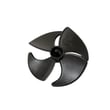
- Evaporator fan motor (moves cold air): refrigerator motor 242077705
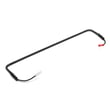
- Defrost heater (prevents ice from choking airflow): refrigerator defrost heater 242044008
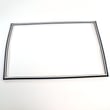
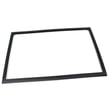
- Door gasket (prevents warm air leaks): Frigidaire refrigerator door gasket (white) 242193206 or Frigidaire refrigerator door gasket (black) 242193212
Why it matters
When airflow is blocked or the evaporator area is iced over, the freezer cannot pull down to safe temperatures, and the refrigerator section often warms up too. Correct control settings and clear vents prevent many “not freezing” complaints.
Last updated: February 2026
What is the most common problem with Frigidaire refrigerators?
The most common problem we see with Frigidaire refrigerators like model FFHT1831QS3 is a cooling complaint: the refrigerator section gets warm, temperatures swing, or frost builds up because airflow or heat removal is restricted. Ice maker water-supply issues are another frequent cause of “not making ice” reports.
Most common symptoms and what they usually point to
- Fresh food warm, freezer OK: restricted airflow, evaporator fan issue, or frost buildup
- Both sections warm: dirty condenser area, condenser fan problem, or sealed-system/compressor issue
- Heavy frost on freezer back wall: defrost system problem (heater, thermostat, timer/control)
- Door won’t seal, moisture or frost near door: gasket not sealing or door alignment issue
- Ice maker not working (if equipped): water supply/shutoff valve issue, kinked line, or low flow
For model-specific operating checks and “common occurrences,” use the owner's manual.
Quick checks you can do first (no parts required)
- Confirm the control is not set to “0” or “OFF” and the unit is not simply in a defrost cycle (the manual notes a defrost wait can be about 20 minutes).
- Make sure vents inside the refrigerator and freezer are not blocked by food packages.
- Listen for the evaporator fan (freezer) running when the door switch is held closed.
- Inspect door sealing: close a dollar bill in several spots; resistance should feel consistent.
- If you have an ice maker, verify the water line is flushed and the shutoff valve is fully open; the manual also advises not using a self-piercing shutoff valve.
Parts that commonly solve cooling and frost complaints
If your troubleshooting points to a failed component, these model-compatible parts are common fixes:
| Symptom | Common fix | Example part for FFHT1831QS3 |
|---|---|---|
| Frost buildup, warm fridge | Defrost heat not melting frost | Refrigerator defrost heater 242044008 |
| Warm fridge, noisy or no airflow | Evaporator fan not moving air | Refrigerator motor 242077705 |
| Moisture/frost at door edge | Door seal leaking air | Frigidaire refrigerator door gasket (white) 242193206 or Frigidaire refrigerator door gasket (black) 242193212 |
Why it matters
Cooling problems usually start small (longer run times, minor frost, warmer shelves) and then snowball into spoiled food, excessive frost, and higher energy use. Catching airflow and door-seal issues early prevents bigger repairs.
Last updated: February 2026