 Installation guide
 Owner’s manual



What is the most common problem with GE dishwashers?
The most common GE dishwasher problems are draining issues (water left in the tub), wash performance problems (not cleaning or not drying), and “won’t start” symptoms caused by a door-latch or power interruption. For GE model GSD4000N20WW, start with the basic checks in the GSD4000N20WW owner’s manual.
- Not draining: clogged drain path, kinked drain hose, or a drain component issue
- Not cleaning well: low incoming water temperature, blocked spray arm holes, or loading issues
- Not drying: rinse agent empty, heater-related issue, or plastic items placed too low
- Won’t start: door not fully latched, tripped breaker, or control problem
- Leaks/odor: food debris buildup, door seal area contamination, or installation/drain routing problems
- Confirm hot water temperature: GE specifies incoming water should be 120°F to 150°F for effective cleaning.
- Check rinse agent: keeping rinse agent filled helps prevent spots and improves drying.
- Inspect spray arms: remove debris from holes and make sure arms spin freely.
- Verify drain routing: look for kinks and clogs; confirm the drain connection is clear.
- Reset power: turn the breaker off for about 30 seconds, then retry.
| Symptom | Common area to inspect | Example part for this model |
|---|---|---|
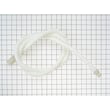
| Water won’t drain | Drain hose, drain mechanism | Dishwasher drain hose WD24X10014 |
| Poor cleaning | Spray arm(s), circulation | Dishwasher spray arm, lower WD12X10244 |
| Poor drying | Heating circuit, rinse agent use | Dishwasher heating element WD05X26780 |
Drain and wash issues often start small (a partial clog, low water temperature, or blocked spray arm) and then snowball into dirty dishes, standing water, and odor. Fixing the basics early helps protect the pump, heater, and tub components.
Last updated: January 2026
What's the lifespan of a GE dishwasher?
A GE dishwasher like model GSD4000N20WW typically lasts 10 to 12 years. With consistent cleaning, correct detergent use, and proper water temperature, many households see 10 to 15 years of service; heavy daily use can shorten lifespan to 8 to 10 years.
- Water quality and temperature: For effective cleaning, the incoming water should be 120°F to 150°F.
- Routine cleaning: Keeping the tub, spray arms, and drain path clear reduces strain on the circulation and drain systems.
- Detergent and rinse agent use: Using dishwasher-approved detergent and a rinse agent helps prevent buildup and spotting.
- Loading habits: Overloading can block spray arms and reduce cleaning performance.
- Installation quality: A stable, correctly installed dishwasher is less likely to develop leaks, vibration issues, or service access problems.
Use these habits to reduce wear on key parts like the circulation pump, heating element, and drain components:
- Run hot water at the sink until it is hot before starting a cycle.
- Clean the interior and remove debris from the bottom of the tub regularly.
- Inspect and clear spray arm holes if you see poor cleaning.
- Use rinse agent consistently to reduce film buildup.
- Address slow draining early (kinks, clogs, or drain restrictions).
| Symptom | What it often indicates | What to check first |
|---|---|---|
| Dishes not drying | Heating or rinse agent issue | Rinse agent level, cycle selection, heating performance |
| Not draining | Drain restriction or drain mechanism issue | Drain hose routing, air gap (if used), drain components |
| Not cleaning well | Spray or circulation problem | Spray arms, loading, water temperature |
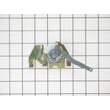
If your GSD4000N20WW is not draining, a failed drain component is a common cause; the GE dishwasher drain solenoid assembly WD21X10268 is one example of a model-matched part that can be involved in drain operation.
Knowing the typical lifespan helps you decide whether to repair or replace. If your dishwasher is under about 10 years old, fixing a specific failure (drain, heating, spray) is often the most cost-effective path.
For model-specific operating and care guidance, follow the GSD4000N20WW owner’s manual.
Last updated: January 2026
Can a clogged drain cause an FTD error?
Yes. On the GE GSD4000N20WW dishwasher, an FTD (fail to drain) condition commonly happens when water cannot leave the tub due to a clog in the drain path (air gap, disposer connection, hose, sump area) or an improper drain setup.
- Cancel the cycle and let the unit try to drain; then check for standing water.
- If your sink is slow to drain, clear the sink drain first (a clogged sink line can block dishwasher draining).
- If the dishwasher drains into a garbage disposer, run the disposer to clear it.
- If you have an air gap, clean it (a blocked air gap can stop draining).
- Inspect the drain hose for kinks, crushing, or a low spot that traps debris.
The installation method can directly cause “won’t drain” symptoms. The installation instructions call out that an air gap must be used when the drain connection is low, and elevated installs need a high drain loop.
| Installation detail | What it affects | What “bad” looks like |
|---|---|---|
| Air gap used when required | Prevents backflow and improves drain performance | Water backs up, FTD symptoms, poor draining |
| High drain loop (proper height) | Helps prevent sink water from flowing back | Hose routed low, water returns to tub |
| Disposer/waste tee connection | Prevents blockage at the sink connection | Knockout plug left in disposer inlet, heavy restriction |
For the exact routing and height requirements, follow the GSD4000N20WW installation guide.
If the drain path and plumbing are correct, the restriction is often inside the dishwasher at the sump area or drain components.
Common part-related causes include:
- Drain hose restricted or internally clogged: dishwasher drain hose WD24X10014
- Drain solenoid not opening the drain valve (on models that use one): GE dishwasher drain solenoid assembly WD21X10268
- Debris affecting pump flow (impeller area): dishwasher pump impeller kit WD19X10038
An FTD condition is not just an inconvenience; standing water can redeposit soil on dishes, create odors, and keep the unit from completing the cycle properly. Fixing the drain restriction or correcting the drain loop/air gap setup restores normal drain performance.
Last updated: January 2026
Does a GE dishwasher have a filter that needs to be cleaned?
Yes. GE dishwashers such as model GSD4000N20WW use a soil-handling system at the bottom of the tub, and keeping that area clean helps prevent odors, poor cleaning, and drain problems. For your exact filter and cleaning steps, follow the GSD4000N20WW owner's manual.
Many GE dishwashers either have a removable filter assembly or a self-cleaning filter with a sump area that still benefits from routine cleaning.
- Turn off power at the breaker before reaching into the sump area.
- Pull out the lower rack so you can access the tub bottom.
- Look for a twist-lock filter screen or cover near the center or back of the tub bottom.
- Rinse the filter or screen under warm water; use a soft brush for stuck-on debris.
- Wipe the sump area clean and remove labels, glass, bones, and food scraps.
- Reinstall the filter or cover fully so the dishwasher seals and circulates water correctly.
A clogged filter area is a common cause of performance complaints.
| What you notice | What it often means | What to do first |
|---|---|---|
| Grit on glasses | Soil recirculating | Clean filter area; verify spray arms spin freely |
| Bad smell | Food debris trapped | Clean filter area; run a cleaning cycle |
| Standing water | Drain path restricted | Check filter area; inspect drain hose routing |
| Poor drying | Water not heating or rinse aid missing | Confirm hot water temp and rinse aid use |
If the dishwasher still will not drain or clean well after cleaning the filter area, these model-matched parts are commonly involved:
- Dishwasher drain hose WD24X10014 (kinks, clogs, or improper high loop)
- GE dishwasher drain solenoid assembly WD21X10268 (drain valve not opening)
- Dishwasher heating element WD05X26780 (poor drying and weak cleaning when water is not heated)
A clean filter and sump help the circulation pump move water at full pressure, keep spray arms from clogging, and reduce the chance of drain backups. The manual also emphasizes proper water temperature (about 120°F to 150°F) and correct detergent use, which both affect cleaning results.
Related help: GE dishwasher error codes
Last updated: January 2026





