What's the difference between a rotary tool and a Dremel?
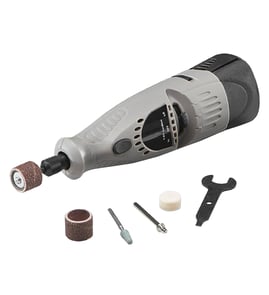
A rotary tool is the general name for a small, high-speed handheld tool that spins accessories for cutting, sanding, grinding, polishing, and engraving. Dremel is a brand that makes rotary tools; your Dremel model 232-5 is a specific rotary (moto-flex) tool.
Quick definition
- Rotary tool: The tool type (category) defined by a rotating collet/chuck that drives bits and attachments.
- Dremel: A well-known brand of rotary tools and accessories.
- Dremel 232-5: A specific model within that brand.
Practical differences you will notice
Even though “Dremel” and “rotary tool” are often used interchangeably, brand and model can affect day-to-day use:
- Accessory fit: Rotary tools commonly use collets and/or chucks; the exact sizes supported can vary by model.
- Speed control: Some tools have variable speed; others are single-speed.
- Power source: Corded, battery-powered, or flex-shaft style setups change portability and torque feel.
- Ergonomics: Grip size, vibration, and balance differ across brands and models.
- Accessory ecosystem: Dremel-branded attachments are widely available, but many rotary accessories are universal if the shank size matches.
Rotary tool vs. Dremel at a glance
| Term | What it means | Example |
|---|---|---|
| Rotary tool | Generic tool category | Any handheld high-speed tool that spins bits |
| Dremel | Brand name | Dremel rotary tools and accessories |
| 232-5 | Specific model | Dremel 232-5 moto-flex tool |
Why it matters when you are buying parts or accessories
Using the correct model number (232-5) helps you match the right attachments and service parts, especially for items like collets, chucks, brushes, switches, cords, and flex-shaft components.
Helpful related DIY reading
For general repair readiness and safe troubleshooting habits, we recommend: are diy appliance repairs safe.
Last updated: February 2026
What is the best rotary?
The “best” rotary tool depends on what you do most often. For most DIY cutting, sanding, grinding, and polishing jobs, we recommend choosing a variable-speed Dremel rotary tool with strong accessory support and comfortable handling, then matching the tool to your typical materials and run time.
How to choose the best rotary tool for your needs
Look for these features first; they make the biggest difference in real-world use:
- Variable speed control (better control on plastic, wood, and polishing)
- Power and torque (more torque helps prevent bogging down under load)
- Comfort and balance (less hand fatigue during carving or sanding)
- Accessory and attachment compatibility (cutoff wheels, sanding drums, engraving bits)
- Corded vs. cordless (corded for long sessions; cordless for portability)
- Collet size options (common sizes like 1/8 inch; adapters expand bit choices)
Quick comparison: corded vs. cordless
| Feature | Corded rotary tool | Cordless rotary tool |
|---|---|---|
| Best for | Long sessions, steady power | Quick jobs, portability |
| Power consistency | High | Medium to high (battery-dependent) |
| Weight | Usually lighter | Often heavier (battery) |
| Convenience | Outlet needed | No cord, easier maneuvering |
What to consider for Dremel model 232-5
Your Dremel 232-5 is listed as a moto-flex tool, which is typically used for detailed work where control matters as much as power. When you are comparing “best” options, prioritize smooth speed control, low vibration, and easy accessory changes for the kind of precision work a flex-shaft style setup is known for.
Why it matters
Rotary tools can all look similar, but the right match prevents burned materials, broken accessories, and hand fatigue. Choosing the right speed range and torque for your most common tasks gives cleaner cuts, better finishes, and longer accessory life.
Helpful DIY reference
If you are comparing models or trying to confirm you have the right model number before ordering accessories, use how to find your appliance model number (and what it means for parts).
Last updated: February 2026
Which Dremel is best for beginners?
For most beginners, we recommend starting with a variable-speed Dremel rotary tool that feels comfortable in your hand and has enough power for cutting, sanding, and light grinding. A corded model is usually the easiest, most consistent choice for learning; cordless is great for convenience once you know your typical projects.
Quick picks by beginner goal
- General DIY and repairs: choose a corded, variable-speed Dremel for steady power and long run time.
- Crafts and fine detail (engraving, polishing): choose a lighter, pen-style tool for control.
- Cordless convenience: choose a battery model if you work away from outlets or do quick jobs.
- Room to grow: choose a kit with common accessories (cutoff wheels, sanding drums, polishing bits).
What to look for (beginner-friendly features)
A beginner-friendly rotary tool setup usually includes these basics:
- Variable speed control (low speed for polishing, higher for cutting)
- Comfortable grip and low vibration
- Easy collet or chuck changes
- Common accessory compatibility (cutting, sanding, grinding, polishing)
- A case or organizer so accessories do not get lost
Corded vs cordless: what changes for a beginner
| Feature | Corded rotary tool | Cordless rotary tool |
|---|---|---|
| Power consistency | Most consistent | Varies by battery and load |
| Run time | Unlimited | Limited by battery |
| Best for | Learning basics, longer sessions | Quick tasks, portability |
| Weight | Often lighter | Often heavier (battery) |
Why it matters
When you are learning, consistent speed and comfortable handling prevent burned materials, broken cutoff wheels, and chatter marks. Once you have the basics down, you can choose a more specialized tool based on the materials you use most (wood, metal, plastic, or light masonry).
Model note for Dremel 232-5
The Dremel 232-5 is a Moto-Flex style tool; beginners typically do best by matching the tool and accessories to the work (detail work vs heavier cutting) and practicing speed control on scrap material first.
For general DIY safety and setup habits before you start, use our are diy appliance repairs safe guide.
Last updated: February 2026
Do Dremel accessories fit all dremels?
No. Dremel accessories are not all universal; fit depends on the specific tool model (including your Dremel 232-5 moto-flex tool), the attachment interface (threaded nose, collet, or chuck), and the accessory’s shank size. Many bits use a 1/8-inch (3.2 mm) shank, but some attachments require a specific nose cap or adapter.
What usually fits vs. what doesn’t
Most compatibility issues come from how the accessory mounts and the size of the bit shank.
- Commonly compatible: standard rotary bits with 1/8-inch (3.2 mm) shanks used in a collet or keyless chuck
- Sometimes compatible: attachments that screw onto a threaded nose (only if your tool has the right nose threads)
- Often not compatible: specialty attachments made for specific models, older attachment systems, or tools with non-standard noses
- May need an adapter: older attachments or accessories designed for a different nose cap style
- Always check: maximum accessory diameter and speed rating for safe use
Quick compatibility checklist (before you buy)
Use this list to match accessories to your Dremel 232-5.
| What to check | What it means | Typical value you’ll see |
|---|---|---|
| Shank size | Bit stem diameter must match collet/chuck | 1/8-inch (3.2 mm) is most common |
| Mounting style | Bit in collet/chuck vs. screw-on attachment | Collet/chuck or threaded nose |
| Speed range | Accessory must be rated for your tool’s RPM | Varies by accessory |
| Clearance | Some attachments need space around the nose | Depends on attachment |
Why it matters
Using the wrong accessory can cause wobble, poor cutting/grinding results, or accessory breakage. Matching the shank size and mounting style helps your Dremel 232-5 run smoother and keeps the accessory centered.
Helpful DIY reference
If you’re troubleshooting a tool that won’t run after changing accessories, use a meter to confirm power and switch function: how to use a multimeter to test electrical parts video.
Last updated: February 2026
Will Dremel accept 1/4 shank?
No. The Dremel 232-5 moto-flex tool is designed around smaller rotary-tool accessories (typically 1/8-inch shank), so a 1/4-inch shank accessory is too large to fit the collet and is not a safe match for this tool.
What fits a Dremel 232-5 (typical shank sizes)
Most Dremel rotary accessories use a 1/8-inch shank, and some specialty accessories use smaller shanks with an adapter. A 1/4-inch shank is generally intended for heavier-duty tools.
- 1/8-inch shank: standard for most Dremel bits and accessories
- Smaller shanks: sometimes used with adapters/collets
- 1/4-inch shank: common for die grinders and heavier rotary tools
Why we do not recommend forcing a 1/4-inch shank
Even if you could improvise a way to clamp it, a 1/4-inch accessory is usually larger and heavier. That increases vibration and load, which can damage the tool and create a safety hazard.
- Higher rotating mass can cause excessive vibration
- Extra load can overheat the motor or flex-shaft
- Poor clamping can let the bit slip or wobble
- Larger accessories can exceed safe operating conditions
Quick compatibility check
Use this as a fast way to decide what you need.
| What you have | What it means | Best next step |
|---|---|---|
| 1/8-inch shank accessory | Standard Dremel fit | Use it with the correct collet and tighten securely |
| 1/4-inch shank accessory | Too large for most Dremel collets | Use a die grinder or a tool designed for 1/4-inch shanks |
Why it matters
Matching the shank size to the correct collet keeps the accessory centered and stable. That protects your Dremel 232-5 and helps you get cleaner cuts, sanding, or grinding without chatter.
For help confirming your exact model number before ordering accessories, use how to find your appliance model number (and what it means for parts).
Last updated: February 2026