Owner’s manual
 View engine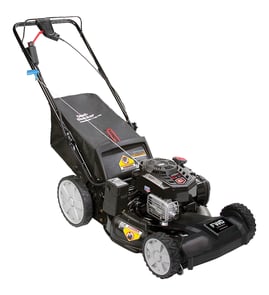



What year is Craftsman Model 917372910?
Craftsman walk-behind mower model 917372910 is documented in an owner’s manual that was printed November 19, 1994, so this model is from the mid-1990s (1994 era). For the exact build year of your specific mower, use the serial number on the rear housing decal and match it using the owner's manual.
What we can confirm for model 917372910
The documentation for this exact model number includes:
- Owner’s manual labeled MODEL 917.372910
- Manual print date: 11/19/94
- Mower type: 22-inch rear discharge, power propelled, 3-in-1 convertible rotary mower
- Engine model reference shown in the manual: 143.956000
How to find the exact year for your specific mower
Model numbers often span multiple production runs, so the serial number is the best way to pin down the exact year.
- Locate the model and serial number decal on the rear of the mower housing
- Write down the full serial number exactly as shown
- Compare the serial format guidance in the owner's manual
- If the decal is missing or unreadable, check for replacement hardware and keep records of any repairs
Quick guide: model year vs. your mower’s build date
| What you have | What it tells you | Best use |
|---|---|---|
| Model number (917372910) | The design family and parts fit | Ordering correct parts |
| Manual print date (11/19/94) | The model’s documentation era | Estimating the model’s timeframe |
| Serial number (on rear decal) | Your mower’s specific build info | Determining the exact year |
Why it matters
Knowing the correct year helps you avoid mismatched parts when servicing common wear items like the blade, drive system, and fasteners. For example, if you are replacing the blade or drive components, matching by model and serial reduces fit issues.
Last updated: February 2026
What are the common problems with Craftsman lawn mowers?
Common problems on the Craftsman 917372910 walk-behind mower include no-start conditions, loss of power, uneven cutting, excessive vibration, starter rope that is hard to pull, loss of drive, and poor bagging. Most of these trace back to basic maintenance items, blade and adapter issues, or grass buildup under the deck; see the owner's manual troubleshooting chart for model-specific checks.
Most common symptoms and what usually causes them
- Won’t start: dirty air filter, stale fuel, water in fuel, spark plug or wire issue, control bar not held in the run position
- Loss of power: clogged deck underside, dirty air filter, cutting too much grass, walking speed too fast
- Poor cut (uneven): worn or bent blade, uneven wheel height settings, low engine speed
- Excessive vibration: loose blade, damaged blade adapter, bent blade, bent crankshaft
- Starter rope hard to pull: blade dragging in grass, brake engaged when control bar is released
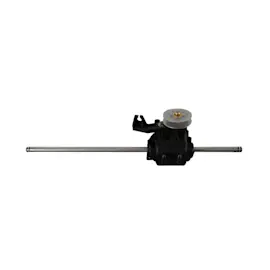
- Loss of drive (self-propel): drive belt slipping or worn, drive wheels not turning with drive control engaged
Quick checks we recommend first (fast, low-cost)
- Tip the mower safely (spark plug wire off) and clean packed grass from under the deck.
- Confirm fresh fuel and correct starting technique; over-priming can flood the engine.
- Inspect the blade for damage and tightness; replace if bent or badly worn.
- Verify wheel height adjusters match side-to-side.
- If it will not self-propel, inspect the drive system and belt condition.
Parts that commonly solve these issues
| Problem | Part to inspect/replace | Example part for this model |
|---|---|---|
| Vibration, poor cut | Blade and blade mounting | Lawn mower blade 532406713 |
| Vibration, blade won’t stay tight | Blade adapter | Lawn mower blade adapter 581547901 |
| Loss of drive | Drive belt | Belt 532157769 |
Why it matters
Catching these problems early prevents bigger failures (for example, running with a loose blade can damage the blade adapter and crankshaft). Keeping the deck clean and the blade sharp also improves cut quality and reduces engine strain.
Last updated: February 2026
Is it cheaper to repair or replace a lawnmower?
For a Craftsman walk-behind mower like model 917372910, repairing is usually cheaper when the fix is a common wear item (blade, belt, drive parts) and you do the work yourself. Replacement is typically cheaper when the engine or deck is badly damaged or multiple major systems need work.
Quick rule of thumb
Repair your mower when the problem is isolated and parts are readily available. Replace it when the repair cost approaches the value of a comparable mower, or when reliability will still be poor after the repair.
- Repair is usually the better value for:
- Dull, bent, or damaged blade
- Slipping or broken drive belt
- Worn drive control components
- Height adjustment issues
- Bagging or discharge problems caused by buildup or wear
- Replace is usually the better value for:
- Cracked or severely rusted deck
- Repeated engine no-starts after fuel and ignition basics are addressed
- Multiple failures at once (drive + deck + engine)
- Severe vibration from a damaged crankshaft (often after striking an object)
What we see most often on this model
The owner's manual for model 917372910 calls out routine maintenance and common fixes such as blade service/replacement, drive belt adjustments, and troubleshooting steps. Those are the types of repairs that usually keep total cost low.
Here are examples of common, cost-effective repairs using parts available for this model:
| Symptom | Likely repair | Example part on this model |
|---|---|---|
| Poor cut quality, tearing grass | Sharpen or replace blade | Lawn mower blade 532406713 |
| Mower will not self-propel or slips | Refit or replace drive belt | Belt 532157769 |
| Uneven cut height or hard-to-adjust height | Inspect/replace adjuster hardware | Husqvarna lawn mower height adjuster knob 532701037 |
Why it matters
A walk-behind mower’s best value comes from keeping the cutting system and drive system maintained. A sharp blade, correct belt tension, and clean underside of the deck reduce strain on the engine and help prevent repeat failures.
How to decide in 5 minutes
- Add up parts you know you need (blade, belt, knobs, wheels).
- Add your time (DIY) or labor (if paying someone).
- Compare that total to a replacement mower you would actually buy.
- If the deck and engine are solid, repairs usually win.
- If the deck is failing or the engine has internal damage, replacement usually wins.
Last updated: February 2026