


How do I know if my lawn mower carburetor is bad?
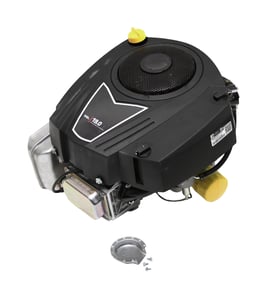
If your Kohler SV620-3210 lawn and garden engine is hard to start, only runs with the choke on, surges, stalls, or runs rough, the carburetor is either dirty, leaking, or internally worn and no longer mixing fuel and air correctly.
Common signs the carburetor is the problem
- Engine starts then dies unless you keep the choke partly on
- Hunting or surging at idle (RPM goes up and down)
- Stalling when you engage the blades or put the mower under load
- Rough running, sputtering, or backfiring through the intake
- Strong fuel smell, wet air filter, or fuel dripping (flooding)
- Poor power and higher than normal fuel use
Quick checks before you replace anything
These checks help separate a carburetor issue from fuel, ignition, or airflow problems.
- Fuel quality: Drain old fuel; refill with fresh gasoline (stale fuel causes lean running and varnish).
- Air filter: Inspect and replace if dirty or oil-soaked (restricted airflow mimics carb trouble).
- Choke and throttle linkages: Make sure the choke plate fully opens and closes and the governor linkage moves freely.
- Fuel flow: Confirm steady flow from the fuel line to the carb (a clogged fuel filter or pinched line looks like a bad carb).
- Spark plug condition: A fouled plug can cause misfire that feels like a carb issue.
“Bad” vs “dirty” carburetor: what’s the difference?
In many cases, the carburetor is not failed; it is clogged with varnish or has a sticking float/needle.
| What you see | Most likely cause | Typical fix |
|---|---|---|
| Runs only on choke | Clogged main jet or air leak | Clean carb and jets; check intake gaskets |
| Fuel dripping, black smoke | Float stuck or needle not sealing | Clean bowl; inspect float and needle |
| Surging at idle | Lean condition (dirty pilot circuit or air leak) | Clean idle circuit; check vacuum leaks |
| Starts with fuel primed into intake then dies | Fuel not metering through carb | Clean carb; verify fuel delivery |
Why it matters
A carburetor that is running lean can cause overheating and poor performance; a carburetor that is flooding can wash oil off cylinder walls and foul the spark plug. Catching the symptoms early helps protect the engine and reduces downtime.
Helpful DIY skill for troubleshooting
If you are checking solenoids, safety switches, or ignition kill circuits while diagnosing a “carb problem,” use a meter the right way: how to use a multimeter to test electrical parts video.
Last updated: February 2026
What is the carburetor part number for the Kohler SV620-3210?
For the Kohler SV620-3210 lawn and garden engine, the carburetor part number depends on the engine’s spec number and carburetor configuration (choke style, fuel solenoid, and linkage). We match the correct Kohler carburetor by using the full model and spec details from the engine ID tag, then selecting the exact carburetor used on that build.
How to identify the correct carburetor for SV620-3210
Use the engine identification label (typically on the blower housing or valve cover area) and record:
- Model: SV620-3210
- Spec number (most important for carb selection)
- Serial number
- Any carb features present (fuel shutoff solenoid, primer, manual choke)
If your carb has a fuel solenoid, the replacement carburetor must include the same solenoid setup or be compatible with your wiring and charging system.
Common carburetor identifiers to compare
Before ordering, compare these physical details on your current carburetor:
- Mounting bolt pattern and throat size
- Choke lever location and linkage attachment points
- Fuel inlet direction (left/right) and hose size
- Presence of an anti-afterfire fuel solenoid (2-wire connector)
- Main jet style (fixed jet vs. serviceable jet)
Quick comparison checklist
| What you see on the engine | What it usually means for the carburetor |
|---|---|
| 2-wire connector on carb bowl | Carburetor includes a fuel shutoff solenoid |
| Manual choke cable attached | Carburetor has a choke shaft/lever for cable |
| Surging at no-load | Often a dirty main jet or air leak, not always a bad carb |
Why it matters
Kohler SV-series engines often share similar-looking carburetors across multiple horsepower ratings, but the spec number controls the exact calibration and linkage. Using the wrong carburetor can cause hard starting, hunting/surging, black smoke, or poor power under load.
Helpful DIY resource
If you need to confirm whether a solenoid, fuse, or wiring issue is preventing fuel flow, use how to use a multimeter to test electrical parts video.
Last updated: February 2026
How to adjust governor linkage on Kohler engines?
To adjust the governor linkage on a Kohler engine like model SV620-3210, we set the governor arm to the wide-open throttle position, rotate the governor cross shaft in the correct direction until it stops, then tighten the governor arm clamp so the linkage is synchronized.
Before you start (safety and setup)
- Park the mower or equipment on level ground and set the parking brake.
- Turn the engine OFF and let it cool completely.
- Disconnect the spark plug wires to prevent accidental starting.
- Verify the throttle control and cable move freely from idle to fast.
- Inspect the governor spring and linkage for bends, wear, or binding.
Governor adjustment steps (typical Kohler procedure)
- Move the throttle control to FAST (full throttle).
- Loosen the nut or bolt that clamps the governor arm (governor lever) to the governor cross shaft.
- Hold the governor arm so the carburetor throttle is held wide open.
- Rotate the governor cross shaft until it stops (this takes up internal governor slack).
- While holding both positions, tighten the governor arm clamp nut or bolt.
- Reconnect spark plug wires and test run; confirm the engine accelerates smoothly and does not surge.
Which way do I rotate the governor cross shaft?
Rotation direction varies by Kohler engine family and linkage layout. Use this quick check: rotate the cross shaft gently one way, then the other; the direction that moves the throttle toward OPEN is the direction you hold while tightening the clamp.
| What you see | What it usually means | What to do |
|---|---|---|
| Throttle plate opens as you rotate the shaft | Correct direction | Hold there and tighten clamp |
| Throttle plate closes as you rotate the shaft | Wrong direction | Rotate the opposite way |
Why it matters
A correctly set governor keeps engine RPM stable under load (blades engaging, hills, thick grass). If the linkage is mis-set, you can get hunting/surging, weak power, or overspeed risk.
Helpful DIY skill for this job
If you need to diagnose a kill wire, charging lead, or loose connector while troubleshooting surging, we recommend using a meter correctly: how to use a multimeter to test electrical parts video.
Last updated: February 2026
How do I figure out what carburetor I need?
For a Kohler SV620-3210 lawn and garden engine, the right carburetor is the one that matches your engine’s exact model and spec details (not just airflow). We recommend identifying the engine spec and linkage/choke style first, then matching the carburetor by fit and configuration so it bolts on and tunes correctly.
Step 1: Confirm the exact engine identification
Use the engine’s ID tag to capture the full information before shopping.
- Model: SV620 (your series)
- Full model number: SV620-3210
- Spec number (often the key to the correct carburetor)
- Serial number (helps confirm production variation)
If the tag is missing or hard to read, use how to find your appliance model number (and what it means for parts) to locate and interpret the identification markings.
Step 2: Match the carburetor by configuration (not “bigger CFM”)
Small V-twin mower engines are calibrated for a specific carburetor size and governor response. A “larger” carburetor usually hurts low-speed torque, drivability, and fuel economy.
Check these fit points:
- Mounting pattern (bolt spacing and intake flange style)
- Choke type (manual lever vs. cable, or electric/solenoid style)
- Throttle/governor linkage (arm orientation and connection points)
- Fuel inlet direction (to avoid hose kinks)
- Anti-afterfire fuel shutoff solenoid (present on many setups)
Quick comparison: common carburetor selection paths
| What you have | What to match | Why it matters |
|---|---|---|
| SV620-3210 with a readable spec number | Carburetor listed for that spec | Best bolt-on fit and correct calibration |
| SV620-3210 but spec unknown | Match by mounting + linkage + choke + solenoid | Prevents wrong throttle/choke operation |
| Engine surges or hunts | Clean/rebuild first, then replace if needed | Many “bad carb” symptoms are varnish or air leaks |
Before you buy: rule out look-alike problems
These issues often mimic a failing carburetor:
- Clogged fuel filter or restricted fuel line
- Stale fuel or water in fuel
- Dirty air filter
- Intake gasket air leak (lean surge)
- Misadjusted governor linkage
Why it matters
A correctly matched carburetor keeps the Kohler SV620-3210 stable under load, prevents surging, and protects the engine from running too lean (hot) or too rich (fouling plugs).
Last updated: February 2026