Owner’s manual
 Error Codes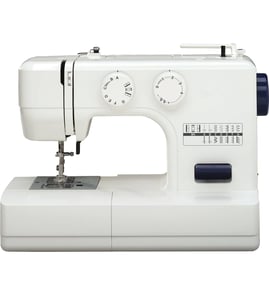


What is a mechanical sewing machine?
A mechanical sewing machine (like the Singer 3116) is a dial and lever controlled machine where you select stitches and adjust settings manually, rather than using a digital screen and buttons. It is designed for straightforward, reliable sewing with hands-on control of stitch and tension.
On the Singer 3116, key sewing functions are adjusted with physical controls such as the stitch length dial, reverse sewing lever, and thread tension dial. These controls directly change how the machine forms stitches.
Common mechanical controls you will use:
- Thread tension dial to balance upper and bobbin thread
- Stitch length dial to change stitch length
- Pattern indicator window to confirm the selected stitch
- Reverse sewing lever to backstitch and lock seams
- Drop feed control for free-motion sewing and darning
For the exact locations and names of these controls on your model, use the diagrams in the 3116 owner's manual.
| Feature | Mechanical sewing machine | Computerized sewing machine |
|---|---|---|
| Stitch selection | Dial/lever | Buttons/touchpad with display |
| Adjustments (length, tension) | Manual dials | Electronic settings |
| Best for | Everyday sewing, learning, simple repairs | Decorative stitches, automation features |
| Typical feel | Direct, hands-on | Guided, menu-based |
Knowing your Singer 3116 is mechanical helps you troubleshoot correctly. Many issues are solved by rethreading, resetting tension, changing the needle, or clearing lint, rather than looking for an error message or software setting.
If the machine binds or the needle will not move, follow a symptom-based checklist like sewing machine needle won't move to pinpoint common mechanical causes.
Last updated: February 2026
How long do mechanical sewing machines last?
A mechanical sewing machine typically lasts 10 to 20 years with normal household use and basic care. For your Singer 3116, consistent cleaning, correct threading, and avoiding jams are what most directly extend service life; see the maintenance and troubleshooting sections in the 3116 owner's manual.
Most mechanical machines like the Singer 3116 fall into these ranges:
| Usage and care level | Typical lifespan | What usually ends the machine’s life |
|---|---|---|
| Light use, cleaned and serviced | 15 to 20+ years | Wear in moving joints, motor or wiring fatigue |
| Regular use, basic cleaning | 10 to 15 years | Timing issues after repeated jams, worn drive components |
| Heavy use, frequent jams, little cleaning | 5 to 10 years | Seized mechanism, damaged hook/bobbin area |
We see the biggest lifespan gains from these habits:
- Clean lint from the bobbin area and feed dogs regularly.
- Change needles on schedule (a bent or dull needle drives skipped stitches and jams).
- Thread correctly (upper thread path and bobbin) to prevent tension-related snarls.
- Use the right needle, fabric, and thread match to reduce strain on the motor and hook.
- Stop immediately if it locks up; forcing the handwheel can knock the machine out of time.
These symptoms usually mean maintenance or an adjustment, not the end of the machine:
- Needle won’t move or machine feels stuck
- Sluggish running or inconsistent speed
- Knocking noises while sewing
- Fabric not feeding smoothly
For step-by-step troubleshooting, use our sewing machine locks up guide.
A Singer 3116 can run for decades, but most early failures come from preventable stress: lint buildup, incorrect threading, and sewing through material that is too heavy for the needle and settings. Reducing jams protects the hook area, feed system, and motor.
Last updated: February 2026
Which is the best Singer heavy duty sewing machine?
If you want a Singer heavy-duty sewing machine for denim, canvas, and other thicker fabrics, the best choice depends on how many stitches and convenience features you want. Your Singer 3116 is a mechanical, home-use machine; with the right needle, thread, and setup it can handle many medium to heavier fabrics.
- Beginner who wants simple and strong: Singer 4423
- More stitch variety for garments and décor: Singer 4432
- Feature-focused (computerized conveniences): Singer 6800C
- Already own a Singer 3116: focus on correct needle size, thread, and fabric handling (it makes the biggest difference)
The Singer 3116 manual emphasizes matching needle size to thread and fabric weight, and using the same thread on top and bottom for best results.
- Use a fresh, straight needle; replace it at the first sign of skipped stitches or thread breakage
- Install the needle correctly: flat side to the back, inserted fully up into the clamp
- Match needle size to fabric weight (heavier fabric needs a larger needle)
- Use polyester thread for synthetics and cotton thread for natural woven fabrics
- Use the same thread type and size in the needle and bobbin
- Sew slowly over thick seams; avoid forcing fabric through the feed dogs
| Fabric type | Typical needle size range | Thread tip |
|---|---|---|
| Quilting cotton, broadcloth | 80/12 to 90/14 | All-purpose polyester or cotton |
| Denim (most garment weights) | 90/14 to 100/16 | All-purpose polyester; longer stitch helps |
| Canvas, heavier layers | 100/16 to 110/18 | Strong polyester; reduce speed |
Most “heavy-duty” complaints come from needle and thread mismatch, a worn needle, or incorrect needle installation. Getting those basics right improves stitch quality, reduces thread breaks, and helps prevent the machine from binding on thick seams.
For Singer 3116 setup details (needle installation, needle types, and fabric recommendations), use the 3116 owner's manual.
Last updated: February 2026
What are the most sought after vintage Singer models?
Some of the most sought-after vintage Singer machines are classic all-metal models known for durability, smooth stitching, and long-term serviceability. Even though your Singer 3116 is a modern mechanical sewing machine, these vintage favorites are often collected for everyday sewing and restoration.
Collectors and sewists commonly look for these models (condition and accessories matter as much as the model number):
- Singer Featherweight 221 and 222: portable, smooth straight stitch, very collectible
- Singer 66 “Red Eye”: iconic decals, strong straight stitch, widely collected
- Singer 99: compact version of the 66, popular for home use
- Singer 201: known for exceptionally smooth straight stitching
- Singer 15: common, rugged, and easy to keep running
The same model can vary a lot in value depending on what is included and how it sews.
- Original finish and decals (less repainting, fewer chips)
- Runs smoothly by handwheel (no binding or grinding)
- Complete accessories (feet, bobbins, attachments, case)
- Original motor and wiring in safe condition
- Clean stitch formation with correct needle and thread
| Model family | Why people want it | Best for |
|---|---|---|
| Featherweight 221/222 | Lightweight, collectible, reliable straight stitch | Travel, piecing, everyday straight stitch |
| 66/99 | Classic look, strong build, easy to find parts | General sewing, restoration |
| 201 | Very smooth, precise straight stitch | Garment sewing, topstitching |
| 15 | Simple, rugged design | Utility sewing, heavier fabrics (with correct setup) |
If you are comparing your Singer 3116 to a vintage Singer, focus on stitch needs and fabric types. Your 3116 manual includes guidance on matching needle type and size to fabric and thread, which is also the key to getting great results on vintage machines. Use the 3116 owner's manual to confirm needle recommendations (for example, standard sharp, ball point, twin needle, and leather needle guidance) and basic maintenance.
For troubleshooting issues that can affect any machine (vintage or modern), use our DIY symptom help like sewing machine locks up.
Last updated: February 2026
What is the most trouble-free sewing machine?
The most trouble-free sewing machine is usually a simple, well-maintained mechanical model with easy threading, steady tension control, and routine cleaning. Your Singer 3116 is built around that idea; following the setup and maintenance steps in the 3116 owner's manual helps prevent the most common “problem” symptoms.
Even the best machines act up when thread, needles, and lint are mismatched. In our experience, the most reliable machines share these traits:
- Mechanical controls (fewer electronics to troubleshoot)
- Easy, repeatable threading path and bobbin loading
- Consistent tension system that is simple to adjust
- Good needle compatibility (correct size and type for the fabric)
- Regular lint removal around the bobbin area and needle plate
When comparing brands and models, we recommend prioritizing basics over extra stitches:
- Stitch essentials: straight stitch, zigzag, buttonhole
- Parts access: easy-to-remove needle plate/bobbin area for cleaning
- Serviceability: common needle system, standard presser feet
- Feel under load: smooth handwheel rotation, no knocking or binding
- Support materials: clear threading diagrams and troubleshooting charts
The Singer 3116 manual troubleshooting guidance points to a few repeat offenders. These are the same issues that affect nearly every home sewing machine:
| Symptom | Most common cause | What to do first |
|---|---|---|
| Upper thread breaks | Incorrect threading or tension too tight | Rethread; lower tension setting |
| Skipped stitches | Needle inserted wrong or damaged | Reinstall needle (flat side to back); replace needle |
| Needle breaks | Wrong needle plate use, bent needle, fabric pulled | Use correct plate; replace needle; guide fabric gently |
| Machine jams/noisy | Lint or thread debris in hook/bobbin area | Clean bobbin area; rethread |
For step-by-step symptom help, use our sewing machine symptoms landing page.
A “trouble-free” machine is usually the one that matches your projects and gets basic care. Correct threading, correct needle selection, and keeping lint out of the bobbin area prevent most jams, thread breaks, and uneven stitches.
Last updated: February 2026