Installation guide
 Owner’s manual
 Error Codes


Is a 7.4 cu ft dryer big?
Yes. A 7.4 cu. ft. drum is considered a large-capacity dryer size, so it is big enough for most families and for bulky items like comforters and towel loads. For your GE GFDN100EL0WW, confirm the exact capacity and load guidance in the owner's manual.
A larger drum lets clothes tumble more freely, which improves airflow and can shorten dry times when the venting is correct.
Common loads that typically fit well in a 7.4 cu. ft. dryer:
- A full family mixed load (shirts, jeans, socks)
- Large towel loads
- Bulky items (comforters, blankets)
- Multiple bedding pieces (sheets plus pillowcases)
- Larger loads without overpacking the drum
| Capacity range | How it’s usually described | Best for |
|---|---|---|
| 5.0 to 6.0 cu. ft. | Standard | Singles, couples, smaller loads |
| 6.1 to 7.0 cu. ft. | Large | Most households |
| 7.1 cu. ft. and up | Extra-large | Families, bulky items, fewer cycles |
Even a big-capacity electric dryer like the GE GFDN100EL0WW can take a long time to dry if airflow is restricted. We recommend:
- Clean the lint screen before every load
- Use the shortest, straightest vent run possible
- Use 4-inch rigid metal ducting when you can
- Avoid crushed or kinked ducting behind the dryer
- Keep the area around and under the dryer free of lint buildup
If you are setting up or reworking the vent, follow the clearances and duct rules in the installation guide.
Last updated: February 2026
How long is a 29 in dryer belt?
A “29-inch dryer belt” is not 29 inches long; it’s a belt size designation. For GE electric dryers like model GFDN100EL0WW, the belt length is typically around 89 to 90 inches (circumference). For the exact belt spec for your unit, confirm it in the GFDN100EL0WW owner's manual.
In many parts listings, “29” refers to a belt style/series (often tied to a common GE belt reference), not the measured length.
Common ways belts are described:
- Series or reference number (example: “29”)
- Rib count (for example, 4-rib)
- Length in inches (circumference)
- Length in millimeters
- Belt profile (multi-rib/poly-V)
Use one of these reliable checks before ordering:
- Look up the drive belt in the model’s parts list and diagram for GFDN100EL0WW
- Read the belt markings printed on the old belt (if it’s still intact)
- Compare rib count and belt width to the original
- Inspect the idler and motor pulley path to ensure the belt routing matches
A belt that is even slightly off can slip, squeal, or break early. It can also cause the drum to stop turning, which leads to “runs but won’t dry” complaints because airflow and tumbling are reduced.
| Listing term | What it usually represents | What you’d measure |
|---|---|---|
| “29 in belt” | Size/series designation | Not 29 inches |
| “89.5 in” | Actual belt circumference | About 89.5 inches |
| “4-rib” | Number of ribs | Rib count on belt |
Last updated: February 2026
What is the most common problem with a GE electric dryer?
The most common problem we see with a GE electric dryer like model GFDN100EL0WW is poor drying or no heat, and the root cause is often restricted airflow (lint buildup or improper/obstructed venting). Heat-related shutdowns and longer dry times frequently trace back to venting issues outlined in the installation guide.
- Clothes take too long to dry: vent duct kinked, crushed, too long, or clogged
- Dryer heats but dries poorly: outside damper stuck, lint screen coated, airflow restricted
- Dryer shuts off mid-cycle: overheating from blocked airflow; safety devices may trip
- Squealing or grinding noise: worn drum support parts (glides, bearings) or blower wheel issues
- Drum tumbles but performance is inconsistent: load size/sorting, moisture sensor contamination
- Clean the lint screen completely (wash off any film if you use dryer sheets).
- Inspect the vent hose behind the dryer for kinks or crushing.
- Confirm the outside wall damper opens easily when the dryer runs.
- Run a timed dry cycle and check for strong airflow at the exterior vent.
- Level the dryer if it shakes or rattles; uneven footing can add noise and wear.
| What you notice | Most likely cause | What to do next |
|---|---|---|
| Long dry times | Obstructed/incorrect ducting | Verify venting setup and clean ducting per the installation guide |
| No heat | Heating circuit issue | Check power supply first; then test heater and thermostats |
| Loud scraping/squeal | Drum support wear | Inspect glides and bearing surfaces; consider dryer drum front glide pad WE03X37318 |
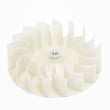
| Rumbling or thumping | Blower wheel or drum support | Inspect blower housing; consider dryer blower wheel WE16X20393 |
Restricted venting does more than slow drying; it raises operating temperatures, which can trigger safety thermostats and shorten the life of heating and drum-support components.
For model-specific operating and care guidance (including safety notes about disconnecting power before service), use the owner's manual.
Last updated: February 2026
Why does my GE dryer keep saying clean lint filter?
On your GE GFDN100EL0WW electric dryer, the “Clean lint filter” message is a reminder, not a sensor. It commonly shows after you press Power, especially if the previous cycle was not finished; it clears after you press Start. See the owner's manual.
The control displays “Clean lint filter” to prompt safe operation and better drying performance.
- It can appear right after you press Power.
- It can appear if the previous cycle was not finished.
- It stays on even if you already cleaned the screen.
- It disappears after you press Start and the cycle begins.
Use this checklist to keep drying times normal and reduce overheating risk.
- Clean the lint screen before every load; reinstall it fully.
- Start the cycle; the reminder should clear once the dryer is running.
- If clothes take too long to dry, check for restricted airflow (lint screen, duct, outside damper).
- Avoid overloading; one washer load at a time dries more evenly.
- If the dryer tumbles but does not heat, check that both breakers/fuses for the dryer circuit are on.
The reminder itself is normal, but long dry times usually mean airflow restriction.
| Symptom | Most common cause | What to check first |
|---|---|---|
| Message shows at Power-on | Normal reminder | Press Start to begin cycle |
| Long dry times, hot cabinet | Vent restriction | Duct kinks, lint buildup, outside damper |
| Lint on clothes | Lint screen not cleaned/installed | Clean and reseat lint screen |
A clean lint screen and clear venting help your GE dryer dry faster, run cooler, and reduce lint accumulation inside the cabinet.
Last updated: February 2026
How to know if a GE dryer belt is broken?
If your GE GFDN100EL0WW dryer runs but the drum will not turn, or you hear the motor running with little to no drum movement, the drum belt is typically broken or has slipped off the idler. Confirm by unplugging the dryer and inspecting the belt path.
- Drum will not spin, but the dryer powers on
- You hear the motor hum or run, but clothes stay in one spot
- Drum spins very freely by hand (with power disconnected)
- Burning rubber smell (belt slipping) or thumping from loose belt
- Dryer stops shortly after starting (some loads trigger a safety response)
- Disconnect power (unplug the cord; pressing Power does not disconnect power).
- Open the cabinet to access the drum area (panel removal steps vary; follow the installation guide).
- Look for the belt wrapped around the drum; it should be tight and centered.
- Check the belt routing around the motor pulley and idler arm.
- Spin the drum by hand; it should turn with steady resistance from the belt and motor.
A belt problem often shows up alongside worn support parts that increase drag and belt wear.
| Symptom | Likely related part | What it does |
|---|---|---|
| Squealing, scraping, rough drum movement | Dryer drum glide bearing (green) WE03X37317 | Supports the drum at the front and reduces friction |
| Thumping or rumbling | Drum support components | Keeps the drum aligned and stable |
| Poor airflow noise, vibration | Dryer blower wheel WE16X20393 | Moves air through the drum and vent |
A broken or slipping belt can mimic a “won’t start” or “no heat” complaint because the dryer may run without tumbling. Fixing the belt path and any worn drum support parts helps restore normal drying time and prevents repeat failures.
Last updated: February 2026