Error Codes



How to raise a refrigerator off the floor?
To raise a Kenmore Elite bottom-mount refrigerator model 59676052701 off the floor, we level it by turning the front leveling legs down (clockwise) to lift the front, then fine-tune the rear height using the rear adjusters if your model has them. Raise it just enough to stabilize the cabinet and improve door sealing.
Safe way to lift and level it
- Unplug the refrigerator before working near wiring or the compressor area.
- Remove the toe grille (kick plate) so you can access the leveling legs.
- Use a helper; bottom-mount units are heavy and can tip if pulled too far forward.
- Turn the front leveling legs down to raise the front; alternate left and right to keep it even.
- Check that the cabinet is stable and does not rock at the corners.
- Reinstall the toe grille and confirm the doors close smoothly.
What height and tilt to aim for
Most bottom-mount refrigerators work best when the cabinet is level side-to-side and tilted slightly back so the doors self-close.
| Check | What you want | Why it helps |
|---|---|---|
| Side-to-side level | Bubble centered | Prevents door swing and uneven gasket wear |
| Front-to-back tilt | Slightly higher in front | Helps doors close and seal |
| Stability | No rocking | Reduces noise and vibration |
If the refrigerator still sits too low
If the legs are fully extended and the cabinet is still low, the floor may be uneven or the rollers/leveling hardware may be worn.
- Verify the floor is solid and not flexing.
- Use a thin, rigid shim under the low side (never under the door).
- Inspect the bottom area for damage or missing hardware.
- If you see broken wiring near the base, follow how to repair broken or damaged wires video.
Why it matters
Correct height and leveling protect the door gaskets, reduce compressor and fan vibration noise, and help the refrigerator hold steady temperatures in both the fresh food and freezer compartments.
Last updated: January 2026
What are the common problems with Kenmore Elite refrigerators?
Common problems on the Kenmore Elite 59676052701 bottom-mount refrigerator include warm temperatures (airflow or control issues), frost buildup in the freezer (defrost or door-seal problems), water leaks (defrost drain issues), and unusual noises (fan or compressor-start components). Most fixes start with cleaning, airflow checks, and targeted part testing.
Most common symptoms and what usually causes them
- Not cooling or weak cooling: dirty condenser area, failed evaporator fan, stuck air damper, or a control/temperature sensing issue
- Freezer frosting or ice buildup: door not sealing, frequent door openings, or a defrost system problem
- Water leaking inside or onto the floor: clogged/iced defrost drain, drain pan issues, or door left ajar causing excess frost melt
- Clicking, buzzing, or rattling: evaporator fan noise, condenser fan noise (if equipped), or compressor start components
- Lights not working or staying on: door switch or light socket problems
Quick checks we recommend before replacing parts
- Set controls to normal and give the unit 24 hours to stabilize after any adjustment.
- Confirm vents are not blocked by food packages (fresh food and freezer).
- Clean dust from the condenser area (a common cause of warm temps and long run times).
- Listen for the evaporator fan in the freezer; it should run when the compressor is running.
- Check door closing and gasket contact all the way around.
Parts that commonly solve these problems on model 59676052701
| Symptom | Part to check | What it affects |
|---|---|---|
| Warm fresh food section | Refrigerator damper control WPW10196393 | Controls cold air flow into the refrigerator compartment |
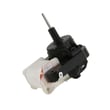
| Warm temps, fan noise, poor airflow | Evaporator motor WPW10128551 | Circulates cold air across the evaporator and through the compartments |
| Erratic temps or cycling issues | Refrigerator temperature sensor 12002355 | Feeds temperature data to the control system |
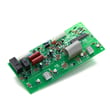
| Dead display or inconsistent operation | Refrigerator electronic control board WPW10503278 | Manages cooling logic, fans, and defrost timing |
Why it matters
Cooling and defrost problems tend to snowball: restricted airflow and frost buildup make the compressor run longer, temperatures drift, and food quality drops. Catching the root cause early often prevents secondary failures.
Last updated: January 2026
What are the dimensions of a Kenmore Elite?
Kenmore Elite dimensions vary by the exact model and style; for the Kenmore Elite bottom-mount refrigerator model 59676052701, the most reliable way to confirm the exact height, width, and depth is to measure the cabinet and doors on your unit. Most bottom-mount refrigerators are roughly 30 to 36 inches wide, 65 to 70 inches tall, and 30 to 35 inches deep.
How to measure your Kenmore Elite 59676052701 correctly
Use a tape measure and record in inches.
- Width: measure the cabinet at the widest point (usually hinge side to hinge side)
- Height: floor to the top of the hinge cover (not just the cabinet top)
- Depth (cabinet): back panel to the front edge of the cabinet (no doors)
- Depth (with doors): back panel to the front of the handles
- Door swing clearance: measure how far doors and freezer drawer extend when open
Typical dimension ranges (what most customers see)
These ranges help when planning a replacement, moving the refrigerator, or checking fit in a cutout.
| Measurement | Typical bottom-mount range | Why it varies |
|---|---|---|
| Width | 30 to 36 in. | cabinet size and door design |
| Height | 65 to 70 in. | hinge style and leveling legs |
| Depth (with handles) | 30 to 35 in. | handle style and door thickness |
Why it matters
Accurate dimensions prevent common fit problems like doors hitting walls, the freezer drawer not clearing an island, or the refrigerator not sliding fully into the opening. It also helps when ordering cosmetic parts like a handle or door gasket.
Related parts that affect fit and sealing
If you are measuring because the doors do not close or the unit is not sealing, these parts are commonly involved:
- Gasket, fz d WPW10443311 (freezer door gasket that helps prevent warm air leaks)
- Refrigerator door handle (stainless) W11690159 (handle depth can change overall depth)
- Refrigerator drawer slide rail W11658402 (drawer alignment affects closing and clearance)
Last updated: January 2026
Why is there ice on the bottom of my freezer side by side?
Ice on the freezer floor is almost always caused by a clogged or frozen defrost drain; defrost water can’t flow to the drain pan, so it refreezes and builds up as a sheet of ice. On Kenmore model 59676052701, start by clearing the drain path and flushing it with hot water.
Quick fix: clear and flush the defrost drain
- Unplug the refrigerator.
- Remove the freezer drawer/bins to access the bottom panel area.
- Melt the ice sheet with a hair dryer on low or by placing towels and using warm water.
- Find the drain opening (typically under the evaporator cover area) and flush it.
Use this safe flush mix:
- 2 cups hot water
- 1 teaspoon baking soda
What to check while you’re in there
- Drain hole is clear of ice, food particles, or sludge
- Drain trough is not cracked or out of position
- Drain tube is not kinked behind the cabinet
- Door is sealing well (warm air increases frost and drain icing)
Parts that can contribute to repeat icing
If the drain keeps freezing, airflow and temperature control issues can make the drain refreeze faster than it can drain.
| Symptom you notice | Common cause | Part to consider for this model |
|---|---|---|
| Frost buildup plus weak airflow | Evaporator fan not running consistently | Evaporator motor WPW10128551 |
| Temps swing, odd cooling behavior | Control not managing defrost/cooling correctly | Refrigerator electronic control board WPW10503278 |
| Freezer too cold or erratic readings | Sensor out of range | Refrigerator temperature sensor 12002355 |
Why it matters
A blocked defrost drain can lead to recurring ice sheets, water leaks, and poor freezer performance. Clearing the drain restores normal defrost water flow and helps prevent refreezing on the freezer floor.
Last updated: January 2026