


What model number is the Briggs and Stratton 17.5 hp engine?
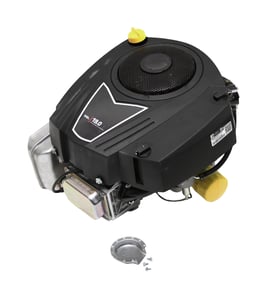
A “Briggs and Stratton 17.5 HP engine” does not have one single model number; 17.5 HP is a power rating used across multiple Briggs engines. For this parts page, the correct engine model number is 407577-0284-E1, and parts should be matched to that exact model.
How to identify the correct model number on your engine
We recommend using the engine’s model-type-code information (usually stamped on the blower housing, valve cover area, or printed on an ID label). Match the full model exactly, including dashes and suffix.
- Look for Model, Type, and Code (or a single long ID string)
- Clean the area first; oil and grass can hide the stamping
- Write the full number exactly as shown (example: 407577-0284-E1)
- Use the full model to avoid ordering the wrong carburetor, ignition coil, or gasket set
- If the label is missing, compare your engine’s major components to the illustrated parts list for this model
Common “17.5 HP” model numbers you may see (examples)
Different equipment brands and production years used different 17.5 HP engines. Here are examples you might run into; these are not interchangeable by horsepower alone.
| What you have | What it means | What to do next |
|---|---|---|
| “17.5 HP” only | Power rating, not a parts identifier | Find the engine model-type-code on the engine |
| 407577-0284-E1 | Specific Briggs engine model on this page | Use this model to select parts |
| A different Briggs model (varies) | Different design and parts | Use that exact model to look up parts |
Why it matters
On Briggs lawn and garden engines, parts compatibility is driven by the full model number, not horsepower. A 17.5 HP engine can use a different fuel system, charging system, or starter depending on the model and type.
Parts that are commonly matched by model number
If you are servicing 407577-0284-E1, these model-matched parts are examples of what you can select from the parts list:
- Briggs & statton lawn & garden equipment engine inline fuel filter 84001895
- Briggs & statton lawn & garden equipment engine ignition coil 592846
- Briggs & stratton lawn & garden equipment engine starter motor 497595
- Briggs & statton lawn & garden equipment engine carburetor 699807
For additional parts searches by model number beyond what’s listed here, use Sears PartsDirect.
Last updated: February 2026
What are the most common issues with 407577-0284-E1?
The most common issues we see on the Briggs 407577-0284-E1 lawn and garden engine are no-start or hard-start conditions, rough running from fuel delivery problems, oil leaks, and charging or ignition failures. These problems usually trace back to routine-wear parts like the fuel filter, ignition coil, carburetor, or seals.
Common symptoms and what they usually point to
- Cranks but won’t start: ignition or fuel delivery issue (coil, carburetor, fuel shut-off solenoid)
- Starts then dies: restricted fuel flow or solenoid not opening
- Runs rough or surges: carburetor contamination or intake air leak
- Oil on the engine or under the mower: worn oil seal or loose drain plug
- Battery not charging: alternator or voltage regulator problem
Quick checks we recommend first
- Use fresh fuel and confirm the fuel valve is open (if equipped).
- Inspect the fuel line and replace a restricted filter such as the Briggs & statton lawn & garden equipment engine inline fuel filter 84001895.
- Check for spark; if spark is weak or intermittent, the Briggs & statton lawn & garden equipment engine ignition coil 592846 is a common fix.
- If it surges or only runs with choke, clean or replace the Briggs & statton lawn & garden equipment engine carburetor 699807.
- If you see oil seepage, inspect common leak points and replace the correct seal, for example the Briggs & statton oil seal 391086S.
Parts that match common failures (examples)
| Symptom | Likely system | Example part on this model page |
|---|---|---|
| Hard start, stalls | Fuel | Inline fuel filter 84001895; carburetor 699807 |
| No spark | Ignition | Ignition coil 592846 |
| Dead battery while running | Charging | Alternator 592830; voltage regulator 845907 |
| Oil leak | Sealing | Oil seal 391086S; oil drain plug 690946 |
Why it matters
Catching fuel restriction, weak ignition, or small oil leaks early prevents hard starting, plug fouling, and accelerated engine wear. On the 407577-0284-E1, these are the highest-impact, most common repair paths.
Last updated: March 2026
What is the average lifespan of 407577-0284-E1?
A Briggs 407577-0284-E1 lawn and garden engine typically lasts 1,000 to 2,000 run-hours with normal residential use and consistent maintenance. In real-world terms, that is often 10 to 15 years for many riders, depending on mowing conditions, storage, and service habits.
Typical lifespan ranges (what to expect)
Engine life is best measured in hours because mowing time varies by yard size and season.
| Use pattern | Typical hours per year | Typical engine life | What that looks like |
|---|---|---|---|
| Light residential | 25 to 50 | 1,500 to 2,000 | Many seasons with routine service |
| Average residential | 50 to 100 | 1,000 to 1,500 | Common for most riders |
| Heavy use | 100+ | 800 to 1,200 | More frequent wear items and service |
What extends engine life the most
These are the maintenance items that make the biggest difference on a Briggs V-twin style mower engine.
- Change oil on schedule; check oil level before each use
- Replace the oil filter regularly (example: Briggs & statton oil filter 499486S or Briggs & statton oil filter 492932S)
- Keep fuel clean; replace the inline fuel filter if flow is restricted (example: Briggs & statton lawn & garden equipment engine inline fuel filter 84001895)
- Keep cooling fins and air intake areas clear of grass and debris
- Use fresh fuel and stabilize fuel for storage; avoid old gas
- Fix small leaks early (common sources include seals and gaskets)
Signs the engine is nearing end-of-life
Wear shows up as performance and starting issues that persist even after tune-up and fuel system service.
- Low power under load, even with clean fuel and proper throttle
- Excessive oil consumption or heavy smoke
- Hard starting that continues after ignition and fuel checks
- Knocking noises, metal debris in oil, or repeated overheating
- Compression-related issues (blow-by, oil in breather)
Why it matters
Knowing the typical lifespan helps you decide whether to invest in maintenance parts (filters, gaskets, ignition components) or plan for a larger repair. Regular oil and fuel system service usually costs far less than internal engine work.
Last updated: March 2026