Error Codes



What is a common problem for a Whirlpool washer?
For the Whirlpool WTW4955HW3 washer, common problems we see are no drain/no spin, not starting (often a lid lock issue), excessive vibration, and loud noises during agitation or spin. Many causes are simple (load balance, clogs), but some point to worn or failed parts.
Most common symptoms and what they usually mean
- Won’t drain or is stuck in drain mode: drain hose restriction, clogged pump area, or a failing drain pump
- Won’t start or stops right away: lid not locking, lid strike misaligned, or control not sensing a safe condition
- No spin or weak spin: shift system issue, drive belt/pulley problem, or load out of balance
- Loud grinding/rumbling: drive pulley wear, drive system issues, or basket/tub components rubbing
- Excessive shaking: uneven load, leveling/feet issues, or worn suspension
Quick checks we recommend first (no parts needed)
- Unplug the washer for 2 minutes, then restore power (basic reset).
- Redistribute the load; avoid washing one bulky item by itself.
- Confirm the drain hose is not kinked and the standpipe is not blocked.
- Run a rinse and spin cycle empty to see if the symptom repeats.
Parts that commonly solve these problems on WTW4955HW3
If troubleshooting points to a failed component, these model-compatible parts are common fixes:
| Symptom | Likely part to inspect/replace | Why it matters |
|---|---|---|
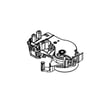
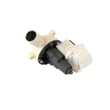
| Won’t drain | Washer drain pump W10919003 | A weak or jammed pump can prevent draining and stop the cycle. |
| Won’t start/locks issues | Washer lid lock W11307244 | The washer may not run or spin unless it senses the lid is locked. |
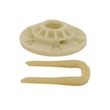
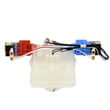
| Loud noise or no/weak spin | Whirlpool washer drive pulley W10721967 | A worn pulley can slip, squeal, or cause poor agitation/spin. |
Why it matters
Catching the symptom early helps prevent secondary damage (for example, repeated no-drain events can strain the pump and control). It also helps you choose the right repair path, whether that is cleaning a restriction or replacing a specific Whirlpool part.
For fault codes and what they mean on similar Whirlpool top-load designs, use Whirlpool belt drive top load washer error codes.
Last updated: January 2026
What is the lifespan of a Whirlpool washing machine?
Most Whirlpool washers, including model WTW4955HW3, typically last about 10 to 14 years with normal household use and basic maintenance. Actual lifespan varies most with load size habits, installation (leveling), water quality, and how quickly small problems are fixed.
What affects lifespan the most
- Overloading (stresses the drive system, suspension, and tub)
- Unbalanced loads (increases vibration and wear)
- Hard water and detergent buildup (can cause odors and poor cleaning)
- Drain issues (coins, lint, and small items can strain the pump)
- Electrical surges (can damage controls)
Maintenance that helps a WTW4955HW3 last longer
- Run periodic cleaning and odor-prevention routines using guidance from how to clean and maintain your washing machine.
- Use the right amount of HE detergent; too much can leave residue.
- Keep loads evenly distributed; wash bulky items in pairs when possible.
- Check fill hoses for bulges or leaks and replace as needed.
- If draining gets slow or noisy, inspect the pump area and related hoses before the motor is overworked.
When a repair is usually worth it (vs. replacement)
| Situation | Usually worth repairing? | Why |
|---|---|---|
| Washer is under ~7 years old | Often yes | Many repairs restore full function cost-effectively |
| Single, clear failure (won’t drain, won’t lock, won’t fill) | Often yes | Common parts can solve the issue |
| Multiple major symptoms (leaks + loud spin + won’t complete cycles) | Sometimes no | Costs can add up quickly |
Parts that commonly extend service life
If symptoms point to a specific failure, replacing the right part can prevent bigger damage:
- Washer drain pump W10919003 when the washer won’t drain, hums, or drains very slowly
- Washer lid lock W11307244 when the washer won’t start or won’t spin because the lid won’t lock
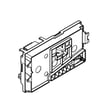
- Control unit assembly, machine and motor W11608056 when the washer behaves erratically or won’t run cycles consistently
Why it matters
A washer that is cleaned, kept level, and not overloaded usually avoids the high-wear failures (vibration damage, drive wear, and drain strain) that shorten lifespan. Catching issues early also helps protect the motor and control system.
Last updated: January 2026
How do I reset a Whirlpool washer?
To reset a Whirlpool washer like model WTW4955HW3, we recommend doing a simple power reset first: turn the washer off, unplug it (or switch the breaker off) for 1 minute, then restore power and try a cycle. This clears many temporary control glitches.
Quick reset steps (WTW4955HW3)
- Press POWER/CANCEL to stop the cycle.
- Unplug the washer from the outlet (or turn the breaker off).
- Wait 60 seconds.
- Plug it back in (or turn the breaker on).
- Wait 30 seconds, then start a Rinse & Spin or Drain & Spin cycle.
If the washer still won’t respond
A reset won’t fix a hard failure (like a lid not locking or a drain problem). Check these common causes next:
- Make sure the lid is fully closed and nothing is caught in the hinge area.
- If the lid won’t lock or the washer won’t start, inspect the washer lid lock W11307244.
- If the washer is stuck draining or won’t drain, check for a clog and inspect the washer drain pump W10919003.
- If the washer seems “dead” (no lights), verify the outlet has power and check the cord connection.
- If problems started after a repair, calibration may be needed; see how to calibrate a washer after a repair video.
What a reset does (and doesn’t do)
| Action | What it helps | What it won’t fix |
|---|---|---|
| Power reset (unplug 1 minute) | Frozen controls, minor software glitches | Broken lid lock, failed pump, wiring issues |
| Calibration after repair | Off-balance sensing, odd cycle behavior | Mechanical damage, leaks |
Why it matters
Resetting is a safe first step because it can restore normal operation without replacing parts. If the issue comes back quickly, that usually points to a component problem (lid lock, drain pump, or the main control) rather than a one-time glitch.
Last updated: January 2026
Is a 4.5 cu ft washer large?
Yes. In general, 4.5 cu ft is considered a large-capacity washer. For the Whirlpool WTW4955HW3 specifically, the exact tub capacity is not identified by the model information we have here, so treat “4.5 cu ft” as a general size category rather than a confirmed spec for this model.
What “large capacity” usually means
A 4.5 cu ft washer commonly works well for:
- Family-size weekly laundry loads
- Towels, jeans, and mixed heavy loads
- Many comforters and blankets (best results when items can move freely)
- Fewer total loads compared with mid-capacity machines
How to tell if your load is too big
Even in a large-capacity top-load washer, overloading can reduce cleaning and cause out-of-balance spinning. Watch for:
- Clothes packed tightly with little room to circulate
- Repeated banging or stopping during spin
- Detergent residue or poor rinsing
- Slow draining after bulky loads
If you’re seeing drain or spin issues after heavy loads, inspecting the drain path and pump is a practical next step; the compatible replacement is the washer drain pump W10919003.
Quick capacity comparison (general guide)
| Capacity range | Typical label | Best for |
|---|---|---|
| 3.5 to 4.4 cu ft | Medium to medium-large | Couples, small families |
| 4.5 to 5.0 cu ft | Large | Families, towels, bedding |
| 5.0+ cu ft | Extra-large | Frequent bulky loads, very large households |
Why it matters
Washer capacity affects cleaning performance, water usage, and wear on drive and suspension components. Loading loosely and choosing the right cycle helps your Whirlpool washer clean better and spin smoother.
Related help: how auto-load sensing washers work (and when they don't)
Last updated: January 2026