Error Codes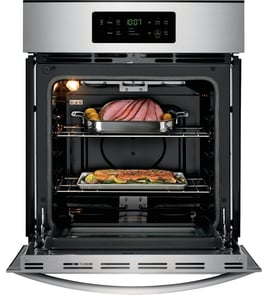


Is a 27 inch wall oven too small?
A 27-inch wall oven is not too small for most homes; it is a common “full-size” option that fits standard cabinetry and handles everyday baking and roasting well. For the GE JKP27GJ4, the right choice depends on your cookware size, how often you cook for groups, and your cabinet cutout.
Most wall ovens fall into three practical size groups:
| Nominal width | Best for | Typical tradeoff |
|---|---|---|
| 24-inch | Small kitchens, light cooking | Smaller pans, less capacity |
| 27-inch | Most households, standard cooking | Slightly less room than 30-inch |
| 30-inch | Frequent entertaining, large cookware | Needs larger cutout and more space |
A 27-inch wall oven usually works great when:
- You cook for 1 to 5 people most of the time
- Your favorite sheet pans and roasting pans are standard size (not oversized)
- You want a built-in look but have a tighter cabinet layout
- You rarely need to bake on multiple racks with very tall items
- Your existing cabinet cutout is already sized for a 27-inch unit
A 30-inch wall oven is typically a better match if:
- You regularly cook for holidays or large gatherings
- You use extra-wide baking sheets, large pizza stones, or big roasting pans
- You often bake multiple trays at once and want more spacing for airflow
Wall oven “inch size” is about cabinet fit first, then cooking capacity. Choosing the correct width helps you avoid installation surprises and ensures your cookware fits comfortably without crowding, which supports more even baking.
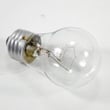
If your oven light is out while you are evaluating performance, replacing the bulb can make it easier to spot uneven browning or hot spots during test bakes; use the model-matched range oven light bulb 40A15.
Last updated: January 2026
Does anyone make a 27 inch gas wall oven?
Yes. Several manufacturers make 27-inch gas wall ovens, but they are less common than 30-inch models and the selection is usually smaller. Since your page is for the GE JKP27GJ4 electric wall oven, a 27-inch gas wall oven is typically a different product line and requires careful fit and fuel checks.
- Cutout size vs. “27-inch” label: the cabinet cutout dimensions (height, width, depth) must match the new oven’s installation requirements.
- Gas type: confirm natural gas vs. LP conversion requirements.
- Electrical needs: most gas wall ovens still need electrical power for controls, ignition, and lights.
- Ventilation and clearances: verify required spacing to cabinets and adjacent appliances.
- Single vs. double oven: a 27-inch double wall oven cutout is very different from a single.
| Feature | 27-inch gas wall oven | 30-inch gas wall oven |
|---|---|---|
| Availability | Limited | Common |
| Replacement flexibility | Lower | Higher |
| Typical use case | Tight cutouts, older kitchens | Standard new installs |
| Price and feature variety | Fewer choices | More choices |
Wall ovens are sized by cabinet cutout requirements, not just the nominal “27-inch” width. If you are replacing a GE JKP27GJ4 electric wall oven with a gas model, you are changing both the fuel supply and the installation requirements, so measuring and planning up front prevents costly cabinet or utility rework.
If you are confirming the exact model you are replacing before shopping, use how to find your appliance model number (and what it means for parts).
Last updated: January 2026
Are electric wall ovens 110 or 220?
Most GE electric wall ovens like model JKP27GJ4 are designed to run on a 240-volt (often called 220-volt) household circuit, not a standard 120-volt (110-volt) outlet. A dedicated double-pole breaker and proper wiring are typically required for safe operation.
Most built-in electric wall ovens use a 240V supply to heat properly and maintain temperature. In many homes, the oven is hardwired or connected through a junction box rather than plugged into a standard receptacle.
- Plan on a 240V circuit (commonly 30A to 50A depending on oven size and features)
- Use a double-pole breaker in the electrical panel
- Confirm the wire gauge matches the breaker size
- If the oven shares a circuit with another appliance, correct that before installing
- If you see flickering lights, tripped breakers, or weak heating, stop using the oven and correct the supply issue
| Item | 120V (110V) circuit | 240V (220V) circuit |
|---|---|---|
| Typical use | Small countertop appliances | Electric wall ovens, ranges, dryers |
| Breaker type | Single-pole | Double-pole |
| Heating performance | Not enough for full-size oven elements | Designed for bake and broil elements |
Using the correct voltage protects the control components and ensures the bake and broil elements reach full temperature. If the oven is underpowered, you can get long preheat times, uneven baking, and repeated breaker trips.
If you are troubleshooting “no heat” or “only broil works,” these model-compatible parts are commonly involved:
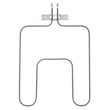
- Range bake element WB44X200 (primary heat source for baking)
- Broil unit WB44X173 (top heating element for broiling)
- Receptacle WB08T10026 (socket connection used with the oven light)
Last updated: January 2026