Owner’s manual


How do I tell what model my Kenmore dryer is?
Your Kenmore dryer’s model number is printed on the model and serial number plate. On Kenmore model 11076812690, that plate is on the dryer cabinet (commonly in the door opening area); write down the full model and serial numbers before ordering parts or checking specs in the 11076812690 owner’s manual.
Where to look for the model number plate
Check these common locations on Kenmore dryers:
- Inside the dryer door opening on the cabinet frame
- On the back panel of the dryer cabinet
- Around the door opening area near the latch side
- On the cabinet near the lower front (less common)
How to read the number (and why it matters)
Kenmore model numbers often start with a 3-digit prefix (for example, 110 or 796). The full model number is what we use to match the correct parts list, wiring layout, and troubleshooting steps.
Quick guide
| What you find | What it’s used for | Example |
|---|---|---|
| Model number | Correct parts and diagrams | 11076812690 |
| Serial number | Production run details | Varies |
| Prefix (first 3 digits) | Identifies the manufacturer family | 110, 796 |
Tips to avoid ordering the wrong part
- Copy the model number exactly as printed (no spaces or extra characters).
- Record the serial number too; it helps when there are version changes.
- Use the model number to confirm the appliance type (electric dryer vs. gas dryer) before buying heating or ignition parts.
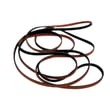
- If you’re replacing a common wear item, match it to the model-specific listing (for example, the drum belt 341241 is a common drum-drive part on many Kenmore 110 dryers).
Why it matters
The model and serial number plate is the fastest way to ensure we’re looking at the correct Kenmore dryer configuration. That prevents mismatched parts, incorrect installation steps, and wasted time during troubleshooting.
Last updated: February 2026
How much does it cost to replace a heating element in a Kenmore dryer?
Replacing the heating element in Kenmore model 11076812690 typically runs $150 to $400 total when you hire a technician (part, labor, and any diagnostic fee). The exact part price varies by the heater style used in your dryer; confirm the correct heater assembly using the parts breakdown in the 11076812690 owner’s manual.
Typical cost breakdown (DIY vs. pro)
- Heating element (part only): $40 to $150
- Service call/diagnostic: $80 to $150
- Labor: $70 to $200
- Most common total with a technician: $150 to $400
| Repair approach | What you pay for | Typical total |
|---|---|---|
| DIY replacement | Part only | $40 to $150 |
| Pro replacement | Part + labor + diagnostic | $150 to $400 |
| Diagnosis only | Diagnostic/service call | $80 to $150 |
What changes the price the most
- Correct heater style for model 11076812690: some Kenmore dryers use an element-only part, others use a heater housing assembly; assemblies cost more.
- Why the element failed: restricted venting or overheating can also damage thermostats and thermal cut-offs.
- Extra parts replaced together: high-limit thermostat, operating thermostat, thermal cut-off, or wiring terminals.
- Access time: cabinet design and lint buildup affect labor time.
Before you replace the element (saves money)
- Make sure the cycle is not set to Air dry/No heat.
- Clean the lint screen and check that the vent is not crushed or kinked.
- If dry times are long, clean the full vent run to the outside hood.
- If the drum will not start, test the door switch WP3406107 first; a no-start issue can be mistaken for a no-heat complaint.
Why it matters
A new heating element can fail quickly if airflow is restricted or temperature control parts are weak. Fixing venting and heat-limit issues at the same time restores normal drying performance and helps the repair last.
Last updated: February 2026
What is the average lifespan of 11076812690?
A Kenmore electric dryer like model 11076812690 typically lasts 13 years with normal household use. Keeping airflow strong (lint screen and venting) and replacing wear parts promptly helps you reach that lifespan with fewer heating and drum-rotation problems.
Typical lifespan and what affects it
Most dryers reach their full service life when heat, airflow, and drum support parts stay in good shape.
- Heavy use (multiple loads daily) shortens lifespan
- Restricted venting and lint buildup increases heat stress
- Overloading strains the motor, belt, and drum rollers
- Skipping cleaning leads to longer dry times and higher temperatures
- Timely replacement of common wear parts prevents secondary damage
Maintenance that extends dryer life
Your owner's manual includes cleaning and safety guidance, including vent-lint removal intervals.
- Clean the lint screen every load
- Check the outside vent hood for strong airflow
- Clean the full vent run periodically (more often with long vents)
- Avoid overloading; keep loads loose so air can circulate
- If you hear squealing or thumping, address drum support parts early
Common wear parts that can limit lifespan
If the dryer runs but the drum will not turn or it slips, the belt and idler are frequent culprits.
| Symptom | Common cause | Example part for 11076812690 |
|---|---|---|
| Drum will not turn | Worn or broken belt | Drum belt 341241 |
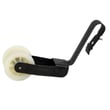
| Squealing, slow start | Worn idler pulley | Dryer idler pulley WP691366 |
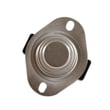
| Runs but no heat (electric models vary) | Thermostat or airflow issue | Dryer operating thermostat WP3387134 |
Why it matters
A dryer near end-of-life often shows up as longer dry times, overheating, or noisy drum rotation. Fixing airflow and replacing a low-cost wear part early can prevent damage to higher-cost components like the drive motor.
Last updated: March 2026