 Installation guide
 Owner’s manual
 Error Codes
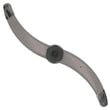



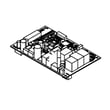

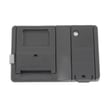
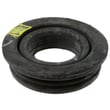

How to order GE appliance parts?
You can order replacement parts for your GE DDT700SGN3BB dishwasher directly from the parts list for this model, using the exact model number to ensure fit. For part identification and diagrams, we recommend checking the owner's manual first.
What you need before ordering
- Complete model number: DDT700SGN3BB
- Serial number (helps confirm production version)
- The part name and part ID from the parts list (example: GE dishwasher pressure sensor WD21X25468)
- A quick symptom description (leaking, not draining, not cleaning, not drying)
- Basic install details (hardwired vs plug-in, drain hose routing)
Common parts customers order for this model
These are frequently replaced items when performance issues show up:
| Symptom | Common part to check | Example part on this model page |
|---|---|---|
| Not draining | Drain pump, drain hose | WD19X25461, WD24X10062 |
| Poor cleaning | Spray arm(s), wash pump | WD22X33499, WD19X25700 |
| Won’t start or won’t latch | Door latch lock | WD21X10490 |
| Not drying well | Heating element | WD05X35098 |
Tips to avoid ordering the wrong part
- Match by part ID (not just a description) because similar GE dishwashers can use different revisions.
- If your issue is a cleaning problem, inspect the lower spray arm for cracks or clogged jets before ordering.
- If the dishwasher won’t drain, check for a kinked hose and a blocked sink/disposer connection before replacing the pump.
- If the unit has power but won’t run, confirm the door closes and latches firmly; a latch problem can stop the cycle.
Why it matters
Using the exact model number (DDT700SGN3BB) and the correct part ID helps ensure proper fit, correct electrical connectors, and normal wash performance. It also reduces repeat repairs caused by installing a similar-looking but incompatible part.
Last updated: February 2026
What is the most common problem with a GE dishwasher?
The most common problems we see with a GE dishwasher like model DDT700SGN3BB are “won’t run/start,” “won’t fill,” and “won’t drain.” Many of these come down to power issues, a door that is not fully latched, or a restriction in the filter or drain path; the DDT700SGN3BB owner's manual troubleshooting chart walks you through the quickest checks.
Most common symptoms and what usually causes them
- Dishwasher won’t run: tripped breaker, wall switch off (if installed), control lock enabled, or the door not latched
- Control responds but won’t fill: door not fully closed, water valve under the sink turned off, or a stuck flood float
- Not draining: clogged filter area, drain hose restriction, or a failing drain pump
- Not cleaning well: blocked spray arm holes, poor loading, low water temperature, or detergent cup blocked by dishes
- Suds/foaming: wrong detergent or rinse aid spill
Quick checks (fastest fixes first)
- Confirm the dishwasher has power (breaker on; any wall switch on).
- Close the door firmly until it latches; a weak latch can stop the cycle.
- Verify the water shutoff valve under the sink is fully open.
- Pull and rinse the filters; check the sump area for debris.
- Inspect the drain hose routing for kinks or a blockage.
Parts that commonly solve “won’t start” or “won’t drain” complaints
If basic checks do not fix it, these model-compatible parts are common repair paths:
| Symptom | Common suspect part | What it affects |
|---|---|---|
| Won’t start or stops mid-cycle | GE dishwasher door latch lock WD21X10490 | Confirms the door is safely closed so the control will run |
| Won’t drain / standing water | Dishwasher drain pump WD19X25461 | Pumps water out to the drain hose |
| Fill or drain errors, odd water level behavior | GE dishwasher pressure sensor WD21X25468 | Helps the control “know” water level and pressure conditions |
Why it matters
Start, fill, and drain problems are the most disruptive because the dishwasher cannot complete a cycle. Fixing the root cause also prevents secondary issues like odors, suds, and poor cleaning performance.
For model-specific error displays and what they mean, use GE electronic dishwasher error codes.
Last updated: February 2026
What is the average lifespan of a GE dishwasher?
Most GE dishwashers, including model DDT700SGN3BB, typically last 10 to 12 years with normal household use and basic care. Consistent cleaning and fixing small issues early helps you reach the high end of that range.
What affects dishwasher lifespan the most
- Hard water and mineral buildup (can shorten pump, heater, and valve life)
- How often you run it (multiple loads daily adds wear)
- Cleaning routine (filter area, spray arms, and interior)
- Detergent choice and dosing (too much can leave residue; wrong type can cause sudsing)
- Small leaks or draining issues left uncorrected
Maintenance we recommend for longer life
Use the care and cleaning guidance in your owner's manual. For most GE dishwashers, these habits make the biggest difference:
- Run a dishwasher cleaner or citric-acid cleaning cycle periodically to reduce film and odors
- Wipe the door edges and check for moisture around the bottom of the door
- Keep spray arm holes clear; remove debris that can block water flow
- Use automatic dishwasher detergent only (never hand dish soap)
- Avoid overloading so the wash system and racks are not forced or jammed
Quick “repair or replace” checklist
If your dishwasher is near the 10 to 12 year mark, use this simple guide.
| What you’re seeing | What it usually means | Typical next step |
|---|---|---|
| Not draining, standing water | Drain restriction or failing pump | Check hose routing; consider dishwasher drain pump WD19X25461 |
| Poor cleaning, gritty dishes | Spray arm blockage or wash circulation issue | Clean spray arms; consider dishwasher spray arm, lower WD22X33499 |
| Won’t start or stops mid-cycle | Latch, control, or sensing issue | Verify door closes firmly; inspect GE dishwasher door latch lock WD21X10490 |
Why it matters
A dishwasher that is cleaned and draining correctly runs with less strain on the wash pump, heater, and seals. That reduces repeat breakdowns and helps your GE DDT700SGN3BB deliver consistent wash performance for its full expected service life.
Last updated: February 2026
Is it worth repairing a GE dishwasher?
Yes, repairing a GE DDT700SGN3BB dishwasher is worth it when the problem is a common, contained failure (drain, latch, leak seal, spray issue) and the machine is under 10 years old; replacement makes more sense when you have repeated leaks, major electrical failures, or multiple high-cost parts needed.
Quick decision checklist
- If it’s under 10 years old, we repair it unless the tub is damaged or it has chronic leaks.
- If the repair is one part and one visit, we repair it.
- If you’ve had 2+ breakdowns in the last 12 months, replacement usually wins.
- If the issue is draining, washing, or door-latching, repairs are typically straightforward.
- If the issue is control-related (dead panel, erratic behavior), compare total repair cost to replacement.
Common repairs on this model that are usually worth it
These are typical “high-impact” fixes for cleaning, draining, and starting problems:
- Not draining: check the drain path and consider the dishwasher drain pump WD19X25461.
- Won’t start or stops mid-cycle: inspect the door latch and strike; the GE dishwasher door latch lock WD21X10490 is a common fix.
- Poor cleaning: inspect and clean spray arms; the dishwasher spray arm, lower WD22X33499 is a frequent replacement.
- Leak detection or fill/wash issues: a sensor problem can be involved; see the GE dishwasher pressure sensor WD21X25468.
Cost-to-value guide (simple rule)
Use this as a practical way to decide.
| Situation | Usually the better choice | Why |
|---|---|---|
| One failed mechanical part (pump, latch, spray arm) | Repair | Restores core function with limited parts cost |
| Multiple symptoms (won’t drain + won’t heat + won’t start) | Replace | Stacked repairs add up quickly |
| Repeated leaks or water damage risk | Replace | Ongoing leak risk outweighs repair value |
| Control board or UI issues plus other problems | Replace | High parts cost and more diagnostic time |
Why it matters
Dishwashers are built around a few core systems (fill, wash, drain, heat, door safety). When only one system fails, replacing the failed part typically brings the GE DDT700SGN3BB back to normal performance. When several systems fail together, the total cost and downtime usually exceed the value of keeping the unit.
Where to confirm symptoms and error clues
We recommend checking the troubleshooting section in the owner's manual and matching any displayed codes to the GE electronic dishwasher error codes guide before ordering parts.
Last updated: February 2026





