Owner’s manual
 Error Codes


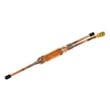
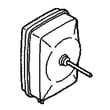
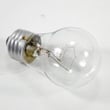

Can I replace fridge parts myself?
Yes, for the GE GTS16GSHCRSS top-mount refrigerator, we recommend DIY replacement for simple, non-sealed-system items (like a light bulb, door switch, or door gasket) as long as you unplug the refrigerator first and reinstall all panels before restoring power; use the GTS16GSHCRSS owner's manual for model-specific safety steps.
Good DIY repairs vs. call a pro
Many repairs are straightforward, but anything involving sealed refrigeration components or complex electrical diagnosis is best handled by a qualified service professional.
Typically DIY-friendly
- Light bulb replacement (unplug first)
- Door gasket replacement and door alignment checks
- Door switch replacement
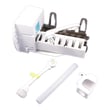
- Ice maker kit installation on compatible setups
- Shelves, bins, crisper drawer, and rails
Usually pro-level
- Sealed system work (compressor, evaporator, refrigerant lines)
- Repeated breaker trips, burning smells, or wiring damage
- Persistent cooling problems after basic checks
Safety steps we follow before any repair
The manual’s key safety guidance is consistent: disconnect power before servicing, and put the refrigerator back together before plugging it in.
- Unplug the refrigerator (control settings do not remove power)
- Shut off the water supply if you are working on an ice maker or water line
- Remove panels carefully; do not damage wiring
- Replace all parts and panels before plugging back in
- Keep hands away from the ice maker mechanism while the refrigerator is plugged in
Common parts customers replace on this model
If your symptom matches one of these, starting with the most likely part saves time.
| Symptom | Common DIY check | Example part for this model |
|---|---|---|
| Interior light out | Verify bulb type, replace bulb | GE appliance light bulb, 40-watt 40A15 |
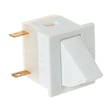
| Light stays off when door opens | Test door switch action | Refrigerator door switch WR23X31507 |
| Warm fridge, fan noise changes | Check evaporator fan operation | Refrigerator evaporator fan WR60X31522 |
| Frost buildup, poor cooling | Defrost system inspection | Refrigerator defrost heater WR09X21107 |
| Door not sealing, moisture | Inspect gasket for gaps/tears | Refrigerator door gasket WR14X27234 |
Why it matters
DIY repairs can restore cooling performance, reduce energy waste from air leaks, and prevent food spoilage. Following the unplug-and-reassemble steps also helps avoid electric shock and accidental damage to wiring or moving mechanisms.
Last updated: February 2026
How big is the GE AutoFill pitcher?
The GE GTS16GSHCRSS AutoFill pitcher is designed to automatically fill to a preset shutoff level; the user manual does not list an ounce or liter capacity for the pitcher. For day to day use, focus on correct shelf placement and proper alignment so it fills and shuts off normally (see the GTS16GSHCRSS owner’s manual).
What we can confirm for this model
The manual instructions for the AutoFill pitcher (on some models) specify how it fits and fills:
- The refrigerator shelf must be set to the second position to use the AutoFill pitcher.
- The lid notch must align with the dispenser guide at the top of the refrigerator.
- The pitcher slides toward the back until it stops.
- Water fills until it reaches a specified level, then shuts off.
Capacity vs. fill level (what to expect)
Because the manual describes a shutoff level but does not publish a capacity, use these practical checks to understand “how big” it is in your kitchen:
| What you’re measuring | Best way to check | Why it’s reliable |
|---|---|---|
| Usable fill amount | Fill once, then pour into a measuring cup | Measures your pitcher’s actual shutoff level |
| Fit in the refrigerator | Verify shelf is in the second position | Ensures the pitcher seats correctly |
| Fill performance | Time one fill cycle | Helps spot low water pressure or air in the line |
If the pitcher will not fill or shuts off early
- Reseat the lid so it fits securely.
- Re-align the notch to the dispenser guide and slide the pitcher fully back.
- Confirm the shelf is in the second position.
- If you recently changed the filter, flush water to purge air (the manual notes this can take about 2 gallons through the autofill dispenser).
Why it matters
AutoFill systems depend on correct positioning and a consistent shutoff level; measuring one full fill at home gives you the exact usable capacity for your specific pitcher and water pressure.
Last updated: February 2026
How wide is a 25.6 cubic foot refrigerator?
A 25.6 cu. ft. refrigerator is typically about 33 to 36 inches wide. Your GE GTS16GSHCRSS is a top-mount model and is not in the 25.6 cu. ft. class; use the exact width and clearance specs in the GTS16GSHCRSS owner’s manual before buying or installing.
Typical width by refrigerator style (25.6 cu. ft. class)
Most 25.6 cu. ft. units are larger cabinets; width is driven more by door style than capacity alone.
- French door: usually 33 to 36 inches
- Side-by-side: usually 33 to 36 inches
- Top-mount (top freezer): 25.6 cu. ft. is uncommon; when it exists, it is typically 33 inches wide
- Counter-depth vs full-depth: width is usually similar; depth changes the most
How we measure for a correct fit
Measure the opening and the refrigerator’s widest points so doors open fully and airflow stays correct.
- Measure the opening width at top, middle, and bottom
- Measure the refrigerator’s widest point (often hinges, not the cabinet)
- Include handles if they extend past the doors
- Plan for door swing clearance (especially near walls)
- Leave airflow clearance per the manual
Quick comparison table
| What you measure | Why it matters | What people miss |
|---|---|---|
| Opening width | Confirms basic fit | Walls are often not perfectly square |
| Widest point (hinge/door) | Prevents “won’t slide in” issues | Hinge bulge and door edge |
| Clearance space | Keeps cooling efficient | Installing too tight to cabinets |
Why it matters
Width and clearance determine whether the refrigerator can be installed, leveled, and opened without hitting walls or starving the condenser of airflow. Getting this right prevents delivery day surprises.
Last updated: February 2026
Is GE Cafe considered high end?
Yes. GE Café is GE’s premium line; it is positioned above standard GE models and typically emphasizes upgraded styling, finishes, and feature packages. Your GE GTS16GSHCRSS is a standard GE top-freezer refrigerator (not a Café model); use the GTS16GSHCRSS owner’s manual for the exact features and specifications on your unit.
Where GE Café fits in the GE lineup
GE generally separates refrigerators into tiers based on design, features, and configurations.
- GE (standard): core features and value-focused designs
- GE Profile: more advanced features and technology than standard GE
- GE Café: premium styling and curated feature sets
- GE Monogram: luxury, built-in, and high-end configurations
| GE line | Typical positioning | Common reasons people choose it |
|---|---|---|
| GE (standard) | Mainstream | Practical features, straightforward ownership |
| GE Profile | Upper mid-range | More options, more tech, more configurations |
| GE Café | Premium | Design-forward finishes, suite look, upgraded features |
| GE Monogram | Luxury | Built-in integration, premium materials, pro-style options |
How to tell if a specific refrigerator is “Café”
Branding varies by model, so we recommend confirming by model number and product labeling.
- Check the model badge and interior model tag for “Café” branding
- Compare the model number on the rating label to the listing in the GTS16GSHCRSS owner’s manual
- Look for Café-specific design cues (handle style, finishes, coordinated suite options)
- Compare configuration; Café commonly appears in French door and specialty layouts
Why it matters
“High end” is driven as much by configuration and features as the brand line. Knowing whether you have standard GE, Profile, Café, or Monogram helps set expectations for features, accessories, and upgrade paths.
Last updated: February 2026
Is top mounted refrigerator better than bottom mounted?
A top-mount (top-freezer) refrigerator like the GE GTS16GSHCRSS is better when you want strong energy efficiency, simpler design, and lower upfront cost; a bottom-mount is better when you want fresh-food items at eye level and easier access to the refrigerator section.
Quick comparison: top-mount vs bottom-mount
| Feature | Top-mount (top-freezer) | Bottom-mount (bottom-freezer) |
|---|---|---|
| Everyday access | Freezer is easiest to reach | Fresh food is easiest to reach |
| Energy use | Typically lower | Typically slightly higher |
| Repair complexity | Typically simpler | Typically more complex |
| Price | Typically lower | Typically higher |
| Best for | Frozen-food heavy households | Fresh-food heavy households |
When a top-mount is the better choice
- You use the freezer often and want it at chest or eye level.
- You want a straightforward refrigerator with fewer features to maintain.
- You want good airflow and installation flexibility; the manual calls for clearances of 3/4 inch at the sides, 1 inch at the top, and 2 inches at the back.
- You prefer easier moving and cleaning access; many top-mount designs use rollers and leveling legs for repositioning.
- You want an ice maker option without moving to a different refrigerator style (on some models).
When a bottom-mount is the better choice
- You open the fresh-food section far more than the freezer.
- You want less bending for produce, drinks, and leftovers.
- You prefer wider refrigerator drawers and more “grab-and-go” organization.
Model-specific notes for GE GTS16GSHCRSS
- This model is a top-freezer design; it is a strong fit if freezer access and efficiency are priorities.
- If you are adding automatic ice, use the model-matched GE refrigerator ice maker kit WR30X10093.
- For exact feature details (shelves, temperature control behavior, door swing reversal), use the GTS16GSHCRSS owner’s manual.
Why it matters
Choosing the right freezer location affects daily ergonomics, energy use, and long-term maintenance. If you cook often and live in the fresh-food section, bottom-mount wins; if you rely on frozen foods and want simplicity, top-mount wins.
Last updated: February 2026
What are the disadvantages of a top mount fridge?
A top-mount (top-freezer) refrigerator like the GE GTS16GSHCRSS trades convenience for simplicity: you bend more to reach fresh food, the freezer sits higher for lifting heavier items, and you typically get fewer built-in convenience features. The GTS16GSHCRSS owner's manual lists the exact storage features and options for your unit.
Main disadvantages for the GE GTS16GSHCRSS
- More bending for everyday items: the fresh-food compartment is below the freezer.
- Heavier lifting from the freezer: bulky frozen foods come down from a higher position.
- Fewer “premium” convenience features: this model uses an internal layout; it does not use an external ice or water dispenser.
- Organization can feel simpler: fewer specialized bins and zones compared with many bottom-freezer designs.
- Door storage limits: tall bottles and bulky containers can be harder to arrange neatly depending on bin setup.
Feature trade-offs at a glance
| Style | What you gain | What you give up |
|---|---|---|
| Top-mount (top-freezer) | Straightforward design, strong value | Fresh-food access lower; fewer built-in convenience features |
| Bottom-freezer | Fresh food at eye level | Higher cost; freezer drawer organization takes practice |
| Side-by-side | Easy freezer access; narrow door swing | Narrower shelves for wide platters |
If you want ice with this model
The GE GTS16GSHCRSS can use an internal ice maker kit (no external dispenser). If you want to add ice production, use the correct kit and follow the manual’s installation and water line guidance.
- Confirm your refrigerator is “ice maker ready” (wiring and fill tube present).
- Plan a proper water supply line and shutoff valve.
- Install the GE refrigerator ice maker kit WR30X10093 and allow time for the first harvest.
Why it matters
Refrigerator style affects daily ergonomics (bending and lifting), how easily you see and rotate food, and which upgrades you can add later (such as an internal ice maker).
Last updated: February 2026
What is the life expectancy of a GE Monogram refrigerator?
A GE Monogram refrigerator typically lasts 15 to 20 years with normal home use and basic maintenance. For your GE GTS16GSHCRSS top-freezer refrigerator, you can expect a similar 15-year typical lifespan when temperatures are kept stable and airflow is maintained per the GTS16GSHCRSS owner’s manual.
What affects refrigerator lifespan most
- Condenser cleanliness: dust buildup makes the compressor run hotter and longer
- Door seal condition: air leaks force longer run times and can cause frost issues
- Airflow inside the freezer and fresh-food section: blocked vents reduce circulation
- Room temperature and ventilation around the cabinet: tight spaces increase heat load
- Ice maker and water line health (if equipped): leaks and valve issues can create corrosion and icing
Typical lifespan ranges (what we see most often)
| Refrigerator type | Typical life expectancy | Notes |
|---|---|---|
| Standard top-freezer (like GTS16GSHCRSS) | 12 to 18 years | Simple design, fewer dispenser components |
| Premium built-in (often Monogram) | 15 to 20 years | Heavier-duty components and cabinetry integration |
| Units with heavy ice and water use | 10 to 17 years | More wear on valves, ice maker, and seals |
Maintenance that helps you reach the high end of the range
- Vacuum condenser area and keep the rear/bottom area clear for airflow
- Keep food covered and avoid loading warm items; excess moisture increases frost load
- Confirm the freezer stays cold enough for ice production (ice makers need a cold freezer)
- Inspect and clean the door gasket; replace if torn or permanently deformed (for example, refrigerator door gasket WR14X27234)
- Address unusual noises early (fan or compressor strain can be an early warning)
Why it matters
A refrigerator that runs longer to hold temperature uses more electricity and wears out key components faster (evaporator fan motor, condenser fan motor, compressor). Simple airflow and sealing checks often add years of reliable cooling.
Last updated: February 2026
What is the most common problem with GE profile refrigerators?
The most common GE Profile refrigerator problems are ice maker issues and cooling problems. Even though your GE GTS16GSHCRSS is a top-mount model (not a Profile), the same high-frequency trouble spots are the ice maker water supply, airflow (fans), and the defrost system; our GTS16GSHCRSS owner’s manual troubleshooting section helps narrow it down fast.
Most common symptoms and what they usually point to
- Not making ice or slow ice production: water line not connected, ice maker switched off, freezer not cold enough
- Warm refrigerator or freezer: evaporator fan not running, blocked vents, dirty condenser area, door not sealing
- Frost buildup on freezer back wall: defrost heater or defrost control issue, door left ajar
- Water leaking or puddles: water line connection issue, clogged defrost drain, inlet valve seeping
- No interior light: bulb or door switch problem
Quick checks we recommend first (fast, no tools)
- Confirm the freezer is cold enough for ice production; many GE units need the freezer at 15°F or colder before the ice maker will cycle.
- If the unit has an ice maker, make sure the refrigerator is actually connected to a cold water supply and the ice maker is turned on only after the water line is connected.
- Check for blocked air vents in the freezer and refrigerator; keep packages from covering vent openings.
- Inspect door closing and gasket contact all the way around.
- Listen for the evaporator fan in the freezer when the door is closed.
Common parts involved (by symptom)
| Symptom | Common part to inspect | Example part for GTS16GSHCRSS |
|---|---|---|
| Warm temps, weak airflow | Evaporator fan motor | Refrigerator evaporator fan WR60X31522 |
| Frost buildup, warm fridge | Defrost heater | Refrigerator defrost heater WR09X21107 |
| Ice maker not filling | Water inlet valve (if equipped) | Refrigerator water inlet valve WR57X39965 |
| Door not sealing, moisture | Door gasket | WR14X27234 or WR14X27236 (match by color/door) |
Why it matters
Ice maker and cooling complaints often share the same root causes: temperature, airflow, and water supply. Fixing the underlying issue (like a weak evaporator fan or a water supply problem) prevents repeat failures and protects food from temperature swings.
Last updated: February 2026