Owner’s manual
 Error Codes


How do I remove the base grille on my Whirlpool refrigerator?
To remove the base grille on your Whirlpool GI6FDRXXY02 bottom-mount refrigerator, grasp the grille firmly at the bottom front of the refrigerator and pull it straight toward you until it releases. Reinstall by aligning it and pressing it back into place. See the owner's manual for illustrations.
- Unplug the refrigerator (recommended if you plan to clean behind the grille).
- Stand in front of the unit and locate the base grille at the very bottom.
- Grasp the grille firmly with both hands.
- Pull the grille straight toward you to pop it off.
- To reinstall, align the grille with the front base and press until it snaps in.
Removing the base grille is commonly done for maintenance and adjustments, including:
- Cleaning dust and pet hair from the condenser area
- Accessing the front leveling screws to steady the cabinet and improve door closing
- Inspecting for water drips or debris near the front base
| Task | Tool you may need | What to look for |
|---|---|---|
| Level the refrigerator | 1/4-inch hex driver | Cabinet tilt, door closing effort |
| Clean condenser area | Vacuum with soft brush | Dust buildup on grille and coil area |
| Basic inspection | Flashlight | Moisture, debris, blocked airflow |
A properly seated base grille helps protect the condenser area and supports airflow at the front of the refrigerator. Keeping the area behind it clean can improve cooling efficiency, especially in dusty homes or with heavy pet traffic.
Last updated: February 2026
Is a bottom mounted refrigerator good?
Yes. A bottom-mount refrigerator like the Whirlpool GI6FDRXXY02 is a great choice for everyday convenience because the fresh-food section sits at eye level, so you reach for most items without bending. It also typically offers wide shelves and easy freezer-drawer access.
- Fresh foods are easier to see and grab (less bending for daily use)
- Freezer drawer can hold bulky items and slides out for access
- Wide refrigerator compartment works well for platters and meal prep
- Often includes ice maker and water features (model-dependent)
- Good fit for kitchens where you open the refrigerator more than the freezer
Bottom-mount units are “good” when they fit your kitchen and your habits. For the GI6FDRXXY02, our manual guidance also highlights installation clearances and ventilation needs.
- Leave space for airflow: 1/2 inch on each side and at the top
- Leave 1 inch behind the refrigerator
- If you have an ice maker, allow extra room for the water line connection
- If installing next to a fixed wall, leave 3 3/4 inches minimum so the door can swing open
- Avoid installing near heat sources; do not install where temps fall below 55°F
For the exact clearance and leveling steps for this model, use the owner's manual.
| Feature | Bottom-mount | Top-mount |
|---|---|---|
| Fresh-food access | Best (eye level) | Good (lower shelves require bending) |
| Freezer access | Drawer style | Swing door style |
| Organization | Strong for fresh foods | Strong for frozen foods |
| Typical cost | Higher | Lower |
If the refrigerator is installed with the right clearances and leveled correctly, doors seal better, temperatures stay steadier, and the ice maker and water system are less likely to have performance issues.
Last updated: February 2026
What is the bottom part of a refrigerator called?
On a Whirlpool GI6FDRXXY02 bottom-mount refrigerator, the “bottom part” most people mean is the compressor area (the machinery compartment near the floor). The key component there is the compressor, which pumps refrigerant through the sealed cooling system.
Depending on the design, the lower rear or lower base area can include:
- Compressor (main pump for the sealed system)
- Condenser coil and airflow path (helps release heat)
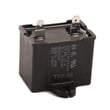
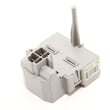
- Run capacitor (helps the compressor start and run)
- Water inlet valve (feeds the ice maker and dispenser, if equipped)
- Leveling legs and brackets (used to level the cabinet)
For model-specific cabinet clearances and ventilation guidance, check the GI6FDRXXY02 owner's manual.
| What you call it | What it usually refers to | What it does |
|---|---|---|
| Bottom of the fridge | Machinery compartment | Houses cooling components |
| Compressor | Compressor | Circulates refrigerant |
| Condenser | Condenser coil | Releases heat to the room |
| Base grille | Toe grille/kick plate | Covers the lower front area |
Knowing the right name helps you troubleshoot noises, heat, or cooling issues and order the correct replacement part. For example, a clicking or humming issue can point to a start component, while poor cooling can involve airflow across the condenser.
If you are diagnosing a bottom-compartment issue, these model-matched parts are commonly involved:
- Refrigerator compressor W10160407
- Refrigerator run capacitor WPW10662129
- Refrigerator condenser WPW10346415
Last updated: February 2026
What is the most common problem with whirlpool refrigerators?
The most common Whirlpool refrigerator problem is a cooling issue (warm fresh-food section, weak freezing, or temperature swings). On the Whirlpool GI6FDRXXY02, the fastest wins are checking power and control settings, then improving airflow by cleaning coils and confirming fans are running; see the owner's manual.
- Refrigerator section too warm but freezer seems OK
- Freezer too warm or soft ice cream
- Unit runs constantly or cycles too often
- Loud humming, rattling, or clicking noises
- Ice maker slow, not making ice, or clumping
- Confirm power: Make sure the cord is fully plugged into a grounded 3-prong outlet; test the outlet with a lamp.
- Check the breaker/fuse: Reset the breaker or replace a blown fuse.
- Verify controls are on: Make sure temperature controls are enabled and not set to an extreme.
- Allow time after changes: After adjusting settings or after a new install, give temperatures time to stabilize.
- Improve airflow: Keep vents inside the compartments unblocked and avoid overpacking.
| Problem area | What you notice | Common fix path |
|---|---|---|
| Airflow and heat removal | Warm temps, long run times | Clean condenser area; ensure good clearance |
| Evaporator fan or airflow restriction | Fridge warm, freezer colder | Check for fan operation and frost buildup |
| Defrost drain/ice buildup | Water, ice, or airflow blocked | Clear drain and remove ice obstruction |
| Water and ice system | No ice or small cubes | Check supply, filter, and valve function |
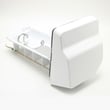
- If the ice maker is not producing ice after basic checks, the refrigerator ice maker assembly WPW10300024 is a common replacement.
- If the dispenser or ice maker is not getting water, a failing inlet valve can be the cause; the GI6FDRXXY02 uses the refrigerator inlet valve WPW10498990.
- If temperatures are erratic or the unit behaves unpredictably, a control issue is possible; one listed option is the refrigerator electronic control board WPW10226427.
Cooling problems can spoil food quickly and force the compressor to run longer than normal. Starting with power, settings, and airflow checks helps you avoid unnecessary parts replacement and narrows the diagnosis to the right system.
Last updated: February 2026