Owner’s manual
 Error Codes


What is the most common problem with a GE refrigerator?
The most common problem we see on a GE refrigerator like model GSH22JGDDWW is a cooling complaint (warm fridge, warm freezer, or temperature swings). The usual causes are restricted airflow, dirty condenser coils, or a failing fan that cannot move air across the evaporator.
- Make sure air vents inside the fresh food and freezer sections are not blocked by food packages.
- Set temperatures back to normal if they were changed (typical targets: 37°F fresh food, 0°F freezer).
- Clean dust and pet hair from the condenser area (unplug first).
- Listen for the evaporator fan; a failed fan often causes warm temps and uneven cooling.
- Check door gaskets for gaps that let warm, moist air in.
For model-specific operating and care steps, use the GSH22JGDDWW owner's manual.
Many GE side-by-side refrigerators also get service calls for dispenser and ice maker problems, usually tied to water flow, freezing, or dispenser door sealing.
| Symptom | Most likely area to check | Common next step |
|---|---|---|
| No ice or small cubes | Water supply, inlet valve, ice maker | Test water flow; inspect valve |
| Water dispenser slow | Filter, air in line | Replace filter; purge air |
| Ice clumps in bucket | Ice chute door not sealing | Inspect chute door and solenoid |
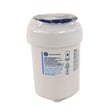
If water flow is weak or tastes off, replacing the filter is a top first step. GE recommends using GE-branded filters for performance and reliability; for this model, the matching part is the GE refrigerator water filter MWFP.
Cooling and airflow problems can raise food temperatures quickly and force the compressor and fans to run longer. Catching simple issues (blocked vents, dirty coils, worn door seals, clogged filter) prevents bigger failures and keeps temperatures stable.
Last updated: February 2026
Are GE side-by-side refrigerators good?
Yes. GE side-by-side refrigerators like model GSH22JGDDWW are a solid choice for everyday reliability and organization; they typically offer easy access to fresh and frozen foods, adjustable shelving, and convenient ice and water dispensing when maintained per the GSH22JGDDWW owner's manual.
Most owners judge a side-by-side by temperature stability, usable storage, and dispenser performance. For the GSH22JGDDWW style of design, these are the most common strengths:
- Consistent cooling when vents are kept clear and doors seal tightly
- Strong day-to-day organization with shelves, bins, and crisper storage
- Convenient in-door ice and water access
- Straightforward maintenance (filter changes, cleaning, basic checks)
Side-by-sides can have normal operating sounds and can be sensitive to airflow and door sealing. These steps help keep performance strong:
- Keep food from blocking air vents in both compartments
- Set temperatures and give the unit 24 hours to stabilize after changes
- Replace the water filter on schedule (every 6 months is a common guideline)
- Clean the dispenser area and drip well to prevent mineral deposits
- Confirm doors close fully and gaskets sit flat all the way around
| Item | What to do | Typical interval |
|---|---|---|
| Water filter | Replace and flush water lines after install | About every 6 months |
| Door gaskets | Wipe clean; check for gaps and tears | Monthly |
| Dispenser area | Wipe dry; remove deposits as needed | As needed |
| Temperature settings | Recheck after loading changes | Seasonally |
If your water tastes off or flow slows down, start with the GE refrigerator water filter MWFP; a restricted filter is one of the most common causes of weak dispenser flow.
A “good” refrigerator stays cold, seals well, and moves air correctly. Most complaints we see trace back to maintenance items (filter, airflow, door seal) rather than the sealed system.
Last updated: February 2026
How to read GE refrigerator model number?
GE refrigerator model numbers identify the exact product family and configuration so we can match the right parts and documentation. For GE model GSH22JGDDWW, the most important step is using the full model number from the ID label inside the fresh food compartment and then confirming it in the GSH22JGDDWW owner's manual.
On GE side-by-side refrigerators like GSH22JGDDWW, the model and serial label is typically located:
- Inside the refrigerator (fresh food) compartment
- At the top right area
- Behind the temperature controls
- On a printed sticker or plate
GE model numbers are a structured code. The exact meaning of each character varies by product line, but the pattern below is what we use to understand what you have.
- Leading letters: product platform/series (often indicates side-by-side vs. top-freezer vs. French door)
- Numbers: size/capacity family (commonly tied to cubic-foot class)
- Middle letters: feature package (dispenser type, icemaker configuration, electronics)
- Ending letters: finish/color and revision identifiers
| Section | Example from model | What it generally tells us |
|---|---|---|
| Prefix | GSH | GE platform/series identifier |
| Size family | 22 | Capacity class (commonly around 22 cu. ft.) |
| Feature codes | JGDD | Feature and configuration codes |
| Suffix | WW | Color/finish code (often white) |
Small differences in the model number can change which parts fit, especially for water and ice components.
- Water filter style and housing
- Ice maker design and wiring
- Dispenser parts and chute door components
- Temperature sensors and control boards
- Door gaskets and shelving layouts
If you are replacing the water filter, matching by model helps ensure you get the correct cartridge, such as the GE refrigerator water filter MWFP when it applies to your configuration.
- Write down the full model number and serial number exactly as shown on the label
- Use the model number to select parts by category (ice maker, water system, controls, doors)
- For operating details and label location confirmation, use the GSH22JGDDWW owner's manual
Using the exact GE model number prevents ordering the wrong part and reduces repeat repairs, especially on dispenser and icemaker systems where similar-looking parts are not interchangeable.
Last updated: February 2026
What is the average life expectancy of a GE refrigerator?
Most GE refrigerators, including the GE GSH22JGDDWW side-by-side, typically last 12 to 15 years with normal household use. Consistent maintenance (cleaning condenser coils, keeping door gaskets sealing, and changing the water filter on schedule) is what most often separates an average lifespan from a longer one.
- Condenser coil cleanliness (dust buildup makes the compressor work harder)
- Door gasket condition (air leaks cause longer run times and frost issues)
- Room temperature and ventilation around the cabinet
- Ice maker and dispenser use (more moving parts, more wear)
- Water quality and filter changes (protects valves and reduces flow problems)
The GSH22JGDDWW owner's manual calls out regular care items and troubleshooting guidance; following a simple schedule helps the sealed system and fans run cooler and longer.
| Task | How often | Why it matters |
|---|---|---|
| Replace water filter | Every 6 months (or sooner if flow drops) | Protects water system parts and keeps dispensing strong |
| Clean condenser coils | Every 6 to 12 months | Reduces compressor run time and heat stress |
| Inspect/clean door gaskets | Every 3 to 6 months | Prevents warm air leaks and moisture buildup |
| Level the refrigerator | As needed | Helps doors close fully and reduces gasket wear |
If performance is declining (warm temps, long run times, weak water flow, slow ice production), these model-matched parts are common checkpoints:
- Refrigerator temperature sensor WR55X10025 (temperature feedback and cycling)
- Refrigerator evaporator fan motor WR60X10185 (moves cold air through compartments)
- Refrigerator water valve WR57X33326 (feeds dispenser and ice maker)
- GE refrigerator water filter MWFP (replace every 6 months for best flow)
A refrigerator that runs hotter or longer than normal wears the compressor, fans, and control components faster. Basic upkeep reduces run time, stabilizes temperatures, and helps your GE side-by-side reach its full expected service life.
Last updated: February 2026
What is the disadvantage of a side-by-side fridge?
A side-by-side refrigerator like the GE GSH22JGDDWW trades wide, open storage for two tall, narrow compartments; the biggest disadvantage is reduced space for wide items (pizza boxes, party platters) and less flexible shelf layout compared with many bottom-freezer or French door designs. See the GSH22JGDDWW owner's manual for shelf and bin configuration details.
- Narrow shelves: wide containers often will not fit flat.
- Less usable “big item” space: large roasts, sheet cakes, and platters can be awkward.
- More door-swing clearance: two full-height doors can need more side clearance in tight kitchens.
- More bending for everyday items: fresh-food and freezer sections both have low shelves and bins.
- Dispenser-related upkeep (if equipped): ice and water features add parts that can clog, leak, or freeze.
| Feature | Side-by-side (like GSH22JGDDWW) | French door | Top freezer |
|---|---|---|---|
| Fits wide items | Fair to poor | Best | Fair |
| Frozen food access | Very good (eye-level) | Good | Good |
| Fresh-food access | Good | Best | Good |
| Door clearance needs | Moderate to high | Moderate | Low |
- Adjust shelves and bins to create one “tall item” lane; follow the layout guidance in the GSH22JGDDWW owner's manual.
- Store wide items vertically when possible (pizza box on edge, platter in a bin).
- Keep airflow clear; overpacking narrow shelves can block vents and cause warm spots.
- If ice or water performance drops, replace the filter on schedule; the correct filter option for this model is the GE refrigerator water filter MWFP.
- For dispenser issues (slow flow, no ice, leaks), use the troubleshooting steps in how to disassemble the ice and water dispenser on a GE refrigerator.
Knowing these tradeoffs helps you plan storage and avoid common performance complaints (warm spots from blocked vents, dispenser problems from overdue filter changes), so the refrigerator cools evenly and stays convenient day to day.
Last updated: February 2026
Is the GSH22JGDDWW garage ready?
The GE GSH22JGDDWW side-by-side refrigerator is not a “garage ready” model; it is designed to run in a controlled indoor environment. For best cooling and ice maker performance, install it where temperatures stay within normal household ranges and follow the location guidance in the GSH22JGDDWW owner's manual.
A garage-ready refrigerator is built and tested to maintain safe temperatures when the surrounding air gets very cold or very hot. In a typical garage, temperature swings can cause:
- Warm fresh food section in summer heat
- Freezer thawing or soft ice cream
- Poor ice production or no ice
- Longer run times and higher energy use
- Extra wear on the compressor and fans
We install and troubleshoot the GSH22JGDDWW as a standard indoor refrigerator. Use these practical guidelines:
- Place it in a dry, ventilated area away from direct sunlight
- Keep it away from heat sources (oven, heater, hot water pipes)
- Avoid locations that drop near freezing
- Avoid very hot spaces where the unit cannot shed heat
- Make sure the outlet is properly grounded and on its own circuit
| Location | Good fit for GSH22JGDDWW? | What typically happens |
|---|---|---|
| Climate-controlled kitchen | Yes | Stable temps, normal cooling and ice |
| Insulated, conditioned garage | Usually | Works if temps stay moderate |
| Unconditioned garage (freezing winters) | No | Cooling control issues, ice maker problems |
| Unconditioned garage (very hot summers) | No | Poor cooling, long run times |
Use this checklist to reduce problems:
- Set fresh food to about 37°F and freezer to about 0°F
- Confirm doors seal tightly and close fully
- Clean condenser area regularly so it can reject heat
- If the ice maker or dispenser acts up, inspect the chute door for air leaks (the refrigerator dispenser ice chute door kit WR17X11653 is the common fix when the flap does not seal)
If temperature swings trigger beeping or control issues, use the GE refrigerator error codes reference to narrow down what the refrigerator is detecting.
Last updated: February 2026