Owner’s manual



What is the common problem with an air compressor?
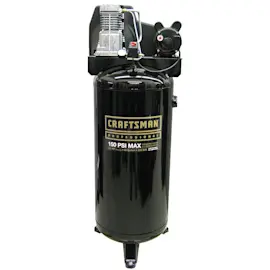
The most common air compressor problems are air leaks, low air output, and pressure control issues (won’t stop, won’t restart, or the safety valve pops). On the Craftsman 919152922 lubricated air compressor, these often trace back to loose fittings, a restricted intake filter, or a faulty check valve, safety valve, or pressure switch (see the owner's manual).
- Air leaks at fittings or hoses: loose connections, damaged hose, or leaking quick-connects
- Safety valve leaks or pops off: defective safety valve or pressure switch not shutting off at cut-out
- Low pressure or weak airflow: restricted air intake filter, air leaks, or compressor too small for the tool’s SCFM demand
- Knocking noise: commonly linked to a defective check valve (and sometimes airflow restrictions)
- Motor won’t run or won’t restart: overload tripped, extension cord/wire size issue, check valve stuck open, or pressure switch not unloading head pressure
Before any checks, unplug the compressor and bleed off tank pressure.
- Listen for hissing around fittings, the pressure switch area, and the tank drain
- Check the air intake filter; clean or replace if restricted
- Pull the safety valve ring briefly; if it still leaks afterward, replace the valve
- Verify the compressor is well ventilated; blocked openings can cause overheating
- Confirm your air tool’s SCFM requirement is not higher than the compressor can supply
| Symptom | Most likely cause | Typical fix |
|---|---|---|
| Safety valve pops off | Pressure switch not shutting off at cut-out | Replace pressure switch |
| Constant small leaks at fittings | Fittings not tight enough | Tighten and reseal fittings |
| Low airflow at tool | Restricted intake filter or air leaks | Clean/replace filter; fix leaks |
| Knocking noise | Defective check valve | Clean or replace check valve |
| Won’t restart | Check valve stuck open or unloading issue | Service check valve; inspect pressure switch unload |
Air leaks and pressure control problems make the compressor run longer and hotter, which accelerates wear. Also, draining condensed water from the tank helps prevent internal rust and tank weakening, which is a key reliability and safety step for lubricated air compressors.
Last updated: February 2026
What does 4.0 scfm at 90 psi mean?
On a Craftsman 919152922 lubricated air compressor, 4.0 SCFM at 90 PSI means the compressor can deliver about 4 standard cubic feet of air per minute while maintaining 90 pounds per square inch (gauge) pressure at the outlet. This rating helps you match the compressor’s air delivery to the needs of air tools.
- SCFM (standard cubic feet per minute): a standardized airflow rating so compressors can be compared more fairly
- CFM: cubic feet per minute (airflow), often varies with pressure and conditions
- 90 PSI (PSIG): a common working pressure for many pneumatic tools
- Tool demand vs. compressor supply: your tool’s required SCFM at a given PSI must be at or below what the compressor can deliver
Use the tool’s label or manual to find its required airflow at a specific pressure.
| What you’re checking | What to look for | What it means for you |
|---|---|---|
| Tool requirement | “SCFM @ 90 PSI” (or similar) | The air the tool consumes at that pressure |
| Compressor rating | “4.0 SCFM @ 90 PSI” | The air the compressor can supply at that pressure |
| Match rule | Compressor SCFM should be higher | Helps prevent pressure drop and constant running |
If an accessory needs more SCFM at 90 PSI than the compressor can supply, you will see pressure drop, weak tool performance, and the motor may run nearly continuously. The troubleshooting guidance in the owner's manual also points out that when accessory air demand exceeds compressor SCFM or pressure capability, a larger compressor is needed.
- Set the regulator so outlet pressure never exceeds the tool’s maximum pressure rating
- Drain tank moisture after use to reduce internal corrosion and keep air quality steadier
- Check for air leaks at fittings and hoses; small leaks reduce available SCFM
- Keep the intake filter clean; a restricted filter reduces air delivery
- Use the shortest practical hose and correct fitting size to reduce pressure loss
Last updated: February 2026
What is the most common cause of air compressor failure?
The most common cause of failure on a lubricated air compressor like the Craftsman 919152922 is preventable overheating and wear from poor maintenance, especially restricted ventilation, a dirty air intake filter, and neglected draining of tank moisture. These issues lead to hard starting, low output, leaks, and premature pump and motor damage.
On this style of compressor, we most often see failures start with airflow restriction, moisture corrosion, or control components that can no longer regulate pressure correctly.
- Restricted ventilation openings causing overheating
- Restricted or dirty air intake filter reducing air delivery
- Water left in the tank causing internal rust and tank weakening
- Air leaks at fittings, hoses, or valves that make the unit run longer and hotter
- Pressure switch problems (won’t shut off at cut-out, or contacts weld)
- Check valve or safety valve issues that cause leaking or hard restarts
These steps prevent the most common failure patterns we see in the troubleshooting guide and safety sections.
- Drain condensed water from the tank after use and before storage
- Keep ventilation openings clear; don’t block the shroud or cooling airflow
- Check and clean the intake filter regularly; replace if clogged
- Tighten leaking fittings and repair air leaks promptly
- Use the regulated pressure under flow conditions (while the tool is running)
- Unplug the compressor and bleed off tank pressure before any inspection or repair
| Symptom | Most likely cause | What to do first |
|---|---|---|
| Runs hot, shuts off, or won’t restart | Overheating, overload tripped, restricted airflow | Clear ventilation, let it cool, check intake filter |
| Low air output to tools | Restricted intake filter, leaks, compressor undersized for demand | Check filter and leaks; reduce tool demand |
| Safety valve pops or tank over-pressurizes | Pressure switch not shutting off at cut-out | Move switch to OFF; replace pressure switch if it won’t stop |
| Knocking noise | Check valve issue | Inspect and clean or replace the check valve |
Overheating and moisture are the fastest ways to shorten compressor life. Restricted airflow drives temperatures up, and water left in the tank accelerates rust; both conditions increase run time, stress the motor, and can turn a small leak or valve issue into a major failure.
For model-specific operating and safety steps, follow the owner's manual.
Last updated: February 2026
What are the 4 types of compressors?
The four common compressor types are reciprocating (piston), rotary screw, centrifugal, and axial. Your Craftsman 919152922 is a one-cylinder, single-stage air compressor pump and tank design that needs no oil; confirm operating limits and safety steps in the owner's manual.
- Reciprocating (piston): A piston compresses air in a cylinder; common in portable and garage compressors.
- Rotary screw: Two rotating screws compress air continuously; common in commercial shops.
- Centrifugal: A high-speed impeller accelerates air and converts velocity to pressure; used for high flow in industrial settings.
- Axial: Multiple rotating and stationary blade rows compress air; used in turbines and very large systems.
| Type | How it compresses air | Typical best use | Typical duty style |
|---|---|---|---|
| Reciprocating | Piston in cylinder | Home, DIY, light shop | Intermittent |
| Rotary screw | Meshing screws | Shop air systems | Continuous |
| Centrifugal | Impeller stages | High-volume industrial air | Continuous |
| Axial | Blade stages | Turbines, large engines | Continuous |
This model’s reciprocating, single-stage design is built for common tasks like inflating, blow-off, and light air-tool use. Because it needs no oil, maintenance focuses on safe operation, airflow, and moisture control rather than oil changes.
- Place the compressor in a clean, dry, well-ventilated area.
- Keep at least 12 inches of clearance from walls or obstructions for cooling airflow.
- Use extra air hose instead of an extension cord when possible (reduces voltage drop and overheating).
- Drain the tank daily or after each use to remove moisture.
- Do not modify the tank or pressure settings; use the regulator and stay within tool pressure ratings.
Compressor type affects noise, duty cycle, and how steady the airflow feels at the regulator; following the model-specific safety and placement guidance helps prevent overheating and unsafe pressure conditions.
Last updated: February 2026
Is it worth it to repair a compressor?
Yes, it is worth repairing a Craftsman 919152922 lubricated air compressor when the failure is a single, identifiable service issue (leaks at fittings, a bad pressure switch, a faulty check valve) and the air tank is sound. It is not worth repairing if the air tank or tank welds leak.
- Repair it for air leaks at fittings or the pressure switch release valve.
- Repair it if it will not build pressure due to a check valve or manifold flapper valve issue.
- Repair it if it will not shut off because the pressure switch is failing (stop using it until fixed).
- Replace the unit if air leaks come from the tank or tank welds.
- Replace the unit after repeated major failures that keep returning.
The 919152922 cycles automatically in ON/AUTO, and the manual directs you to shut it down before service. Use the troubleshooting section in the owner's manual to match your symptom to likely causes.
- Turn the pressure switch to OFF.
- Unplug the compressor.
- Bleed off tank and hose pressure.
- Let the head and outlet tube cool before touching.
| Symptom | Common cause | Usually worth repairing? |
|---|---|---|
| Leaks at fittings | Loose/failed fitting | Yes |
| Won’t shut off, excessive pressure | Pressure switch issue | Yes (after shutdown) |
| Won’t build pressure | Check valve or flapper valve | Yes |
| Leaks at tank or welds | Defective air tank | No |
A small air leak or control part failure is a straightforward fix that restores normal cut-in and cut-out operation. A tank or weld leak is a pressure-vessel problem; replacement is the practical and safe choice.
Last updated: February 2026