Error Codes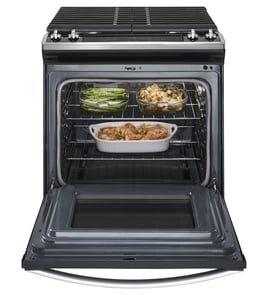




How long should a Kenmore gas stove last?
A Kenmore gas freestanding range like model 36272491990 typically lasts 15 years with normal household use. Consistent cleaning, correct burner flame, and quick repair of ignition or heating issues help you reach that lifespan.
Typical lifespan and what affects it
Most gas ranges land in a fairly tight range; the biggest differences come from heat exposure, cleaning habits, and how quickly small problems get fixed.
- Typical lifespan: 15 years
- Heavy use (daily high-heat cooking) can shorten life
- Poor airflow and grease buildup can overheat controls and wiring
- Repeated boil-overs can clog burner ports and corrode parts
- Ignition problems that are ignored can stress the gas valve and burner system
Maintenance checklist that adds years
These steps prevent common failures on Kenmore gas ranges.
- Clean surface burner caps and ports so flames stay even
- Wipe spills quickly to prevent corrosion and clogged orifices
- Keep the oven bottom and burner area free of heavy grease
- Replace a weak oven igniter early (slow preheat, gas smell, or no bake)
- Use the correct appliance bulb wattage if the oven light is dim or out
Parts that commonly drive “end of life” symptoms
If the range is otherwise in good shape, replacing a few key parts often restores reliable baking and ignition.
| Symptom | Common cause | Example part for this model |
|---|---|---|
| Oven won’t heat or takes too long | Weak igniter | G.e. range oven burner igniter WB13K21 |
| Uneven or low oven heat | Burner issue | Bake burner WB16K10035 |
| Oven light out | Burned-out bulb | 40a15bulb 40A15 |
Why it matters
A 15-year lifespan is realistic only when the burner system lights quickly and burns cleanly. Fixing slow ignition and uneven flames early improves cooking results, reduces wear on the gas components, and helps your 36272491990 range stay dependable.
Last updated: February 2026
How to change Kenmore spark electrode igniter?
To change a spark electrode igniter on your Kenmore gas freestanding range model 36272491990, we shut off power and gas, remove the burner parts to access the electrode, transfer the wire connector to the new electrode, then reinstall and test for a strong, consistent spark at the burner.
Safety first (do this before touching anything)
- Turn the range control knobs to OFF.
- Unplug the range or switch OFF the circuit breaker.
- Close the gas shutoff valve.
- Let the cooktop cool completely.
- Work in good light so you do not cross-thread screws or crack porcelain.
Step-by-step: replacing the spark electrode
- Remove the grate and lift off the burner cap and burner head.
- Remove the screw(s) holding the electrode to the burner base or orifice holder.
- Pull the electrode up gently to expose the wire connection.
- Move the wire connector to the new electrode: attach the connector to the wire and crimp it snug so it cannot pull off.
- Insert the new electrode into the orifice holder and secure it with the screw.
- Reinstall the burner head and cap; make sure the cap sits flat.
- Restore gas and power; test ignition.
What “good ignition” looks like
| Check | Normal result | If not normal |
|---|---|---|
| Spark | Rapid clicking, visible spark to burner | Re-seat electrode and cap; check wire fit |
| Flame | Even blue flame around burner | Clean burner ports; verify cap alignment |
| Timing | Lights within a few seconds | Inspect electrode tip spacing and mounting |
Common mistakes that cause repeat failures
- Burner cap not seated correctly (spark clicks but no ignition)
- Loose or poorly crimped connector (intermittent spark)
- Electrode mounted crooked or too far from the burner
- Moisture or heavy cleaner residue around the igniter tip
Why it matters
A properly mounted spark electrode lights gas quickly, which reduces delayed ignition, improves burner performance, and helps prevent unburned gas odors during startup.
For additional troubleshooting if the burner still will not light after replacement, use our oven wont heat troubleshooting gas range problems video.
Last updated: February 2026
How to remove the top of a Kenmore gas range?
To remove the cooktop on your Kenmore 36272491990 gas freestanding range, we lift off the removable burner pieces first, then release the cooktop fasteners and hinge or lift the top (depending on the design). Shut off power and gas before starting.
Safety first
- Turn off power at the breaker (or unplug the range).
- Shut off the gas supply valve.
- Let all burners and the oven cool completely.
- Protect the countertop and cooktop surface with a towel or cardboard.
- Use gloves; sheet metal edges under the top can be sharp.
Step-by-step: removing the cooktop
- Remove the grates.
- Lift off the burner caps and any removable burner heads/bases.
- Look for screws at the front lip (under the front edge) or under the burner bases; remove them.
- If your model uses burner tubes, remove any screws securing the tubes to the top.
- Lift the front of the cooktop. Some tops hinge up; others lift off after the rear tabs release.
- Support the top safely (or disconnect any ground wire clips if present) before fully removing it.
What you may need to remove (common layouts)
| Cooktop style | What usually comes off first | What usually holds the top down |
|---|---|---|
| Sealed burners | Grates, burner caps | Front screws and/or rear tabs |
| Open burners | Grates, burner heads | Screws at burner bases and tube brackets |
Why it matters
Removing the top gives access to surface burner valves, igniters, and gas tubing so you can clean spills, clear clogs, or replace parts without forcing components and causing leaks.
Parts that are commonly involved
If you are lifting the top to diagnose a burner that will not light or has an uneven flame, these parts are often in the repair path:
- Range surface burner orifice WB28K10023 (sets gas flow to the burner)
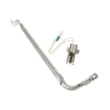
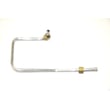
- Range surface burner supply tube WB28K10024 (feeds gas to the burner area)
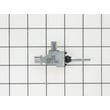
- Range surface burner valve WB21K38 (controls gas to the burner)
Last updated: February 2026
What are the symptoms of a bad igniter on a gas oven?
A bad oven igniter on your Kenmore 36272491990 gas freestanding range usually shows up as an oven that will not heat, heats very slowly, or lights after a long delay. In many cases the igniter still glows, but it is too weak to open the gas valve reliably.
Common symptoms you can see and hear
- No bake heat at all, even though the control is set to Bake
- Igniter glows dull orange or red instead of getting bright
- Long preheat times or the oven never reaches set temperature
- Delayed ignition (burner lights late, sometimes with a brief “whoosh”)
- Burner cycles erratically (heats, then drops out unexpectedly)
Quick checks we recommend (before replacing parts)
- Confirm gas supply: surface burners should light and burn steadily.
- Watch the igniter during Bake: it should glow strongly and the burner should light within about 30 to 90 seconds on most gas ranges.
- Look for burner ignition pattern: once lit, the bake burner flame should be even across the burner.
- If the igniter glows but the burner does not light, the igniter is the most common cause; the replacement for many versions of this model is the g.e. range oven burner igniter WB13K21.
Igniter vs. gas valve: what the symptoms usually mean
| What you observe | Most likely cause | What to do next |
|---|---|---|
| Igniter does not glow at all | Igniter open, wiring issue, or control problem | Check wiring connections; test igniter continuity |
| Igniter glows weakly, burner never lights | Weak igniter | Replace igniter |
| Igniter glows strong, still no flame | Gas valve or gas supply issue | Check for proper gas supply; consider valve diagnosis |
Why it matters
A weak igniter can prevent the oven gas valve from opening on time, which causes no-heat complaints, temperature swings, and delayed ignition. Replacing a failing igniter often restores normal preheat and steady baking performance.
Last updated: February 2026
Where to find model number on Kenmore gas range?
On a Kenmore gas freestanding range like model 36272491990, the model number is printed on a rating label attached to the appliance frame. The most common spots are the oven door frame (door jamb) or the frame behind the storage/warming drawer.
Most common label locations to check
- Open the oven door and look along the left or right door jamb (front frame)
- Pull out the bottom storage drawer and look on the frame behind it
- Check the back panel near the gas line connection area
- Look on the side frame just inside the cooktop edge (if accessible)
What the label looks like (and what to write down)
The rating label usually includes several identifiers. For parts lookup, we recommend copying these exactly:
- Model number (example: 36272491990)
- Serial number (helps confirm production run)
- Gas type (natural gas or LP) and sometimes BTU ratings
| Label item | Why it matters for parts |
|---|---|
| Model number | Matches your exact parts list and diagrams |
| Serial number | Helps confirm correct revision/version |
| Gas type (NG/LP) | Affects burner orifice sizing and fuel setup |
Why it matters
Kenmore ranges often have similar-looking designs across multiple model numbers. Using the exact model number prevents ordering the wrong burner, igniter, or hardware and speeds up finding the right replacement part.
If you are troubleshooting while you are there
If you are already checking inside the oven or drawer area and the oven is not heating, a common repair on gas ranges is the oven igniter. For this model, the g.e. range oven burner igniter WB13K21 is one of the key parts tied to bake ignition.
Related DIY help: Kenmore 362 freestanding range error codes
Last updated: February 2026