Error Codes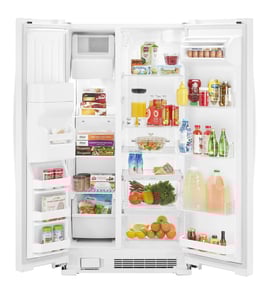



Does anyone make a 30 inch side-by-side refrigerator?
Yes. Several brands make 30-inch class side-by-side refrigerators, but they are less common than 33-inch and 36-inch models. If you are trying to match the built-in opening for a KitchenAid KSSP48QJS00, measure the cabinet cutout carefully because “30-inch” is often a nominal size.
What “30-inch” usually means
Most “30-inch” refrigerators are designed to fit a 30-inch wide space, but the actual cabinet width can vary by fractions of an inch, and door swing and handle depth can change the real clearance you need.
- Confirm the cutout width (inside cabinet opening)
- Check door swing clearance (especially next to a wall)
- Verify depth (counter-depth vs standard depth)
- Plan for ventilation (built-in vs freestanding requirements)
- Confirm water line needs if you want ice and water
Quick fit checklist (before you buy)
Use this checklist to avoid a “fits on paper, not in the kitchen” problem:
- Measure width at the front and back of the opening
- Measure height to the lowest cabinet/trim point
- Measure depth to the back wall and any baseboard
- Note hinge side and whether you need reversible doors
- Confirm electrical outlet location and water supply location
Common 30-inch options (what you’ll see in the market)
| Type | Typical width class | Notes |
|---|---|---|
| Freestanding side-by-side | 30-inch class | Limited selection; often fewer features |
| Built-in/undercounter side-by-side | 30-inch class | Niche products; verify ventilation and cutout specs |
| Narrow French door (alternative) | 30-inch class | More common than side-by-side in this width |
Why it matters for KSSP48QJS00 owners
Your KitchenAid KSSP48QJS00 is a built-in refrigerator, so replacing it with a narrower 30-inch unit can leave gaps, require trim changes, or affect airflow. If you are also troubleshooting water or ice features while shopping, our guides like how to prevent water dispenser and ice maker problems can help you evaluate whether a repair is a better short-term option.
Last updated: January 2026
Is side-by-side or bottom freezer better?
For most households, a bottom-freezer refrigerator is better for everyday convenience because fresh food sits at eye level and you bend less. A side-by-side (like KitchenAid KSSP48QJS00) is better when you want narrow door swing clearance and easy access to frozen foods.
Quick comparison
| Feature | Side-by-side (KSSP48QJS00 style) | Bottom freezer |
|---|---|---|
| Fresh food access | Good, but shelves are narrower | Best, most-used items at eye level |
| Freezer access | Very convenient, no bending | More bending (drawer/basket) |
| Door swing clearance | Often better in tight kitchens | Can need more clearance |
| Wide items (pizza boxes, platters) | Harder in freezer due to narrow side | Often easier in freezer drawer |
| Ice/water in door | Common | Common on many models |
Choose side-by-side if you want
- Better fit in a galley kitchen or tight aisle (narrower doors)
- Frozen foods at a comfortable height
- In-door ice and water convenience
- More organized freezer shelving (less “stacking” than a drawer)
Choose bottom freezer if you want
- Fresh food at eye level (less bending for daily use)
- Wider refrigerator shelves for trays and large containers
- A freezer drawer that holds bulky items more easily
- A layout many people find easier for meal prep and groceries
Why it matters
The “better” style depends on how you use the refrigerator. If you access fresh food far more than frozen food, bottom freezer usually feels more efficient day to day. If your kitchen is tight or you use the freezer constantly, side-by-side can be the more practical fit.
If you are troubleshooting a side-by-side experience
If your decision is driven by performance issues (warm temps, weak airflow, slow ice), those are typically repairable. For example, evaporator fan issues can affect cooling consistency; our refrigerator evaporator fan motor WP4389155 is a common part involved in airflow problems.
Last updated: January 2026
How do I find the model number on my KSSP48QJS00?
Your KitchenAid built-in refrigerator’s model number is on the appliance ID tag, usually inside the fresh food compartment along the side wall or near the ceiling. Match that tag exactly to KSSP48QJS00 when selecting diagrams and parts.
Where to look on a KitchenAid built-in refrigerator
Check these common ID tag locations:
- Inside the refrigerator section on the left or right side wall
- Near the top (ceiling) of the fresh food compartment
- Around the door opening (door jamb area)
- Behind the crisper drawers (on the liner wall)
- On the hinge-side frame area (visible when the door is open)
What to write down (and why)
Record the full information from the tag so we can match the correct parts list for your exact unit.
- Model number (example: KSSP48QJS00)
- Serial number
- Any revision or engineering code (if shown)
- Brand (KitchenAid)
Quick match guide
| On the tag | How to use it |
|---|---|
| Model number | Use it to pull the correct parts diagrams and compatibility |
| Serial number | Helps confirm production range when parts changed over time |
| Revision code | Helps avoid ordering a similar-looking but incorrect part |
If the tag is missing or unreadable
Use these practical options to confirm the model before ordering:
- Check your purchase paperwork or installation documents
- Look for a second tag near the grille area (common on built-in designs)
- Compare your dispenser and ice maker configuration to the parts diagrams
- Use our guide: how to find your appliance model number (and what it means for parts)
Why it matters
KitchenAid model numbers can be very similar; one character difference can change the correct door gasket, ice maker, or electrical parts. Using the exact KSSP48QJS00 model number helps ensure proper fit and function.
Last updated: March 2026