




What is NSF ANSI standard 184 certified dishwasher?
An NSF/ANSI 184 certified dishwasher is a residential dishwasher, such as the GE CDT845M5N3S5, that has been tested to meet a sanitization performance standard. In practice, it means the dishwasher can achieve a 99.999% (5-log) bacteria reduction when you run the unit on its sanitizing cycle.
What NSF/ANSI 184 requires (in plain terms)
To earn NSF/ANSI 184 certification, a residential dishwasher’s sanitizing cycle must meet key performance targets, including:
- Sanitization performance: at least 99.999% (5-log) bacteria reduction
- Final rinse temperature: must reach 150°F during the sanitizing cycle
- Verified results: performance is validated through standardized testing, not just a “sanitize” label
What this means for everyday use
Certification matters most when you need extra hygiene, but it only applies when you use the correct cycle and setup.
- Select the dishwasher’s Sanitize (or sanitizing) option, not a quick cycle
- Avoid opening the door mid-cycle, which can reduce heat retention
- Use fresh detergent and load so spray arms can rotate freely
- Keep filters and spray paths clean so hot water reaches all surfaces
Quick reference: certified vs. not certified
| Feature | NSF/ANSI 184 certified sanitize cycle | Non-sanitize or non-certified cycle |
|---|---|---|
| Bacteria reduction target | 99.999% (5-log) | Not standardized |
| Final rinse temperature target | 150°F | Varies by cycle |
| Testing standard | Verified to NSF/ANSI 184 | No NSF/ANSI 184 verification |
Why it matters
NSF/ANSI 184 certification helps you compare dishwashers based on a consistent sanitization benchmark. If your GE dishwasher is not heating, not filling, or not completing the sanitize cycle, that performance can drop even if the dishwasher runs.
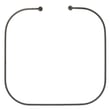
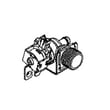
If you suspect a heating or water-fill problem, common repair paths include checking the element heat WD05X35098 and the dishwasher water inlet valve WD15X26078.
Last updated: January 2026
Is a lower dBA better for a dishwasher?
Yes. For a GE dishwasher like model CDT845M5N3S5, a lower dBA rating is better because it means the dishwasher runs quieter. In most kitchens, anything around the low-to-mid 40 dBA range sounds very quiet; going below that is even quieter but usually costs more.
What dBA numbers sound like in real life
Dishwasher sound ratings are measured in dBA; every small drop is noticeable.
- 50 dBA and up: clearly audible in the next room
- 44 to 47 dBA: quiet enough for most open kitchens
- 40 to 43 dBA: very quiet, often hard to notice
- Below 40 dBA: ultra-quiet, premium pricing is common
| dBA rating | What you typically notice | Best for |
|---|---|---|
| 50+ | You hear it running | closed kitchens, budget models |
| 44 to 47 | soft background sound | most households |
| 40 to 43 | barely noticeable | open floor plans |
| <40 | near-silent | noise-sensitive spaces |
When paying for lower dBA is worth it
Lower dBA is most valuable when the dishwasher runs while you are nearby.
- Open-concept kitchen and living room
- You run cycles at night
- You work from home near the kitchen
- You frequently use longer cycles (Normal, Auto, Heavy)
Why “quiet” can still sound loud sometimes
Even a low-dBA dishwasher can seem noisy if something is off.
- Dishes or utensils are touching and rattling
- The unit is not firmly secured and vibrates against cabinets
- Spray arms are hitting tall items
- A worn pump can get louder over time (wash or drain)
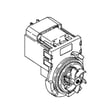
If your CDT845M5N3S5 suddenly gets louder and you also notice poor washing or odd draining sounds, common suspects include the wash pump main asm WD19X25700 or the dishwasher drain pump WD19X25461.
Why it matters
A lower dBA rating improves comfort and flexibility; you can run the dishwasher during meals, TV time, or overnight without it becoming a distraction.
Last updated: January 2026
Can a clogged drain cause an FTD error?
Yes. On the GE CDT845M5N3S5 dishwasher, a clogged drain or standing water in the tub can trigger an FTD error because the dishwasher expects to drain to an empty tub before it starts the next fill and wash sequence.
What to check first (fast, no parts)
- Cancel the cycle and let the dishwasher attempt a drain.
- Remove and clean the filter area and sump screen; clear food debris, labels, and glass.
- Check the sink drain/disposer inlet where the dishwasher drain hose connects; clear any blockage.
- Inspect the drain hose for kinks, crushing, or a low spot that traps water.
- Verify the high loop (or air gap, if used) is installed correctly to prevent backflow.
Parts that commonly relate to FTD and draining
If the drain path is clear but the dishwasher still leaves water behind, these model-matched parts are common suspects:
| Symptom you see | Most likely area | Example model-matched part |
|---|---|---|
| Hums but won’t pump water out | Drain pump or obstruction at pump | Dishwasher drain pump WD19X25461 |
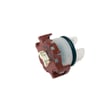
| Drains sometimes, then errors | Water level sensing or pressure feedback | GE dishwasher pressure sensor WD21X25468 |
| Won’t fill after draining issues | Fill system (after tub is confirmed empty) | Dishwasher water inlet valve WD15X26078 |
Why a clogged drain can trigger FTD
FTD is commonly tied to the dishwasher not reaching the expected water condition at the expected time. If old water remains in the tub, the control can interpret that as a drain or fill problem and stop the cycle to prevent poor washing or overflow.
When to use error-code help
If you see FTD repeatedly after clearing the drain path, use GE electronic dishwasher error codes to narrow the failure to draining, sensing, or control-related issues before replacing parts.
Last updated: January 2026
What are the most common problems with GE dishwashers?
For the GE CDT845M5N3S5 dishwasher, the most common problems are no-start/no-run, not draining, not cleaning well, not drying, and unusual noises. These issues usually trace back to the door latch, drain system, wash pump and spray arms, heating circuit, or a control-related fault.
Most common symptoms and what they usually mean
- Won’t start or stops mid-cycle: door not fully latched, power issue, or a control fault
- Water won’t drain: clogged filter/sump area, kinked drain hose, or a weak drain pump
- Dishes still dirty: blocked spray arms, low water fill, or wash pump circulation problem
- Not drying: heater circuit issue, venting problem, or settings/load issues
- Grinding or humming noises: debris in pump area, failing pump, or spray arm contact
Quick checks we recommend first (fast, no parts)
- Confirm the door closes firmly and the latch engages; a mis-latch can prevent starting.
- Reset power at the breaker for 1 minute, then try a normal cycle.
- Clean the filter area and remove debris from the sump.
- Check the drain hose routing for kinks and make sure the sink/disposer connection is clear.
- Run hot water at the sink for 30 to 60 seconds before starting to improve wash performance.
Parts that commonly fix these problems on CDT845M5N3S5
| Symptom | Common part to inspect | What it affects |
|---|---|---|
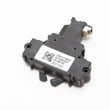
| Won’t start | GE dishwasher door latch lock WD21X10490 | Confirms the door is closed so the control will run |
| Not draining | Dishwasher drain pump WD19X25461 | Pumps water out through the drain hose |
| Not cleaning | Wash pump main asm WD19X25700 | Circulates water to the spray arms |
| Not drying | Element heat WD05X35098 | Heats water and supports drying performance |
Error codes can speed up the diagnosis
If your display shows an error code, match it to the failure area before replacing parts. Use GE electronic dishwasher error codes to identify what the code points to (drain, fill, heating, or control).
Why it matters
Dishwasher problems often look similar (for example, “not cleaning” can be low fill, a blocked spray arm, or a weak wash pump). Narrowing the symptom first helps you avoid replacing the wrong part and gets your GE dishwasher back to normal cycle time and performance.
Last updated: January 2026





