Installation guide
 Owner’s manual
 Error Codes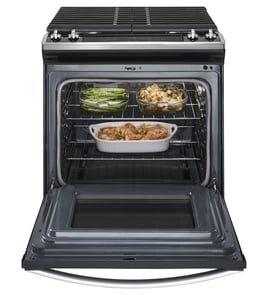




How long should a Kenmore gas stove last?
A Kenmore gas range like model 79074239310 typically lasts 15 years with normal household use. Consistent cleaning, correct burner flame adjustment, and quick repair of ignition or heating problems help you reach that lifespan; see the maintenance guidance in the 79074239310 owner's manual.
Most gas ranges land in the same general window, but these factors make the biggest difference:
- How often the oven and surface burners are used (daily cooking shortens life)
- Keeping burner heads, caps, and ports clean so flames stay even and blue
- Avoiding repeated “clicking” ignition issues (they stress switches and spark components)
- Fixing slow oven ignition early (it can lead to poor baking and extra wear)
- Using proper cookware and correct flame size (reduces soot and overheating)
Use this as a simple routine for the 79074239310:
- Wipe spills promptly; baked-on spills can damage finishes and create odors
- Clean burner caps and burner heads so gas ports do not clog
- Confirm flames are mostly blue; brief orange tips can happen from dust or coastal air
- Keep the oven interior and bottom area clean per the 79074239310 owner's manual
- Replace failed wear items (igniters, sensors, bulbs) before they cause bigger symptoms
Many problems that feel like “the range is dying” are actually repairable.
| Symptom | Most common cause | Typical fix |
|---|---|---|
| Oven won’t heat or heats very slowly | Weak igniter | Replace igniter (often restores normal bake) |
| Oven temperature swings | Temperature sensor drifting | Replace sensor, then verify temps |
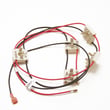
| Burners click but won’t light reliably | Igniter switch/harness or spark module issue | Inspect wiring, replace failed component |
| Oven light out | Burned-out bulb | Replace bulb |
Model-matched parts we commonly see for these issues:
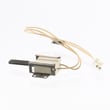
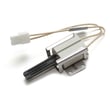
- Tappan range oven burner igniter 316489403
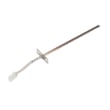
- Frigidaire range oven temperature sensor 316490000
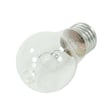
- Appliance light bulb, 40-watt 316538904
A gas range can run for years past the point where performance starts slipping. Addressing ignition and temperature-control issues early keeps cooking results consistent, reduces nuisance shutdowns, and helps your Kenmore 79074239310 reach its full expected service life.
Last updated: February 2026
How to change Kenmore spark electrode igniter?
To change a surface-burner spark electrode igniter on Kenmore gas range model 79074239310, we shut off power, lift the cooktop as needed, remove the burner parts, swap the electrode (and wire connection), then reassemble and verify ignition at the LITE setting per the installation guide.
- Turn the surface burner knob to OFF.
- Unplug the range or switch OFF the circuit breaker (igniters are electric).
- Shut off the gas supply valve if you will lift the cooktop or move the range.
- Let all burner parts cool completely.
- Work in good light; take a photo before disconnecting any wire.
- Remove the grate and burner cap. Lift off the burner cap and set it aside.
- Remove the burner head (if applicable). Some designs lift off; others are secured with screws.
- Access the electrode. The electrode is the small ceramic post near the burner head.
- Disconnect the wire. Pull the connector straight off the electrode terminal (do not yank the wire).
- Remove the electrode. Take out the mounting screw and lift the electrode out.
- Install the new electrode. Seat it in the same position and secure it with the screw.
- Reconnect the wire. Push the connector fully onto the new electrode terminal.
- Reassemble the burner. Reinstall the burner head and cap; confirm the cap is centered and “clicks” into place and does not slide off-center.
After restoring power (and gas), test each burner:
- Push in and turn the knob to LITE; you should hear sparking.
- The burner should light within about 4 seconds after air is purged from the gas line.
- Once lit, turn the knob out of LITE so the igniter stops sparking.
| Symptom | Most likely cause | What to check |
|---|---|---|
| No spark at any burner | No power to range | Breaker, outlet, cord |
| All burners spark but one will not light | Gas not reaching that burner or burner parts misaligned | Cap centered, burner head seated, ports clear |
| Clicking continues after lighting | Knob left in LITE or moisture/soil around electrode | Turn knob down; dry/clean area |
A correctly seated burner cap and properly connected electrode give fast ignition and prevent constant sparking, delayed lighting, and uneven flames.
Last updated: February 2026
How to take the top off a Kenmore gas range?
For Kenmore gas range model 79074239310, the cooktop is not removable, so we do not take the top off as a service step. Instead, we access burners and ignition parts from above (grates, caps, heads) or from the rear/lower panels as outlined in the installation guide.
- Turn all knobs to OFF and let everything cool.
- Remove the grates.
- Lift off the burner caps.
- Lift off the burner heads (some lift straight up; some may be held by screws depending on position).
- Shut off gas at the manual shut-off valve if you will move the range
- Unplug the power cord (spark ignition uses electricity)
- Protect the countertop with a towel or cardboard
- Keep burner parts grouped by burner location
- Use the right driver (commonly 1/4-in or 5/16-in nut driver)
Because the cooktop does not lift off on this design, deeper service is typically done by pulling the range out and removing access panels.
| What you need to reach | Common access method | What you may remove |
|---|---|---|
| Surface igniter wiring | Rear panel | Rear panel screws, wire connectors |
| Spark module | Rear panel or lower area | Rear panel, mounting screws |
| Oven igniter | Inside oven cavity | Oven bottom panel, flame spreader/shield |
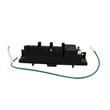
If a surface burner will not spark or clicks constantly, the issue is often in the ignition circuit. For model 79074239310, a common related part is the range spark module 5304508269.
Trying to lift or “take off” a non-removable cooktop can bend the main top, damage burner alignment, or pinch ignition wiring. Using the correct access method keeps the gas range safe and prevents repeat ignition and flame problems.
Last updated: February 2026
What are the parts of a gas oven?
A Kenmore 79074239310 gas oven is built around a gas burner system (igniter, gas valve, burner, and temperature control) plus the oven cavity parts that manage heat, airflow, and lighting. Many “oven problems” trace back to the igniter, sensor, or door seal.
- Oven burner: produces the bake flame when gas is released and ignited.
- Hot surface igniter: glows, then triggers the gas valve to open so the burner lights.
- Oven gas valve: opens to feed gas to the burner once the igniter is hot enough.
- Temperature sensor/thermostat control: tells the control system when to cycle heat on and off.
- Oven vent: exhausts heat and combustion byproducts; it must stay unobstructed.
- Oven light and lens/shield: illuminates the cavity; uses a 40-watt appliance bulb.
If you are identifying parts for repair on the Kenmore 79074239310, these are common service items:
- Tappan range oven burner igniter 316489403
- Frigidaire range oven temperature sensor 316490000
- Frigidaire range oven gas valve 316031501
- Appliance light bulb, 40-watt 316538904
When you set Bake, current flows to the igniter; it glows like a light bulb. After about 30 to 60 seconds, the gas valve opens and the burner lights. The igniter and burner then cycle to hold temperature.
| Symptom | Most likely area | Common part to check |
|---|---|---|
| No bake flame, no glow | Ignition circuit | Oven burner igniter |
| Glow but no flame | Gas valve or weak igniter | Gas valve, igniter |
| Temperature swings | Sensing/control | Oven temperature sensor |
| Light out | Lighting | 40-watt appliance bulb |
Knowing the core parts helps you troubleshoot safely and avoid replacing the wrong component. For example, a “no heat” complaint is often an igniter issue, while “bakes unevenly” points more toward airflow, sensor feedback, or door sealing.
- Keep the oven vent clear; blocking it can affect combustion airflow.
- Do not attempt to operate the electric ignition oven during a power failure; reset controls to OFF.
- Use the procedures and diagrams in the 79074239310 owner’s manual for part locations and safe access.
Last updated: February 2026
Where to find Kenmore gas range model number?
On Kenmore gas range model 79074239310, the model and serial number identification plate is on the right-hand surface of the oven front frame. Open the storage drawer, warmer drawer, or broiler drawer to see the plate; the exact location is shown in the installation guide.
- Turn the oven off and let it cool.
- Pull out and open the bottom drawer (storage, warmer, or broiler drawer depending on your range).
- Look at the right-hand side of the oven front frame.
- Find the identification plate with the model and serial numbers.
- Write down the model number, serial number, and lot number/letter.
When we help you order parts or troubleshoot, these details prevent mismatches.
| What to copy | Where it’s used | Example of why it matters |
|---|---|---|
| Model number | Parts compatibility | Ensures the correct igniter or sensor fits |
| Serial number | Service history | Helps identify production changes |
| Lot number/letter | Exact configuration | Confirms factory fuel/pressure setup |
Kenmore ranges can share similar styling across model series, but internal components (like an oven igniter, temperature sensor, or control board) can differ. Using the identification plate info helps us match the correct replacement part the first time.
- Wipe gently with a damp cloth; avoid abrasive cleaners.
- Use a flashlight and take a close-up photo.
- Compare the number format with the 79074239310 owner’s manual.
Last updated: February 2026