 Installation guide
 Owner’s manual




What are the commonly replaced parts in a dishwasher?
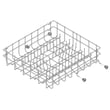
In a Kenmore 58714012400 dishwasher, the most commonly replaced parts are the ones tied to leaks, filling/draining, heating, and wash performance: door seals and gaskets, spray arms, inlet and drain pumps, heating parts, and door-latch components. Use the owner's manual to match symptoms to the right part.
Commonly replaced parts (and what they fix)
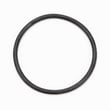
- Door seals and gaskets: stop water leaks at the door or tub edge
- Spray arms: restore spray coverage when dishes come out dirty
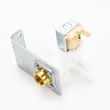
- Water inlet valve: fixes slow fill or no fill issues
- Drain pump: fixes standing water at the end of the cycle
- Heating element and thermostat: improves drying and helps maintain proper wash temperature
- Door latch parts: fixes a dishwasher that will not start because the door will not latch
Model-specific examples available for Kenmore 58714012400
| Symptom | Common part to check | Example part on this model |
|---|---|---|
| Leaking at bottom of door | Lower door seal | Gasket 809006501 |
| Poor cleaning, spray seems weak | Spray arm | Dishwasher spray arm 5304518927 |
| No fill or slow fill | Water inlet valve | Valve 154637401 |
| Won’t drain, water left in tub | Drain pump | Dishwasher drain pump A00126501 |
| Not drying, water not heating | Heating circuit | Heater 154665201 and dishwasher thermostat 154290204 |
Quick checks before replacing parts
- Confirm the water supply is on and the supply line is not kinked.
- If filling is weak, clean the inlet valve screen; the installation instructions describe removing screws at the inlet end of the valve to clean the filter screen.
- Make sure items are not blocking the spray arm from rotating.
- Verify home water pressure is typically 20 to 120 psi and incoming water is at least 120°F (49°C).
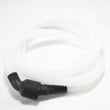
- If draining is poor, check for a kinked drain hose and a clear sink/disposer connection.
Why it matters
Replacing the correct part first saves time and prevents repeat leaks, poor wash results, and overheating or no-heat conditions. It also helps you avoid replacing higher-cost items (like a motor or control panel) when the root cause is a seal, valve, or clogged spray component.
Last updated: February 2026
How to reset Kenmore 58714012400 dishwasher?
To reset a Kenmore 58714012400 dishwasher, we restore the control to a known starting point by turning the cycle dial to OFF (or a clear stop position), then selecting a fresh cycle and closing the door to latch. This clears most “stuck” cycle or control conditions.
Quick reset steps (dial-control models)
- Turn the cycle dial clockwise until it points to OFF (or the end of a cycle).
- Wait 30 seconds.
- Turn the dial to NORMAL WASH (or your preferred cycle).
- Run the hot water at the nearest sink until it is hot, then turn it off.
- Close the door firmly until it latches to start.
For the exact cycle positions and options on your unit, follow the cycle chart in the owner's manual.
If the dishwasher still will not respond
These checks fix the most common “won’t start” or “buttons not working” complaints on this model style:
- Confirm the door is fully closed and latched (a weak latch can prevent starting).
- Make sure the dial is not between detents; align it exactly on a cycle.
- Check the house breaker or fuse; reset the breaker once if it tripped.
- If the tub is overfilled or the unit acts like it is flooding, inspect the float area; a stuck float can keep the fill system off.
- If you see leaking at the bottom of the door, replace the lower door seal; a leak can lead to safety shutoff behavior on some installations.
| Symptom | Most likely cause | What we do next |
|---|---|---|
| Dial turns but nothing happens | No power or door not latched | Check breaker, then latch alignment |
| Starts then stops quickly | Dial not set cleanly on a cycle | Re-seat dial on NORMAL WASH |
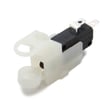
| Overfilling or no fill | Float/float switch issue | Inspect float; consider switch 154773201 |
| Water leaking at door bottom | Worn lower seal | Replace gasket 809006501 |
Why it matters
A proper reset gets the dishwasher back to the normal “Getting Started” sequence (load, add detergent, select cycle, latch door). It also helps you avoid repeated partial fills, poor cleaning, and unnecessary strain on the motor and heater.
Last updated: February 2026
How to drain a Kenmore 58714012400 dishwasher?
To drain your Kenmore 58714012400 dishwasher, we shut off power, then drain water by disconnecting the drain line from the drain pump and letting it empty into a pan. If it is not draining during normal use, we focus on the drain hose routing and connections first. See the owner's manual for the drain and winterizing steps.
Quick drain steps (safe method)
- Turn off power at the breaker (electric shock hazard).
- Shut off the water supply.
- Place a shallow pan and towels under the dishwasher.
- Disconnect the drain line from the drain pump and drain water into the pan.
- Reconnect the drain line securely before restoring power.
If the dishwasher will not drain during a cycle
Most “won’t drain” problems on this model come from a restricted drain path, a kinked hose, or a poor drain hose setup.
Check these common causes
- Drain hose kinked, crushed, or routed with sharp bends
- Drain hose not properly attached to the drain pump assembly
- Drain hose loop not high enough (the loop should be at least 32 inches above the floor)
- Hose connected incorrectly (avoid connecting to a horizontal pipe between the sink drain and disposer)
- Clog at the sink/disposer connection or an external air gap (if your setup uses one)
Drain setup checklist (what “correct” looks like)
| Item to verify | What we look for | Why it matters |
|---|---|---|
| Hose routing | No kinks or sharp bends | Prevents restricted drain flow |
| High loop | At least 32 inches above floor | Helps prevent backflow |
| Hose position | Dishwasher does not rest on hose | Avoids pinching and leaks |
| Connection point | Secured with a clamp | Prevents leaks and blow-offs |
Parts that commonly relate to draining issues
If the hose and sink connection are clear but draining is still weak, a failing drain pump is a common next suspect.
Why it matters
A restricted drain can leave dirty water in the tub, cause odors, and reduce wash performance. Correct hose routing and a proper high loop are the fastest fixes because they address the most common installation-related drain problems.
Last updated: February 2026





