Owner’s manual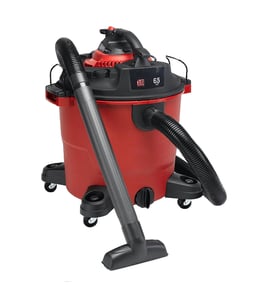



What is the list of vacuum cleaner parts?
For the Craftsman 113177571 wet/dry vacuum, the parts list includes the power and airflow components (motor and housing), the collection drum and float shutoff, the filter system, and the cleaning accessories like the hose and nozzles. For the complete model-specific breakdown, use the 113177571 owner's manual.
Common parts you will see on a wet/dry vacuum
These are the most common components customers replace or troubleshoot on a Craftsman wet/dry vac:
- Motor and motor housing (creates suction and airflow)
- Power cord and plug (power delivery; cord damage is a common issue)
- Drum or tank (holds debris and liquids)
- Float mechanism (shuts off airflow when liquid reaches a set level)
- Filter and filter cage/plate (captures dust; must be dried after wet pickup)
- Hose and adapters (air path from tool to drum)
- Nozzles and tools (utility nozzle, crevice tool, brush)
- Wheels/casters (mobility)
Model-specific accessories available for Craftsman 113177571
If you are building out your setup or replacing worn accessories, these parts match this model page:
| Accessory type | Example part for this model | What it helps with |
|---|---|---|
| Hose | Wet/dry vacuum hose, 1-1/4-in x 6-ft 551013109 | Restores suction path; replaces cracked or leaking hose |
| Adapter | Wet/dry vacuum hose adapter, 1-1/4 to 2-1/2-in 551025121 | Connects different hose/tool sizes |
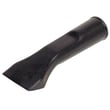
| Detail tools | Wet/dry vacuum crevice tool 551012109 | Tight spaces, corners, car interiors |
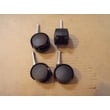
| Mobility | Wet/dry vacuum caster wheel 551009108 | Replaces broken or stuck wheels |
Why it matters (picking the right part)
Wet/dry vac parts are not one-size-fits-all. Hose diameter (such as 1-1/4 inch), tool fit, and the filter and float setup directly affect suction, safety, and whether the vac can handle liquid pickup without shutting off early.
Quick safety and use notes from the manual
- Unplug the vac before changing/cleaning the filter or emptying the drum.
- Do not vacuum flammable/combustible liquids, explosive dust, or hot ashes.
- When vacuuming liquids, keep the filter installed; the float will rise and stop airflow when the drum fills.
- If the filter gets wet, dry it before dry pickup to prevent mildew and filter damage.
Last updated: February 2026
Where to find model number on Craftsman Wet-Dry Vac?
On the Craftsman wet/dry vacuum model 113177571, the model and serial number are printed on the handle. We recommend writing both down and keeping them with your paperwork so you can match parts correctly using the 113177571 owner's manual.
Where to look (quick checklist)
- Unplug the wet/dry vacuum.
- Stand behind the unit and locate the carry handle.
- Look for a label or stamped plate on or near the handle.
- Find MODEL NO. 113.177571 (often shown as 113177571) and the serial number.
- Record both numbers for future parts ordering and service.
What the label typically shows
| Label item | What it’s used for | Example for this vac |
|---|---|---|
| Model number | Identifies the exact vacuum design | 113177571 |
| Serial number | Identifies your specific unit | Varies by unit |
| Brand/type | Confirms product family | Craftsman wet/dry vacuum |
Why it matters
Craftsman wet/dry vac parts can look similar across models, but hose sizes, filters, and motor components can differ. Using the exact model number helps us match the correct accessories and repair parts the first time.
Parts that commonly depend on the model number
- Hose diameter and length (for example, 1-1/4 inch vs. 2-1/2 inch)
- Filter style and filter cage fit
- Casters and drum configuration
- Switch and motor cover style
Last updated: February 2026
What is the best wet-dry vacuum to buy?
For most DIY and garage cleanups, the “best” wet-dry vacuum is the one that matches your job size and accessories. If you already own a Craftsman wet/dry vacuum like model 113177571, keeping it running with the right hose, tools, and filter care often delivers the best value for everyday household use (as intended in the 113177571 owner's manual).
How to choose the right wet-dry vacuum
Focus on the features that change real-world performance:
- Capacity (gallons): bigger drums mean fewer trips to empty, but more bulk to store.
- Hose diameter and length: wider hoses move debris faster; longer hoses improve reach.
- Wet pickup protection: look for a float shutoff that stops airflow when the drum fills.
- Filtration and maintenance: a torn or missing filter reduces performance and can damage the vac.
- Noise and comfort: hearing protection matters for long sessions.
If you already have Craftsman 113177571: upgrades that matter most
Many “new vac” complaints are really hose or tool limitations. These model-compatible accessories are common performance boosters:
- Replace a cracked or stiff hose with the wet/dry vacuum hose, 1-1/4-in x 6-ft 551013109.
- Improve tight-space pickup with the wet/dry vacuum crevice tool 551012109.
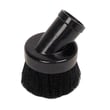
- Add detail cleaning with the wet/dry vacuum dusting brush, 1-1/4-in 551004116.
- Improve mobility with the wet/dry vacuum caster wheel 551009108.
Quick comparison: what “best” means by use case
| Use case | What to prioritize | Typical fit |
|---|---|---|
| Car interior, small messes | 1-1/4 in tools, crevice reach | Portable or small shop vac |
| Garage and DIY projects | Strong airflow, durable hose | Mid-size shop vac |
| Heavy debris, frequent wet pickup | Larger capacity, float shutoff | Larger shop vac |
Why it matters
Wet pickup changes how a vac behaves. On the Craftsman 113177571, airflow will stop and motor pitch rises when the float lifts at a set liquid level; at that point, shut the vac off, unplug it, and empty the drum. Running with the float raised can damage the motor, and the filter needs to be dried after liquid pickup to prevent mildew.
Last updated: February 2026
How do you remove the filter from a CRAFTSMAN wet dry vac?
On the Craftsman 113177571 wet/dry vacuum, unplug the power cord first, remove the top (motor) section to access the filter, then take off the filter retainer (plate and nut) and slide the filter straight off the filter cage. Handle the paper filter gently to avoid tears.
Safety first (do this every time)
- Unplug the vacuum before changing or cleaning the filter.
- Never run the vac without a filter installed.
- Do not remove the filter cage; it helps protect your fingers from the blower wheel.
- If the filter is torn or has holes, replace it right away.
Step-by-step: removing the filter
- Turn the vac off and unplug it.
- Release the latches and lift off the top section (powerhead) to expose the filter area.
- Remove the filter plate (retainer) and loosen the filter nut (finger pressure only).
- Slide the filter off the filter cage.
- Tap loose debris into the drum; for fine dust, rinse gently with water (low pressure) and let the filter dry fully before dry pickup.
Cleaning method guide
| Situation | Best method | Key tip |
|---|---|---|
| Light dry debris | Tap debris loose | Tap against the inside of the drum |
| Fine dust buildup | Rinse with water | Use low pressure to avoid damaging pleats |
| Wet pickup used | Rinse and dry completely | Store only when fully dry |
Reinstalling the filter (quick checklist)
- Wipe the lid sealing area clean so the filter seats properly.
- Slide the filter fully onto the cage.
- Reinstall the filter plate and run the filter nut down finger tight only (do not overtighten).
- Confirm the filter is snug and evenly seated before closing the lid.
Why it matters
A clean, properly seated filter keeps suction strong and prevents dust from blowing back into the air. A damaged filter can leak dust and quickly reduce performance.
For diagrams and the exact filter assembly order for this model, use the 113177571 owner's manual.
Last updated: February 2026