 Installation guide
 Owner’s manual


What is the lifespan of a GE dryer?
A GE electric dryer like model GTDP490ED8WS typically lasts about 10 to 13 years with normal household use. Consistent airflow maintenance (lint filter and venting) and avoiding overloads are the biggest factors that help your dryer reach the upper end of that range; see the GTDP490ED8WS owner's manual for care and cleaning guidance.
What affects dryer lifespan the most
- Airflow and venting: A partially clogged exhaust makes the dryer run longer and work harder.
- Lint filter habits: Cleaning the lint filter before each use reduces heat stress and improves drying.
- Load size: Overloading increases wear on the drum belt, idler pulley, and motor.
- Heat management: Restricted airflow can overheat thermostats and the heating element.
- Installation quality: Short, rigid metal ducting and proper routing reduce strain and drying time.
Maintenance checklist that extends life
Use these habits to keep your GE GTDP490ED8WS running efficiently:
- Clean the lint filter before every load.
- Inspect and clean the vent duct periodically; disconnect and vacuum the duct when lint builds up.
- Confirm the outside exhaust hood flaps move freely and are not blocked.
- Do not crush or collapse the vent; use the shortest practical run.
- Avoid overloading; it wastes energy and increases wrinkling and wear.
Common wear items vs. what you’ll notice
| What wears | What you may notice | Example part for this model |
|---|---|---|
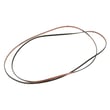
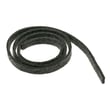
| Drum belt | Drum not turning, squealing, burning rubber smell | Dryer drum belt WE03X29897 |
| Heating system components | Long dry times, no heat, cycling issues | Heating element, thermostats |
| Door switch | Dryer will not start when door is closed | Door switch |
Why it matters
A dryer that runs longer due to vent restriction or overloading puts extra stress on the heating element, thermostats, motor, and drum support parts. Keeping airflow strong is the simplest way to reduce repairs and maximize lifespan.
Last updated: January 2026
What is the most common problem with a GE dryer?
The most common problems we see with the GE GTDP490ED8WS electric dryer are long dry times from restricted venting, no heat from a tripped breaker (electric dryers often need two), and a drum that will not turn due to a worn belt. Confirm basics first using the GTDP490ED8WS owner's manual.
Most common symptoms and what usually causes them
- Clothes take too long to dry: lint filter full, kinked or clogged exhaust duct, outside hood damper stuck.
- Dryer tumbles but does not heat: one house fuse blown or one breaker tripped (dryer can run but not heat).
- Dryer will not start: unplugged cord, tripped breaker, door not fully closed, failed door switch.
- Drum will not turn: worn or broken belt, idler pulley issue.
Quick checks we recommend (in order)
- Clean the lint filter before every load.
- Inspect the vent path; use the shortest run possible and avoid crushed ducting.
- Check the outside exhaust hood; make sure the flaps move freely and nothing is nesting inside.
- Reset both breakers (or replace both fuses) for the dryer circuit.
- If the motor runs but the drum does not, inspect the belt and idler system.
Common causes at a glance
| Symptom | Most likely cause | What to check first |
|---|---|---|
| Long dry times | Restricted venting | Lint screen, duct kinks, hood damper |
| Tumbles, no heat | One breaker/fuse open | Reset both breakers, verify 240V supply |
| Will not start | Power or door circuit | Outlet power, door closure, switch |
| No tumble | Belt or idler problem | Belt condition, idler pulley movement |
Parts that often fix these issues
If your symptoms match, these model-compatible parts are common solutions:
- Dryer drum belt WE03X29897 (drum not turning)
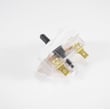
- Dryer door switch WE4M415 (won’t start when door is closed)
- Dryer heating element WE11M10001 (no heat after power and venting check)
Why it matters
Restricted venting is a top root cause because it increases drying time and can trigger overheating-related shutdowns. Proper 4-inch metal ducting and a clear exhaust hood help the GTDP490ED8WS dry faster and run more efficiently.
Last updated: January 2026
How to tell if a GE dryer motor is bad?
On a GE GTDP490ED8WS electric dryer, a bad motor usually shows up as the drum not turning, a humming sound with no rotation, or the dryer stopping shortly after start. We confirm motor failure by checking power and door/start circuits first, then testing the motor circuit for proper continuity.
Quick symptoms that point to a failing motor
- Dryer hums but the drum will not turn (belt and drum are not jammed)
- Dryer starts, then stops within seconds (often after the start button is released)
- Burning smell or repeated thermal shutdown (after airflow checks)
- Drum turns by hand but will not run under power
- Motor runs intermittently, especially when warm
Rule out the common non-motor causes first
Before condemning the motor, we check these items because they can mimic a bad motor:
- Power supply: many electric dryers need two breakers/fuses; the dryer can tumble or act odd if one side is lost
- Door switch: if it is not closing electrically, the motor will not run (see dryer door switch WE4M415)
- Start circuit: a failed start switch can prevent the motor from engaging (see dryer push-to-start switch WE4M416)
- Drum drive: a broken belt can make it seem like the motor is bad (see dryer drum belt WE03X29897)
| What you observe | Most likely area to check | Typical next step |
|---|---|---|
| No sound at all | Power, timer, door/start circuit | Verify breakers, then test switches |
| Hums but won’t turn | Motor, seized drum, belt/idler | Check drum for binding, then test motor |
| Starts then stops quickly | Motor centrifugal switch, start circuit | Test motor circuit continuity |
How we test the motor (safe, practical approach)
- Unplug the dryer before opening panels.
- Confirm the drum turns by hand and nothing is binding.
- Inspect the belt and idler path for breaks or jams.
- Use a multimeter to check continuity through the motor circuit (including the motor windings and internal switch paths as shown in the wiring diagram in the GTDP490ED8WS owner’s manual).
Why it matters
A weak or failing motor can overheat, trip safety devices, and leave clothes damp. Verifying airflow and the drive system first prevents replacing a motor when the real issue is a belt, switch, or vent restriction.
Last updated: January 2026





