Owner’s manual
 View engine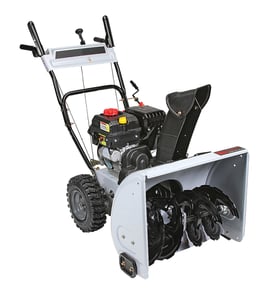



How to read Craftsman snowblower serial number?
On the Craftsman snow thrower model 247883962, the serial number is read directly from the product identification label; we use that serial number to identify the exact production run, while the model number identifies the design family. Use the label details exactly as printed in the 247883962 owner's manual.
Where to find the identification label
Most Craftsman snowblowers place the product identification label on the rear of the unit near the wheel area. For this style of machine, check:
- The back side of the metal base between the left and right rear wheels
- The rear frame area just above the axle
- The lower rear housing where the handle assembly mounts
- Any label plate riveted to the chassis (not the plastic belt cover)
How to read it correctly
Write the information down exactly as shown, including any letters, dashes, and leading zeros.
- Model number: identifies the snowblower model (example format may start with letters on some Craftsman units)
- Serial number: identifies the specific unit; it is usually longer and may include letters and numbers
- Date code (if shown): helps narrow down parts changes within the same model
- Engine model/type/code (if shown): useful when ordering engine-specific parts like a spark plug or carburetor
Quick checklist before you order parts
- Clean snow and grime off the label so every character is readable
- Copy characters carefully (0 vs O, 1 vs I)
- Match the model number to 247883962 before selecting parts
- If the label is damaged, use the diagrams and specs in the 247883962 owner's manual to confirm what you have
Why it matters
Snowblower parts can change within the same model over different production runs. Using the correct serial number helps ensure you get the right belt, cable, bearing, or shear pin for your exact Craftsman unit.
| What you have | What it helps with |
|---|---|
| Model number (247883962) | Finds the correct parts diagrams and assemblies |
| Serial number | Confirms the correct version within the model |
| Engine ID info | Matches engine-specific maintenance and repair parts |
Last updated: January 2026
What is the most common problem with snow blowers?
The most common snowblower problem is a no-start condition. On the Craftsman snow thrower model 247883962, this is usually caused by stale fuel, a dirty carburetor, or ignition issues such as a worn spark plug, especially after off-season storage. See the 247883962 owner's manual for the correct starting and maintenance steps.
Quick checks we recommend first
- Confirm the fuel is fresh and the fuel shutoff (if equipped) is ON.
- Make sure the ignition key is fully inserted.
- Verify the choke is set for cold starting and the throttle is in the FAST/RUN position.
- Check that the spark plug wire is firmly seated.
- If the engine is flooded, set choke OFF and pull-start several times to clear it.
Most common causes and what they look like
| Symptom | Likely cause | What to do next |
|---|---|---|
| Engine will not start after storage | Old fuel or varnished carburetor | Drain old fuel, refill with fresh fuel; clean the carburetor if needed |
| Starts, then dies | Restricted fuel flow or dirty carburetor | Check fuel cap vent, fuel line, and carburetor bowl |
| Hard starting in cold weather | Choke not used correctly, thick oil | Use full choke for cold start; verify oil is correct for winter temps |
| Pull cord feels normal but no ignition | Spark plug issue | Inspect/replace spark plug; confirm spark plug wire connection |
Parts that commonly get involved in “won’t start” complaints
Even though a no-start is often fuel or ignition related, these model-related items frequently show up during diagnosis:
- A broken Craftsman snowblower shear pin 738-04124A can stop the auger from turning (the engine may still run).
- A worn auger belt can prevent snow throwing even if the engine starts.
- A stretched drive cable can keep the drive or auger from engaging correctly.
Why it matters
Most snowblower “problems” start as simple maintenance issues. Fresh fuel, correct oil, and seasonal checks reduce hard-starting, stalling, and poor performance, and they help protect the carburetor and engine.
For step-by-step maintenance help, use how to check a snowblower spark plug video and how to change snowblower oil video.
Last updated: January 2026
Is it worth fixing a snowblower?
Yes, it’s usually worth fixing a Craftsman snow thrower like model 247883962 when the repair is a normal wear item (belts, cables, shear pins) and the total repair cost stays well below the price of a comparable new machine. Use the 247883962 owner’s manual to confirm the correct maintenance and adjustment checks before you buy parts.
Quick way to decide (cost vs. value)
We use this simple rule for most gas snowblowers:
- Repair it when the fix is routine and parts plus labor are under about 50% of the cost of a similar new snowblower.
- Replace it when the repair involves major drivetrain or gearbox damage, or repeated failures that push costs above that threshold.
- Repair it now if the machine is otherwise solid and you just lost auger or drive function (often a belt, cable, or shear pin).
Typical “worth fixing” repairs on this model
Common, cost-effective fixes include:
- Replacing a broken auger protection pin such as the Craftsman snowblower shear pin 738-04124A
- Replacing a worn auger belt (symptom: auger stops under load)
- Replacing a worn ground drive belt (symptom: wheels won’t pull)
- Adjusting or replacing a drive or speed selector cable
- Lubricating the drive hex shaft and wheel hubs to restore smooth drive engagement
What the symptoms usually mean
| Symptom | Most common cause | Typical fix type |
|---|---|---|
| Auger won’t turn but engine runs | Broken shear pin, loose belt, belt wear | Low-cost part and adjustment |
| Wheels won’t move in any gear | Drive belt wear, friction wheel wear, cable out of adjustment | Moderate repair |
| Grinding or loud clunking in auger housing | Foreign object damage, bearing/gear issues | Inspect before investing |
Why it matters
A snowblower’s auger and drive systems are designed with “sacrificial” wear parts (like shear pins and belts). Fixing those items restores performance without replacing the whole machine, and it helps prevent bigger damage to the gearbox and auger shaft.
Helpful DIY guidance
If you’re weighing a belt or drive issue, follow how to replace a snowblower belt video to estimate time, tools, and complexity before deciding.
Last updated: January 2026