Owner’s manual
 Error Codes


How to tell cubic feet of Kenmore refrigerator by model number?
For Kenmore Elite model 10658962700, the model number by itself usually does not reliably tell the exact cubic-foot capacity. The most accurate way is to use the refrigerator’s listed interior capacity in the owner's manual, or calculate an estimate from the usable interior dimensions.
- Check the capacity spec in the owner's manual (often listed as “capacity” or “total volume”).
- Look for the rating label inside the fresh food section or freezer section; some units list capacity on the product data label.
- Estimate capacity by measuring usable interior space (see formula below).
- Use the model number to match the correct product documentation; that is the most dependable “model-number-based” method.
Measure the usable interior space (not the outside cabinet):
- Fresh food compartment: height x width x depth (in inches)
- Freezer compartment: height x width x depth (in inches)
Then calculate:
| What you measure | Math | Result |
|---|---|---|
| Cubic inches | H x W x D | total cubic inches |
| Cubic feet | cubic inches ÷ 1728 | approximate cu. ft. |
- Measure to the inside liner, not the door bins.
- Subtract space taken by fixed shelves, ice maker housing, and air ducts.
- Add fresh food + freezer results for a total capacity estimate.
Capacity affects how you shop for the right parts and accessories (for example, water filtration and ice maker components) and helps you compare side-by-side refrigerators by usable storage, not just exterior size.
Last updated: February 2026
Where is the model number on a Kenmore side by side refrigerator?
On Kenmore Elite side-by-side refrigerator model 10658962700, the model number is printed on the appliance identification label inside the fresh food (refrigerator) compartment, typically on a side wall near the top or around the crisper area. Check the same label for the serial number.
- Open the refrigerator door and scan the left and right interior walls
- Look near the top front edge where the cabinet meets the door opening
- Check around the crisper drawers (side wall or ceiling area)
- Look for a white or silver sticker/plate with barcodes
- If you do not see it, remove items and use a flashlight to read the label clearly
The ID label commonly includes both the model and serial information.
| Item on label | What it’s used for | Why you need it |
|---|---|---|
| Model number | Identifies the exact refrigerator design | Ensures parts like a water filter or ice maker match |
| Serial number | Identifies the production unit | Helps confirm version and production details |
We use the model number to match the correct Kenmore parts and diagrams for your exact refrigerator. For example, the correct water filter and ice maker can vary by model, even within similar-looking side-by-side units.
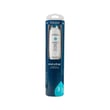
Once you find the model number, compare it to the listing on your parts page and then choose parts by name and ID, such as the genuine Kenmore refrigerator water filter EDR3RXD1 or refrigerator ice maker 2198597. For more model-specific identification details, use the owner's manual.
Last updated: February 2026
What is the average lifespan of a Kenmore Elite refrigerator?
Most Kenmore Elite refrigerators average 12 to 15 years of service life. With steady maintenance (clean airflow, good door sealing, correct temperatures) and timely repairs, many units can reach 15 to 20 years, including the Kenmore Elite 10658962700.
A refrigerator’s lifespan is mostly driven by compressor run time, heat removal, and how well the doors seal.
- 12 to 15 years: common average for modern side-by-side refrigerators
- 15 to 20 years: achievable with strong maintenance and fewer heavy-use conditions
- Shortens lifespan: dirty condenser coils, warm room location, frequent door openings, poor door sealing, ice maker or water leaks
Use these habits to reduce compressor workload and prevent moisture and ice issues.
- Keep condenser area clean and unobstructed for better heat release
- Confirm doors close easily and seal fully; adjust leveling if needed
- Set temperatures correctly and change only one setting at a time, then wait 24 hours for stabilization
- Replace the water filter on schedule to protect water flow and reduce dispenser issues
- Watch for early symptoms (warm temps, frost buildup, unusual noises) and address them quickly
| Age of refrigerator | What’s common | What we recommend |
|---|---|---|
| 0 to 5 years | Minor adjustments, filter changes | Follow the owner's manual for temperature and ice maker setup |
| 6 to 12 years | Wear parts, occasional leaks or ice issues | Inspect water supply parts and door sealing |
| 13 to 20 years | Higher chance of cooling or defrost problems | Repair if cooling system is strong; replace key wear parts as needed |
If you are maintaining water and ice features, these parts are commonly involved in performance and reliability.
- Genuine Kenmore refrigerator water filter EDR3RXD1 (water quality and flow)
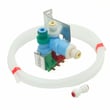
- Refrigerator inlet valve W10408179 (water supply to ice maker and dispenser)
- Refrigerator ice maker 2198597 (ice production and shutoff function)
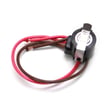
- Refrigerator defrost bi-metal WPW10225581 (helps prevent frost-related airflow loss)
A side-by-side refrigerator can run a large portion of the day; keeping airflow clean, doors sealing, and temperatures stable reduces run time and heat stress. That directly improves food safety, energy use, and the odds of reaching the upper end of the lifespan range.
Last updated: February 2026
Why is my Kenmore Elite side by side ice maker not working?
If the ice maker in your Kenmore Elite 10658962700 side-by-side refrigerator is not making ice, the most common causes are the ice maker being switched off, the freezer not being cold enough yet, or a water supply issue (filter restriction or a failed inlet valve). Use the 10658962700 owner's manual steps to confirm the ice maker ON setting and water system prep.
- Confirm the ice maker is ON (wire shutoff arm down for Style 1, or the switch slid to ON for Style 2).
- Make sure the household water supply valve is fully open and the line is not kinked.
- Allow time: after installation or a warm-up, it can take 24 hours to start making ice and up to 3 days to fill the bin.
- If you use reverse osmosis, expect lower water pressure; low pressure can reduce or stop ice production.
- Replace a clogged filter such as the genuine Kenmore refrigerator water filter EDR3RXD1.
A working water dispenser does not always guarantee the ice maker is getting enough flow. The ice maker fills through the inlet valve and a small fill tube that can freeze or clog.
| Symptom | Most likely cause | What we recommend |
|---|---|---|
| No ice, no fill sound | Water supply off or ice maker OFF | Turn ice maker ON; verify supply valve open |
| Small cubes or slow production | Restricted filter or low pressure | Replace filter; verify pressure and RO setup |
| No ice, dispenser works | Inlet valve issue or frozen fill tube | Inspect fill tube for ice; consider valve replacement |
If you suspect the valve is not opening for the ice maker, the model-matched replacement is the refrigerator inlet valve W10408179.
An ice maker that runs without adequate water flow can cycle repeatedly, make hollow cubes, or stop producing altogether. Getting the freezer cold enough and restoring steady water flow prevents repeat failures and improves cube quality.
Last updated: February 2026
What are the common problems with Kenmore Elite refrigerators?
Common problems on the Kenmore Elite side-by-side refrigerator model 10658962700 include warm temperatures, ice maker or dispenser issues, water leaks, frost or ice buildup, and unusual noises. Most fixes start with temperature control checks, allowing 24 hours between adjustments, and inspecting airflow, water supply, and the defrost system (see the owner's manual).
- Fridge or freezer too warm: dirty condenser coils, blocked vents, evaporator fan problem, or a defrost issue
- Ice maker not making ice: ice maker switched off, freezer not cold enough yet, or low water pressure
- Water dispenser slow or dripping: air in the water system, restricted filter, or inlet valve issue
- Water leaking inside: clogged defrost drain, ice buildup around the evaporator area
- Buzzing, thumping, or fan noise: ice maker running without water, normal ice harvest sounds, or a worn fan blade
- Confirm temperatures and wait time: after any control change, wait 24 hours before adjusting again.
- Give a new install time to stabilize: allow 24 hours after installation for the refrigerator to reach the recommended setting.
- Check ice maker basics: make sure the ice maker is ON; if the water line is not connected, turn the ice maker OFF to prevent buzzing.
- Verify water supply and pressure: a household water supply must be connected and turned on; reverse osmosis systems can reduce pressure.
- Look for airflow restrictions: avoid blocking vents with packages; listen for the evaporator fan running.
If troubleshooting points to a failed component, these model-matched parts are common fixes:
| Symptom | Likely part to check | Part ID |
|---|---|---|
| No ice or weak water flow | Refrigerator water filter | Genuine Kenmore refrigerator water filter EDR3RXD1 |
| No water to ice maker/dispenser | Refrigerator inlet valve | Refrigerator inlet valve W10408179 |
| Frost buildup, warm temps | Defrost bi-metal or heater | Refrigerator defrost bi-metal WPW10225581, refrigerator heater WP2323198 |
| Rattling or scraping in freezer | Evaporator fan blade or motor | Refrigerator evaporator fan blade WP2169142, refrigerator evaporator fan motor WP2315549 |
Catching airflow, water-supply, and defrost problems early helps prevent food spoilage, recurring ice buildup, and strain on major components like the compressor.
Last updated: February 2026