Owner’s manual
 Error Codes


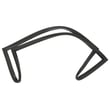

How to remove bottom grille on GE refrigerator?
On the GE GFE28GGKIBB bottom-mount refrigerator, the bottom grille (base grille) typically comes off by removing any retaining screws (if present) and then pulling the grille straight out to release the tabs. Reinstall by aligning it and sliding it back into place.
Steps to remove the bottom grille
- Unplug the refrigerator or switch off power at the breaker (safer when working near wiring).
- Look along the top edge of the grille for retaining screws; remove them with a Phillips screwdriver if your unit has them.
- Grip the grille near both ends.
- Pull the grille straight toward you to release the clips or tabs.
- If it resists, check for hidden screws and pull evenly to avoid cracking the plastic.
If you need to pull the refrigerator out first
The manual guidance for moving the refrigerator applies when you need clearance to access the lower front area.
- Raise the front leveling legs.
- Pull the refrigerator straight out (do not “walk” it sideways).
- Watch the power cord and water supply line so they do not get pinched or rolled over.
- Push the refrigerator straight back in, then lower the leveling legs until they touch the floor.
For the model-specific moving and safety notes, follow the owner's manual.
Quick tool and fastener guide
| What you might see | What to use | What to do |
|---|---|---|
| No screws visible | Hands | Pull grille straight out to release tabs |
| Phillips screws | Phillips screwdriver | Remove screws, then pull grille out |
| Hex-head screws (less common) | Nut driver/socket | Remove screws, then pull grille out |
Why it matters
Removing the base grille is a common first step for cleaning dust from the condenser area, checking for water leaks, or accessing lower-front components. Pulling straight and supporting the grille prevents broken mounting tabs and rattles after reassembly.
Last updated: February 2026
Is a top mount or bottom mount fridge better?
A bottom-mount refrigerator like the GE GFE28GGKIBB is usually better for everyday convenience because fresh food sits at eye level and you bend less. A top-mount refrigerator is often the better pick if you want the simplest layout and typically lower energy use.
Quick comparison
| Feature | Bottom-mount (bottom freezer) | Top-mount (top freezer) |
|---|---|---|
| Fresh food access | Best (most-used items up high) | Good, but you bend more |
| Freezer access | More bending | Best (freezer at eye level) |
| Organization | Often more bins and drawers | Often simpler, fewer zones |
| Energy use | Often slightly higher | Often slightly lower |
| Price and complexity | Often higher | Often lower |
What we recommend choosing based on
- How you cook: If you use fresh ingredients daily, bottom-mount is more comfortable.
- Freezer habits: If you use the freezer constantly, top-mount keeps it easiest to reach.
- Kitchen space: Bottom-mount units can be heavier and may need more careful leveling for door closure.
- Organization needs: Bottom-mount designs commonly include more drawers and storage zones.
- Long-term upkeep: More features (ice maker, dispenser, extra controls) can mean more parts to maintain.
Why it matters
Most households open the fresh-food doors far more than the freezer. With a bottom-mount design, you reduce bending and keep frequently used items (milk, produce, leftovers) in the most accessible spot, which can make daily use noticeably easier.
Helpful model-specific tip (GE GFE28GGKIBB)
If you choose a bottom freezer model and the doors do not seem to close or align well after moving or leveling, follow the setup and adjustment guidance in the owner's manual. Proper leveling helps doors seal correctly, which supports stable temperatures and efficient cooling.
Last updated: February 2026
What is the most common problem with a GE refrigerator?
The most common GE refrigerator complaint is not cooling correctly (fresh food warm, freezer warming, or temps swinging). On the GE GFE28GGKIBB bottom-mount refrigerator, many “cooling problems” are caused by airflow issues, door sealing/alignment, or normal operating conditions described in the owner's manual.
Most common issues we see (and what to check first)
- Not cooling or weak cooling: confirm temperature settings; allow 24 hours after first plug-in or a long power outage for temps to stabilize.
- Strange noises: humming, fan speed changes, cracking/popping, and ice-chute motor sounds can be normal during cooling and defrost.
- Ice maker not making ice: make sure the ice maker is turned on; discard the first 24 hours of ice after starting to reduce odor/taste issues.
- Water dispenser dripping or leaking: purge air by dispensing water for at least 5 minutes.
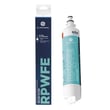
- Slow water flow: a clogged or misinstalled water filter is a top cause.
- Door not closing or doors misaligned: door alignment affects cooling and frost; this model uses an adjustment screw accessed by opening the freezer door.
Quick symptom-to-cause guide
| Symptom | Most likely cause | Best first step |
|---|---|---|
| Fresh food warm, freezer OK | Airflow restriction or door not sealing | Check door seal and door alignment; avoid overpacking vents |
| Both sections warm | Startup/power outage recovery or airflow issue | Wait 24 hours; confirm doors close fully |
| Clicking/popping noises | Normal cooling/defrost expansion | Compare to normal sounds in the manual |
| Dispenser drips after use | Air in water line | Dispense water 5 minutes to purge air |
| Slow dispenser flow | Clogged filter | Replace filter or install bypass plug (if used on your setup) |
Why it matters
Cooling, ice production, and water dispensing all depend on steady airflow and tight door sealing. A small door alignment or filter issue can look like a major failure, but it is often a fast fix once you match the symptom to the right check.
Helpful DIY resources
Last updated: February 2026