

How to identify a Kenmore washer model?
Your Kenmore washer model number is the ID we use to match the correct parts for your washer; for this page, the model is 11082873100. On most Kenmore washers, you’ll find the model/serial tag under the lid (top-load) or around the door opening (front-load), and sometimes on the back panel near the power cord.
Where to look on Kenmore washers
- Top-load washer: lift the lid and check the rim under the lid or the underside of the lid
- Front-load washer: open the door and check the door opening frame
- All styles: check the rear panel near the power cord entry or control console
- Look for a sticker or metal plate labeled “Model” and “Serial”
- Write the model number exactly as shown (numbers and any letters)
What the model number looks like
Kenmore model numbers are often 10 to 12 characters. Many Kenmore washers start with 110 (a common Kenmore prefix), followed by additional digits that identify the exact design and parts.
| What you see on the tag | What it means | Why it helps |
|---|---|---|
| Model number (example: 11082873100) | Exact washer identity | Ensures part fit and compatibility |
| Serial number | Production identifier | Helps with service history and age |
| Type/style codes (sometimes) | Internal configuration | Useful when multiple versions exist |
Why it matters when ordering parts
Using the exact model number prevents common fit issues, especially with high-variation items like a lid switch, water inlet valve, drain pump, or drive components.
- Model number narrows parts to the correct Kenmore washer design
- Prevents ordering look-alike parts that mount differently
- Helps match assemblies like the motor coupling and gear case
- Speeds up troubleshooting when symptoms point to common wear items
If you’re diagnosing a symptom while you identify the model, a quick cross-check of common failures can help; for example, agitation issues often involve the agitator dog 80040 or the coupling 285753A.
Why it matters
Kenmore washers can share similar cabinets and controls across different builds, but internal parts can vary; the model number is the fastest way to get the right replacement part the first time.
Last updated: February 2026
Is it worth repairing a Kenmore washing machine?
Yes, it’s usually worth repairing a Kenmore washer, especially a proven direct-drive top-load model like Kenmore 11082873100, as long as the repair cost is reasonable and the machine isn’t leaking badly from the tub or transmission area. Many common failures are inexpensive, long-lasting fixes.
A practical way we decide: repair vs. replace
We use these checkpoints to make the call quickly:
- Repair it when the issue is a common wear part (agitator, coupling, pump, lid switch) and the washer otherwise fills, drains, and spins.
- Repair it when the fix is under about 50% of the cost of a comparable new washer.
- Replace it when there’s major rust-through, repeated flooding, or multiple major failures at once.
- Replace it when the basket/tub area is damaged and the repair requires extensive teardown.
- Repair it when you like the cleaning performance and want to keep a simple mechanical design.
Common repairs on this model that are typically “worth it”
These are frequent, high-value repairs for Kenmore 11082873100:
| Symptom | Likely cause | Example part to check |
|---|---|---|
| Agitator moves poorly or “ratchets” | Worn agitator dogs | Agitator dog 80040 |
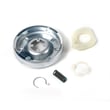
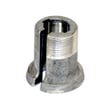
| Washer won’t agitate/spin but motor runs | Motor coupling broken | Coupling 285753A |
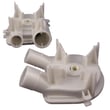
| Won’t drain or leaks at pump | Drain pump worn/cracked | Water pump WP3363394 |
| Won’t spin or has burning smell in spin | Clutch slipping | Whirlpool washer clutch 285785 |
| Won’t start or stops when lid opens/closes | Lid switch issue | Switch W10820036 |
What to check before spending money
- Confirm the washer drains strongly (good flow out of the drain hose).
- Listen for the motor: hums vs. runs (a hum often points to a jammed pump or failed coupling).
- Check for oil on the floor under the center (can indicate gear case problems).
- Inspect for water leaks during fill, wash, and drain.
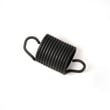
- If it’s out of balance often, inspect suspension components such as the washer suspension spring WP63907.
Why it matters
A targeted repair on a direct-drive Kenmore washer often restores full wash and spin performance for years, while avoiding the cost and learning curve of a new machine.
Last updated: February 2026
What is the average lifespan of a Kenmore washer?
A Kenmore washer typically lasts 10 to 15 years with normal household use. For your Kenmore model 11082873100, good loading habits, correct detergent use, and quick attention to leaks or draining problems help you reach the high end of that range.
What affects washer lifespan the most
- Overloading (stresses the drive system, clutch, and suspension)
- Frequent unbalanced loads (increases wear on springs and drive components)
- Slow draining or leaks (can damage the pump area and surrounding parts)
- Hard water and excess detergent (buildup can reduce performance over time)
- Delayed repairs after new noises, burning smells, or poor agitation/spin
Common wear items that can shorten life (and what they do)
If the washer stops agitating, won’t spin well, or makes grinding noises, these model-related parts are often involved:
| Symptom | Commonly involved part | What it impacts |
|---|---|---|
| Agitator moves poorly or “ratchets” | Agitator dog 80040 | Agitation action inside the agitator |
| Washer won’t agitate/spin, motor runs | Coupling 285753A | Transfers motor power to the drive system |
| Won’t drain or drains slowly | Water pump WP3363394 | Removes water from the tub |
| Loud banging, tub off-balance | Washer suspension spring WP63907 | Supports tub and controls movement |
Maintenance steps that add years
- Keep loads evenly distributed; wash bulky items with a few towels to balance.
- Use the right amount of HE detergent (even in many top-load situations, less is usually better).
- Check hoses and the drain path if you notice slow draining or water left in the tub.
- Stop using the washer if you see leaks; fix them before they damage other components.
- If agitation weakens, inspect the agitator components before the problem spreads to the drive system.
Why it matters
A washer that is maintained and repaired early usually avoids “cascade failures” where one worn part (like a coupling or pump) forces extra strain on the motor, clutch, or gearcase, shortening the overall life of the machine.
Last updated: February 2026