Owner’s manual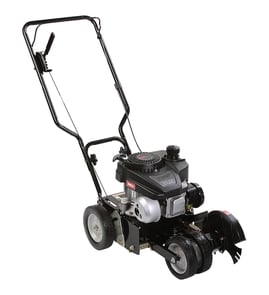



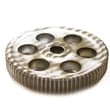
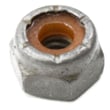
Should you sharpen edger blades?
For the Craftsman 358796500 electric edger, we do not sharpen the edger blade; we replace it if it’s bent, warped, cracked, broken, or otherwise damaged. Keeping the blade’s original shape helps the edger cut cleanly and reduces vibration.
What we recommend instead of sharpening
Sharpening can change the blade profile and lead to rough cutting or extra vibration. A better approach is routine inspection, cleaning, and replacement when needed.
- Unplug the edger before inspecting or servicing the blade area.
- Clean packed grass and debris from the blade and guard area.
- Inspect the blade for bends, cracks, warping, or missing chunks.
- Replace any damaged or worn guards before using the edger.
- Lightly oil external metal surfaces for storage to reduce corrosion.
For the model-specific maintenance and safety steps, follow the owner's manual.
When to replace the blade (practical checklist)
Replace the blade if you notice any of the following:
- Visible cracks, chips, or a bent edge
- Warping (blade does not look flat/true)
- Excessive vibration during operation
- Poor edging even at full speed and a steady pace
- The blade binds frequently after clearing debris
Quick decision table
| What you see | What it means | What to do |
|---|---|---|
| Blade is bent/warped/cracked | Unsafe and cuts poorly | Replace the blade |
| Blade is dull but intact | Normal wear | Clean, adjust depth, edge slowly |
| Blade won’t turn | Often debris binding | Clear debris; recheck guard area |
Why it matters
This edger’s blade spins at high speed and can keep rotating briefly after you release the switch. Maintaining the blade in safe condition (instead of reshaping it by sharpening) helps prevent binding, reduces motor strain, and keeps edging performance consistent.
Parts and ordering tips
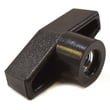
If you’re adjusting cut depth or the front wheel assembly, make sure the knob tightens securely. If your height adjustment hardware is worn or won’t hold position, replace the edger height adjuster knob 530402881. For additional replacement parts for model 358796500, use the parts list for this model or search by model number on Sears PartsDirect.
Last updated: February 2026
What size blade is a Craftsman 358796500 edger?
For the Craftsman 358796500 electric edger, the blade size is the round replacement blade specified for this model in the owner's manual. This model uses a dedicated edger blade (the manual lists it as a customer serviceable part), so matching the blade by model number is the correct way to ensure fit and safe operation.
How to confirm the correct blade for model 358796500
Use these checks before ordering:
- Verify the model number on the edger data label is 358796500.
- Use the parts list in the owner's manual to identify the correct blade listing.
- Compare your current blade’s center hole and mounting hardware style (cup washer, spring washer, hex nut).
- Replace any worn mounting hardware if it will not tighten securely.
- Inspect the blade guard and edge guide for damage before reinstalling.
Blade details you can rely on for this model
The documentation for this unit identifies the blade as a serviceable replacement part for the 358796500 edger (separate from the warranty coverage). That means the safest, most accurate “size” match is the blade specified for this exact model rather than a universal diameter.
What the manual shows (hardware stack-up)
| Item at blade mount | Purpose | What to look for |
|---|---|---|
| Cup washer | Centers and supports blade | Lip orientation matches manual diagram |
| Spring washer | Helps maintain tension | Not flattened or cracked |
| Hex nut | Secures blade | Threads tighten smoothly |
Why it matters
Edger blades are not interchangeable just by diameter. The arbor hole, thickness, and mounting hardware must match the Craftsman 358796500 design so the blade runs true, cuts cleanly, and stays secured during operation.
You can order the correct replacement blade and related hardware for your model through the parts list for 358796500, or search by model number on Sears PartsDirect.
Last updated: February 2026
Which is better, string or blade edger?
A blade edger is better when you want crisp, straight edges along sidewalks and driveways; a string edger is better for quick touch-ups and tight, irregular areas. Your Craftsman 358796500 is a blade-style edger, built for precise edging and controlled depth cuts (see the owner's manual).
Quick comparison: string vs. blade
| Feature | String edger | Blade edger (like Craftsman 358796500) |
|---|---|---|
| Edge quality | Good for light cleanup | Best for sharp, defined edges |
| Best surfaces | Curves, beds, around obstacles | Sidewalks, driveways, patios |
| Cutting behavior | Flexible line can fray/break | Metal blade cuts cleanly but can bind on debris |
| Maintenance | Replace line often | Inspect blade and guard; replace damaged blade |
When a blade edger is the better choice
We recommend a blade edger when you want consistent results and a straight edge line.
- You edge along concrete frequently (sidewalks, curbs, driveways)
- You want a uniform trench or bevel cut
- You need depth control using the front wheel adjustment
- You prefer a guided cut using the edge guide
When a string edger is the better choice
A string edger fits best when access and flexibility matter more than a perfectly crisp edge.
- You have lots of curves, landscape borders, or tight corners
- You only need light trimming, not cutting into soil
- You want a lighter-duty tool for quick weekly touch-ups
Safety and performance tips for blade edging
The 358796500 is designed to run a blade; the manual specifically warns not to use wire, rope, or string on this unit.
- Clear the area first; rocks, nails, wire, and string can be thrown or wrap the shaft
- Keep the blade guard installed and in good condition
- Let the blade reach full speed before entering the cut
- Adjust depth with the front wheel; deeper cuts increase motor load
- Replace blades that are bent, warped, cracked, or damaged
Why it matters
Choosing the right edger type affects edge quality, time spent, and safety. Blade edgers deliver the cleanest edge line, but they demand better debris control and regular blade inspection to prevent binding and kickback.
Last updated: February 2026