Owner’s manual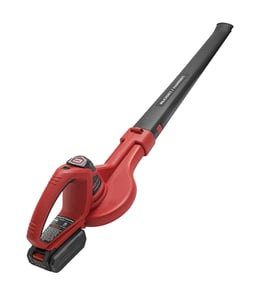



What is better, cfm or mph for a leaf blower?
For a leaf blower, CFM and MPH are both important because they measure different performance strengths. On the Craftsman 358799400 electric blower, the rating is 360 CFM and 220 MPH, which gives you strong force to dislodge debris (MPH) plus solid airflow volume to move it into piles (CFM). See the 358799400 owner’s manual for the exact performance ratings and operating guidance.
What each rating means (and when it matters)
- CFM (cubic feet per minute): how much air the blower moves; higher CFM helps move more leaves at once.
- MPH (miles per hour): how fast the air exits the nozzle; higher MPH helps break loose wet, stuck, or matted debris.
- Nozzle/tube design: a narrower outlet often increases MPH; a wider outlet often increases effective CFM at the work surface.
- Your job type: patios and driveways often benefit from higher MPH; lawns and large leaf piles often benefit from higher CFM.
Quick guide: which should you prioritize?
| Your cleanup situation | Prioritize | Why |
|---|---|---|
| Wet leaves stuck to pavement | MPH | More “push” to break debris loose |
| Large piles of dry leaves | CFM | Moves more material per pass |
| Tight corners, mulch beds | MPH | Better control and targeted force |
| General all-around yard cleanup | Balance | Best mix of loosening plus moving |
How we recommend choosing for real-world performance
- Start with what you clean most often (wet debris vs. dry piles).
- Consider corded electric vs. gas: electric models often deliver consistent airflow, but cord length and extension cord choice affect convenience.
- Use the right setup: never run the unit without the proper tube/attachment installed.
Why it matters
If you buy based on only one number, you can end up with a blower that either scatters debris without moving it efficiently (high MPH, low CFM) or moves air broadly but struggles to dislodge stuck material (high CFM, low MPH). A balanced rating is usually the best everyday choice.
Last updated: January 2026
How to find Craftsman leaf blower model number?
Your Craftsman electric leaf blower model number is printed on the product’s model label; for model 358799400, the manual lists it as Model No. 358.799400. On most units, the label is on the motor housing or main body where the power cord enters.
Where to look on a Craftsman leaf blower
Check these common label locations first:
- Side of the motor housing (main body)
- Rear of the housing near the handle
- Near the power cord strain relief (where the cord enters the unit)
- Under or near the inlet cover area (vacuum side)
- Along the lower housing seam where two halves join
What the model number looks like (and why it matters)
For this blower, you may see the number with punctuation on the label.
| You might see | It means |
|---|---|
| 358.799400 | Same model as 358799400 |
| 358799400 | Same model, just without the dot |
Using the exact model number helps us match the correct parts list, diagrams, and documentation such as the 358799400 owner’s manual.
Tips to read a worn or dirty label
If the label is hard to read:
- Unplug the blower first, then wipe the label with a damp cloth
- Use a flashlight at an angle to make embossed text easier to see
- Take a close-up photo and zoom in
- Write down every digit; one missing number can point to the wrong parts
Why it matters
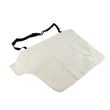
Craftsman blowers can look similar across model families, but parts like the collection bag and fasteners can differ. Confirming 358799400 ensures you order compatible items such as the vacuum bag 530095564 when you need replacements.
Last updated: January 2026
What is considered the best leaf blower?
The “best” leaf blower is the one that matches your yard size, debris type, and how you want to power it (corded electric, battery, or gas). For a corded electric model like Craftsman 358799400, “best” usually means strong airflow for typical leaves, easy handling, and safe operation per the owner's manual.
How to choose the best leaf blower for your needs
We recommend picking based on real-world use, not just CFM or MPH.
- Yard size: small patios and driveways vs. large lots
- Debris type: dry leaves vs. wet leaves and small twigs
- Power source: corded electric (steady power), battery (mobility), gas (maximum runtime)
- Noise and weight: important for longer sessions
- Attachments: blower tube, vacuum kit, and collection bag options
Quick comparison: corded electric vs. battery vs. gas
| Type | Best for | Typical tradeoffs |
|---|---|---|
| Corded electric (like Craftsman 358799400) | Reliable power for home cleanup near outlets | Cord management, extension cord selection matters |
| Battery | Convenience and portability | Runtime limits, battery cost |
| Gas | Heavy-duty, large areas | More maintenance, higher noise, fuel handling |
What “best” looks like for Craftsman 358799400 owners
If you already own the Craftsman 358799400 electric leaf blower, the best performance comes from using it the way it was designed.
- Use the blower only with the proper tube installed to control airflow and reduce flying debris risk
- Wear eye protection and clear the area of rocks, wire, and glass before blowing
- Use a polarized extension cord and correct outlet orientation for safer operation
- Keep air openings clear so airflow stays strong
- If you use vacuum mode, avoid vacuuming gravel, metal, or broken glass to protect the impeller
Why it matters
A leaf blower that is “best” on paper can be frustrating in real use if it is too heavy, too loud, underpowered for wet debris, or mismatched to your power setup. Matching the blower type to your cleanup routine gives better results and fewer clogs, stalls, and safety issues.
Last updated: January 2026
Is there a 300 mph leaf blower?
Yes, 300 MPH leaf blowers exist, but they are typically larger gas backpack blowers. Your Craftsman model 358799400 is an electric blower/vac rated at 220 MPH (360 CFM), so 300 MPH performance is outside what this model is designed to produce (see the 358799400 instruction manual).
What “300 MPH” usually means
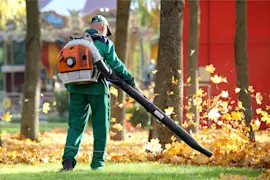
Most 300 MPH ratings are advertised for gas-powered backpack or high-output handheld blowers. MPH is only one part of performance; CFM (air volume) and nozzle design also affect how well a blower moves wet leaves and heavy debris.
- MPH: air speed at the nozzle (helps with stuck debris)
- CFM: air volume moved (helps push piles and cover area)
- Nozzle/tube design: can change real-world feel even at similar specs
- Power source: gas models often reach higher peak MPH than corded electric
How your Craftsman 358799400 compares
Here is the model-specific spec we use for quick comparison.
| Blower type | Typical use | Typical peak MPH range | Notes |
|---|---|---|---|
| Corded electric blower/vac (like 358799400) | Driveways, patios, light yard cleanup | ~150 to 250 | Often lighter, steady power, needs extension cord |
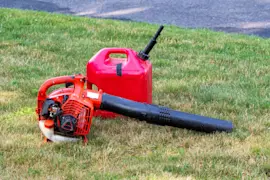
| Gas handheld | Medium yard cleanup | ~180 to 250+ | More portable, louder, more maintenance |
| Gas backpack | Large yards, heavy leaf loads | ~230 to 300+ | Highest output, heavier, higher cost |
If you want stronger blowing performance
If you are trying to “upgrade” results with the Craftsman 358799400, focus on setup and airflow restrictions.
- Use the correct blower tube and attachments listed in the 358799400 instruction manual
- Keep air vents and the blower tube clear of packed debris
- Use the correct extension cord gauge for the cord length (undersized cords reduce power)
- Avoid using the blower with openings blocked (airflow loss reduces performance)
- If using vacuum mode, make sure the bag is not overfilled; replace a torn bag such as the vacuum bag 530095564 when needed
Why it matters
Chasing a higher MPH number alone can be misleading. Matching MPH + CFM to your yard size and debris type helps you get faster cleanup without overbuying or ending up with a tool that feels underpowered.
Last updated: January 2026