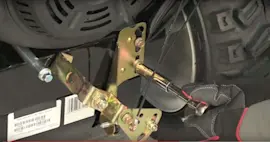
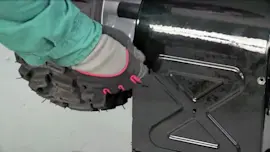
Owner’s manual
 View engine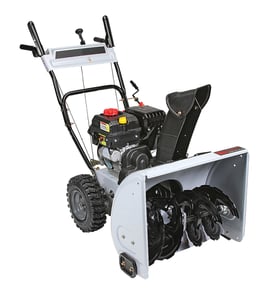



What is the typical lifespan of a gas snowblower?
A typical gas snowblower lasts 10 to 15 years with normal homeowner use and routine maintenance. For the Craftsman 247886913, the operator guidance also references an average useful life of 7 years or about 60 hours of operation, after which we recommend annual inspections to keep it operating safely and reliably (see the 247886913 operator's manual).
What “lifespan” means for a snowblower
Snowblower life is usually limited by wear items (belts, friction wheel rubber, scraper blade, skid shoes), corrosion, and fuel-system issues from storage.
Common lifespan ranges:
| Usage pattern | Typical service life | What usually ends it |
|---|---|---|
| Light, occasional storms | 12 to 20 years | Fuel varnish, rust, neglected maintenance |
| Average homeowner use | 10 to 15 years | Wear parts plus storage-related issues |
| Heavy, frequent use | 7 to 12 years | Drive/auger wear, friction wheel, cables, bearings |
Maintenance that extends life the most
We see the biggest lifespan gains from consistent seasonal care and correct off-season storage.
- Change engine oil on schedule and before long storage
- Use fresh fuel and drain/run the tank dry for storage periods over 30 days
- Inspect fuel line, tank, cap, and fittings for cracks or leaks
- Check that control levers engage and disengage correctly; adjust as needed
- Clear packed snow after use to prevent freeze-up of the auger/impeller
- Replace worn wear items before they damage larger assemblies
For step-by-step storage and engine prep details, follow the 247886913 operator's manual.
Why it matters
A snowblower can “still run” but become unsafe or unreliable as wear parts thin out and controls drift out of adjustment. Treating the 7-year or 60-hour mark as a checkpoint helps prevent mid-storm failures and protects major components like the auger gearbox and drive system.
Last updated: January 2026
How do I tell what year my snowblower is?
For Craftsman snow thrower model 247886913, the most reliable way to determine the year is to use the engine identification code (date code) on the engine itself; that code indicates when the engine was manufactured, which closely matches the snowblower’s build timeframe.
Where to find the date information
Check these common locations on the engine:
- Blower housing or recoil starter housing (near the pull-start)
- Valve cover area
- Engine shroud near the spark plug
- A metal tag or printed label on the engine
- Stamped numbers on the engine block
For diagrams and engine identification callouts, use the 247886913 owner’s manual.
How to read the engine code (typical format)
Many small engines use a numeric date code where the first two digits are the year (for example, “99” = 1999), followed by month and day information. Once you find the code, write it down exactly and decode it using the engine maker’s format.
Quick example (common pattern)
| Code segment | Meaning | Example |
|---|---|---|
| First 2 digits | Year | 99 = 1999 |
| Next 2 digits | Month | 01 = January |
| Next 2 digits | Day | 15 = 15th |
If the engine code is missing or unreadable
Use these backup checks to narrow the production era:
- Look for a model and serial label on the snowblower frame (often near the rear frame or under the dash area)
- Compare your control layout and decals to the parts list illustrations
- Check whether your unit has an electric starter listed in the parts section
- Match wear parts (belts, cables, shear pins) to the model-specific parts list
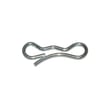
If you are replacing common wear items while you are identifying the unit, keep model-matched parts on hand such as the Craftsman snowblower shear pin 738-04124A.
Why it matters
Knowing the year helps us match the correct parts and service procedures for your Craftsman snowblower, especially for engine tune-up items, belts, cables, and chute or drive adjustments.
Last updated: January 2026
What is the most common problem with snow blowers?
The most common problem we see with gas snowblowers like Craftsman model 247886913 is a no-start or hard-start condition caused by old fuel and fuel-system varnish, followed closely by auger issues after an ice jam (often a sheared auger pin). Use the 247886913 operator's manual for the exact maintenance schedule and safety steps.
Most common issues (and what usually causes them)
- Won’t start / starts then dies: stale fuel, gummed carburetor, fouled spark plug, water in fuel
- Auger won’t turn: ice jam or foreign object; shear pin breaks by design to protect the gearbox
- Clogged chute / poor throwing: wet snow buildup, packed ice, low engine speed, worn auger/impeller performance
- Drive problems (won’t move or slips): worn drive belt, friction wheel wear, linkage out of adjustment
- Controls feel loose or don’t engage: cable stretch or misadjustment (drive or auger control)
Quick checks we recommend before replacing parts
- Shut the engine off and remove the key, then wait for all moving parts to stop.
- Check fuel freshness; if it is older than about 30 days, drain it by running the engine until it stops (storage method).
- Inspect the auger area for an ice jam; clear packed snow safely.
- If the auger does not turn, inspect the shear pins and replace only the specified type.
- Verify control levers engage and disengage properly; adjust per the manual.
Shear pins: what to use on this model
If the auger stops after hitting ice or a foreign object, the shear pin is designed to break to protect the auger gearbox.
| Symptom | Likely cause | What to do |
|---|---|---|
| Auger won’t spin but engine runs | Sheared auger pin | Replace with the correct shear pin and cotter pin |
| Repeated pin breakage | Ice jams, debris, or forcing the auger | Clear jams, slow down, avoid hidden objects |
| Grinding/noise from auger area | Damage beyond the pin | Inspect auger/gearbox components before continued use |
For Craftsman 247886913, use the specified replacement shear pin: snowblower shear pin 738-04124A.
Why it matters
Starting issues and shear-pin failures are the most common because they are tied to normal seasonal use: fuel sits between storms, and the auger regularly encounters packed snow and hidden debris. Correct storage and using the right shear pins prevents bigger repairs.
Last updated: January 2026
Is it cheaper to repair or replace a snowblower?
Repairing your Craftsman snow thrower model 247886913 costs less when the issue is a normal wear item or adjustment (shear pins, belts, cables, tune-up). Replacing is the better value when the repair estimate reaches about half the price of a comparable new snowblower or when major engine or drivetrain work is needed.
Quick decision checklist
- Repair for maintenance-level fixes: oil change, spark plug service, cable adjustment
- Repair when the auger stops after hitting ice or debris (shear pins are designed to protect the auger system)
- Repair when the machine starts reliably and the housing and frame are solid
- Replace when there are repeated breakdowns in the same season
- Replace when there is major rust or structural damage in the auger housing or frame
- Replace when major drivetrain or engine repairs are needed (high labor, multiple parts)
Cost guide: common scenarios
| Symptom or repair scenario | Best first move | Typical cost impact |
|---|---|---|
| Auger will not turn | Check and replace shear pins | Low |
| Drive will not move | Adjust drive cable, then inspect belt | Low to medium |
| Still will not drive after adjustment | Inspect friction wheel and drive system | Medium to high |
| Hard starting or surging | Fuel system service, spark plug check | Low to medium |
Model-specific notes for Craftsman 247886913
- The manual for 247886913 includes a published average useful life guideline of 7 years or 60 hours of operation; after that point, repair decisions become more cost-sensitive because multiple systems can be worn.
- The manual also warns to use the correct auger shear pins; using the wrong pins can lead to expensive damage.
If you choose to repair: best first steps
- Follow the safety and maintenance steps in the 247886913 operator's manual
- If the auger will not turn, replace the correct shear pins such as Craftsman snowblower shear pin 738-04124A
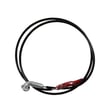
- Adjust drive and shift cables before assuming internal drivetrain failure
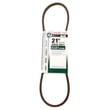
- Inspect belts for glazing, cracking, or stretching
Why it matters
A targeted repair (shear pin, belt, cable adjustment) restores performance for far less than replacement and helps prevent secondary damage to the auger gearbox and drive system.
Last updated: January 2026