Owner’s manual
 View engine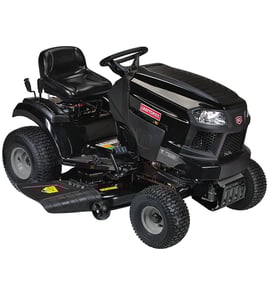


What engine does Craftsman riding mower use?
The Craftsman lawn tractor model 917271550 uses a low-emission gasoline engine and is rated at 15.5 HP in the owner’s manual. For the exact engine manufacturer and model family (such as Briggs & Stratton), match the engine ID label on your tractor to the specifications in the 917271550 owner's manual.
How to identify the exact engine on your 917271550
Use the engine’s ID tag to confirm the engine make and model used on your specific tractor.
- Turn the key off, remove the key, and let the engine cool
- Lift the hood and look for an engine label on the blower housing, valve cover, or near the starter
- Record the engine model, type, and code (or serial number)
- Compare those numbers to the engine section in the 917271550 owner's manual
- Use the engine ID when ordering tune-up parts (spark plug, air filter, oil filter)
What we can confirm from the manual
The manual for model 917271550 describes the tractor as a 15.5 HP, 42-inch mower with electric start and a 6-speed transaxle.
| Item | What to use for confirmation | Where to find it |
|---|---|---|
| Horsepower rating | Owner’s manual specs | 917271550 owner's manual |
| Engine make/model | Engine ID label | On the engine itself |
| Correct replacement parts | Engine ID plus tractor model | Parts listings for 917271550 |
Why it matters
Craftsman tractors can be built with different engine variants over time; using the engine ID prevents ordering the wrong ignition, fuel, or maintenance parts and helps ensure proper starting, mowing power, and charging performance.
Last updated: January 2026
Is it worth replacing a lawn mower engine?
Yes, replacing the engine on your Craftsman lawn tractor model 917271550 is worth it when the tractor’s deck, steering, and drive system are in solid shape and you want to extend the machine’s life. If the total engine swap cost approaches about half the price of a comparable new tractor, replacement usually makes less sense.
Quick decision checklist
- The mower deck is not rusted through and cuts evenly after basic service
- The tractor drives normally (no slipping, grinding, or loss of motion)
- The frame, steering, and brakes are safe and tight
- You can do the work (or pay labor) without exceeding your budget
- You plan to keep the tractor several more seasons
What to inspect before you spend money
Use the 917271550 owner's manual to review safety and maintenance items, then check these high-value areas:
- Deck and blade system: bent blades, worn mandrels, heavy buildup under the deck
- Belts and pulleys: glazing, cracking, or frequent belt throw
- Safety interlocks: seat switch and clutch/brake start interlock must work correctly
- Cooling and fuel delivery: dirty cooling fins, clogged in-line fuel filter, old fuel
Common “not worth it” signs
| What you find | What it usually means |
|---|---|
| Deck shell is cracked or badly rusted | Cost to restore cut quality can rival a replacement tractor |
| Drive system problems plus engine failure | You may be buying an engine and a drivetrain repair |
| Safety switches bypassed or unreliable | Higher risk and more troubleshooting time |
Parts that often get addressed during an engine swap
Even when the engine is the main issue, we often see these wear items handled at the same time:
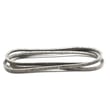
- Replace a worn ground drive belt such as the v-belt 532138255
- Refresh cutting components (blade condition, mandrel play, fasteners)
- Clean debris buildup and restore proper cooling airflow
Why it matters
A new engine can restore reliability, starting, and power, but the tractor only performs as well as the deck, belts, and safety systems around it. The manual’s guidance on blade torque, interlocks, and seasonal maintenance helps protect your investment and prevent repeat failures.
Last updated: January 2026
How much does it cost to replace a riding lawn mower engine?
Replacing the engine on a Craftsman lawn tractor model 917271550 typically costs about $260 to $1,800 installed, depending on the engine type, labor rates, and whether related items (battery cables, belts, pulleys) also need service. Plan on around 6 labor hours for a riding mower engine swap.
What drives the total cost
- Engine price: new replacement engines vary widely by horsepower, shaft size, and brand
- Labor time: riding mower engine replacement is commonly a half-day job
- Extra parts: worn drive components often get replaced at the same time
- Shop supplies: fuel line clamps, oil, filter, and hardware
- Diagnosis time: confirming the engine is truly failed (not a safety switch or fuel issue)
Typical cost breakdown (installed)
| Cost item | Typical range | Notes |
|---|---|---|
| Engine (part) | $200 to $1,400 | Biggest variable; match crankshaft specs and mounting pattern |
| Labor | $200 to $600 | Often based on ~6 hours for a riding mower |
| Fluids and small parts | $20 to $120 | Oil, filter, clamps, spark plug, misc. hardware |
| Optional related parts | $40 to $200+ | Belts, pulleys, battery, fuel filter, etc. |
Before you replace the engine (quick checks)
Many “bad engine” symptoms are caused by fuel, ignition, or safety interlocks. The 917271550 operator presence and interlock system should prevent starting unless conditions are correct.
- Make sure the clutch/brake pedal is fully depressed
- Confirm the attachment clutch is disengaged
- Check the spark plug wire is tight
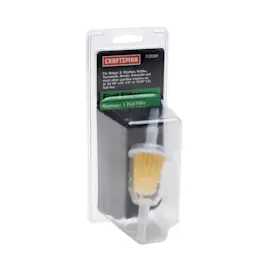
- Replace the in-line fuel filter if fuel flow is restricted
- Clean engine cooling fins/air screen to prevent overheating-related problems
If the engine cranks but will not start, we use the same basics every time: spark, fuel, compression.
Parts that commonly get inspected during an engine swap
If you are already paying labor, it often makes sense to inspect wear items that affect performance and drive.
- Ground drive belt (example: v-belt 532138255)
- Engine pulley alignment and condition
- Wiring connections and battery cables
- Fuel line condition and clamps
- Deck and blade condition (bent blades can cause vibration and extra load)
Why it matters
A correct engine replacement is not just “bolt it in”; matching crankshaft dimensions, pulley alignment, and safety interlock operation helps the tractor start safely, drive correctly, and avoid premature belt or pulley wear.
For model-specific procedures and safety checks, follow the 917271550 owner's manual.
Last updated: January 2026