Installation guide
 Owner’s manual
 Error Codes


Where to find part number on GE dryer?
On your GE DLLSR40EG1WW dryer, the model and serial tag (where you’ll find the identifying numbers you need to match parts) is typically located on the front panel behind the dryer door. Use that tag information when ordering replacement parts to ensure the correct fit.
What to look for on the ID tag
The tag usually includes several numbers; the most useful ones for parts lookup are:
- Model number (for this dryer: DLLSR40EG1WW)
- Serial number (helps confirm production details)
- Electrical ratings (volts/amps, sometimes needed for electrical parts)
- Manufacturing codes (occasionally referenced in service literature)
For diagrams and exact label-location notes for your unit, check the DLLSR40EG1WW owner’s manual.
Quick steps to find it (and record it correctly)
- Open the dryer door.
- Look along the door opening on the dryer’s front panel (often near the top or side).
- Wipe dust off the label so every character is readable.
- Write the model number exactly as shown (letters and numbers).
- Take a clear photo for reference when ordering parts.
Model number vs. part number (common mix-up)
The label on the dryer gives you the model number; individual part numbers are listed in parts diagrams and on the part itself.
| You have | Where you find it | What it’s used for |
|---|---|---|
| Model number (DLLSR40EG1WW) | ID tag behind the door | Ensures you’re shopping the right parts list |
| Part number | On the part or in parts diagrams | Ensures you’re buying the exact replacement |
Why it matters
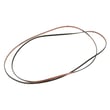
GE dryers can use different components across similar-looking models. Matching parts to DLLSR40EG1WW helps avoid ordering the wrong item, especially for fit-critical parts like the drive belt WE03X29897 or a door safety component.
Last updated: February 2026
What is the most common problem with a GE electric dryer?
On the GE DLLSR40EG1WW electric dryer, the most common issues are no heat/long dry times (usually airflow restriction or a failed thermostat or safety device) and the drum not tumbling (often a worn belt or pulley). Regular lint and vent cleaning prevents many repeat failures.
Most common symptoms and what they usually mean
- Runs but no heat: heating circuit problem (thermostat, high-limit, wiring) or poor airflow causing overheating protection to open.
- Takes too long to dry: lint filter clogged, vent/duct kinked or blocked, outside damper stuck, or load and settings mismatch.
- Drum will not spin: broken belt, seized idler pulley, or drum support wear.
- Stops mid-cycle: overheating from restricted venting, or a safety thermostat opening.
- Won’t start: door switch or push-to-start switch issue.
Quick checks we recommend first (fast, no parts)
Follow the care and troubleshooting guidance in the DLLSR40EG1WW owner’s manual.
- Clean the lint filter before every load (the manual calls this out as routine care).
- Check the vent path for restrictions: crushed flex duct, lint buildup, or a stuck exterior damper.
- Avoid overloading; heavy items (like towels) should be dried in smaller loads.
- Match the cycle and dryness setting to the fabric type; automatic dry times vary with load size, fabric, and vent condition.
- Verify power: many electric dryers can run with a partial power issue but not heat correctly.
Parts that commonly fix “no tumble” on this model
If the motor runs but the drum does not turn, these are the most common wear items:
| Symptom | Most likely wear part | Example part for DLLSR40EG1WW |
|---|---|---|
| Drum won’t turn, belt slack/broken | Drum belt | Drive belt WE03X29897 |
| Squeal, thump, or belt keeps slipping | Idler pulley | Idler pulley WE12X83 |
| Scraping or rumbling as drum turns | Drum glides/bearings | Dryer drum glide bearing WE03X37318 |
Why it matters
Airflow problems (lint filter and venting) do more than slow drying; they can overheat the dryer and trigger high-limit protection, which leads to “no heat” complaints and repeat shutdowns. Good venting also reduces energy use.
Last updated: February 2026
What's the life expectancy of a GE dryer?
A GE electric dryer like model DLLSR40EG1WW typically lasts about 10 to 13 years with normal household use. Consistent airflow (clean lint filter and proper venting) and avoiding overloads are the biggest factors that help the motor, drum support parts, and heating system last longer.
What affects dryer lifespan the most
- Airflow and venting: restricted exhaust makes the dryer run hotter and longer
- Lint filter habits: clean before every load to reduce heat buildup and strain
- Load size: overloading increases wear on the drum, belt, and bearings
- Drum support condition: worn glides or bearings can cause drag and noise
- Electrical health: stable 240V supply and tight terminal connections reduce component stress
Maintenance that extends life (best ROI)
GE’s guidance for this dryer includes cleaning the lint filter before each use and keeping the exhaust system clear and properly vented. Details and diagrams are in the DLLSR40EG1WW owner’s manual and the DLLSR40EG1WW installation guide.
Our practical checklist:
- Clean the lint screen before every load; wash it with mild soap and water if fabric softener residue builds up
- Inspect and clean the vent duct and outside hood periodically; keep the run short and uncrushed
- Use 4-inch metal ducting (rigid or flexible metal), not plastic
- Do not overload; it wastes energy and increases wrinkling and mechanical wear
- Vacuum lint from inside the cabinet periodically (unplug first)
Common wear parts and what they usually mean
| Symptom | Most common cause | Example part for this model |
|---|---|---|
| Drum not turning, motor runs | Worn or broken belt | Drive belt WE03X29897 |
| Squealing, scraping, thumping | Worn drum glides or bearings | Dryer drum glide bearing WE03X37318 |
| Long dry times, hot cabinet | Vent restriction or lint buildup | Check venting per manual/install guide |
Why it matters
A dryer that breathes well dries faster, runs cooler, and puts less load on the drive system (belt, idler pulley, drum bearings). That directly improves reliability and helps you reach the typical 10 to 13-year lifespan.
Last updated: February 2026