Owner’s manual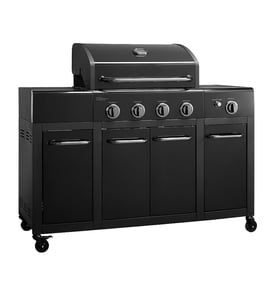
How do I find my Kenmore Grill model number?
Your Kenmore gas grill model number is printed on the grill’s rating label, usually on the back panel of the grill base or inside the cabinet area. For Kenmore model 14623673310, use that full number when ordering parts or checking diagrams in the 14623673310 owner's manual.
Where to look on the grill
Check these common label locations first:
- Back panel of the grill base (rear of the cart)
- Inside the cabinet (open the doors and look on side walls)
- Side panel near the propane tank area
- Under a side shelf or on the inner frame rail
- Near the control panel area (inside the cart, behind the knobs)
What the label looks like
Most Kenmore grill labels include a few key fields. Use the model number for parts lookup.
| Label field | What it’s used for | Example format |
|---|---|---|
| Model number | Finding correct parts and diagrams | 146.23673310 or 14623673310 |
| Serial number | Identifying production run | Letters and numbers |
| Fuel type | Matching regulator and orifices | LP or NG |
Tips to avoid ordering the wrong parts
Once you find the model number, these steps prevent mismatches:
- Write the model number exactly as shown (include dots if present)
- Take a clear photo of the label before it fades
- Match the part by name and diagram position, not just appearance
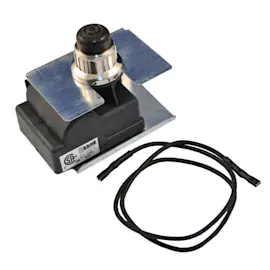
- If you are replacing ignition parts, confirm whether your grill uses a push-button igniter or battery ignition
If you are troubleshooting ignition while you search for the label, the gas grill wont ignite or light video walks through common checks like gas supply, burner ports, and igniter spark.
Why it matters
Kenmore grills often look similar across model families, but burner, manifold, and igniter setups can differ. Using the exact model number (like 14623673310) ensures the right fit for parts such as a manifold or igniter.
Last updated: January 2026
What setting is 350 on a gas grill?
On the Kenmore 14623673310 gas grill, 350°F is typically a “medium” heat setting. On most gas grills, that means preheating with the lid closed, then running the main burners around the middle of their dial range until the grill stabilizes near 350°F.
Quick temperature-to-knob guide (most gas grills)
Use the lid thermometer (or a grate-level thermometer) because knob markings vary by grill.
- Low: about 225 to 275°F
- Medium: about 325 to 375°F (350°F lives here)
- Medium-high: about 375 to 450°F
- High: about 450 to 550°F+
| Target temp | Typical knob position | Best use |
|---|---|---|
| 250°F | Low | Slow cook, thicker cuts |
| 350°F | Medium | Roasts, chicken pieces, baking |
| 450°F | High | Searing, quick grilling |
How we recommend hitting 350°F reliably
- Preheat 10 to 15 minutes with the lid closed.
- Start with burners at medium, then adjust in small steps.
- Give changes 3 to 5 minutes to stabilize before adjusting again.
- For more even heat, keep the lid closed as much as possible.
- If your grill runs hot, use indirect heat (one burner off, food over the unlit zone).
Why it matters
Recipes that call for 350°F assume a steady, moderate oven-like heat. On a gas grill, that temperature is easiest to maintain with the lid closed and by using the thermometer instead of relying on dial labels.
For model-specific operating and preheat guidance, follow the 14623673310 owner's manual.
Last updated: January 2026
How to reset propane regulator on grill?
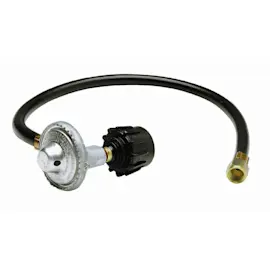
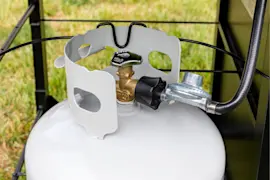
On the Kenmore gas grill model 14623673310, you reset the propane regulator by shutting off the LP tank, bleeding off trapped pressure, then reconnecting and reopening the tank valve very slowly. This clears the regulator’s flow-limiting safety condition and restores normal gas flow.
Step-by-step: reset the LP regulator
- Turn all control knobs to OFF.
- Close the LP tank valve fully (turn clockwise).
- Open the grill lid.
- Disconnect the regulator from the LP tank.
- Turn one burner knob to HIGH for 30 to 60 seconds to bleed pressure, then turn it OFF.
- Reconnect the regulator to the LP tank hand-tight.
- Open the LP tank valve slowly (take 5 to 10 seconds for the first full turn).
- Light the grill following the lighting steps in the 14623673310 owner's manual.
Signs the regulator needs a reset (and what you’ll notice)
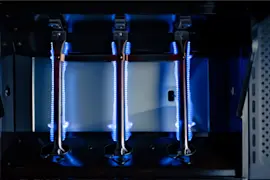
- Burners light but flames are very small, even on HIGH
- Grill takes a long time to preheat
- Flames drop when you open the lid or turn on another burner
- You recently opened the tank valve quickly after connecting
Quick checks before you reset
- Confirm the LP tank has fuel (a low tank can mimic low-flow symptoms).
- Make sure the regulator coupling is straight and fully seated.
- Verify burner knobs were OFF when you opened the tank valve.
Reset vs. replacement: what’s the difference?
| Situation | What to do | Typical result |
|---|---|---|
| Low flames after opening tank fast | Do the reset steps | Normal flame returns |
| Low flames keep coming back | Clean burners and check air shutters | More even heat |
| No improvement after reset | Inspect gas path (regulator, manifold, valves) | Points to a failed part |
If you suspect a gas flow issue beyond the reset, the gas distribution components start at the gas grill manifold 30400047.
Why it matters
The regulator is designed to restrict flow if it senses a sudden surge. Opening the LP tank valve slowly prevents that safety feature from tripping, which helps your Kenmore grill heat evenly and ignite reliably.
Last updated: January 2026
Are Kenmore grills good quality?
Kenmore grills are typically a solid mid-range choice: they heat up fast, cook evenly when maintained, and offer good value for the features. For Kenmore model 14623673310, long-term quality depends most on routine cleaning and keeping ignition and gas-flow parts in good condition (see the 14623673310 owner's manual).
What “good quality” means for a gas grill
Quality shows up in day-to-day performance and how well the grill holds up outdoors.
- Consistent ignition (push-button or electronic lighting works reliably)
- Even heating across the cooking surface
- Stable frame and shelves that do not wobble
- Predictable gas control from low to high
- Parts support so you can replace wear items instead of replacing the grill
Common strengths and common pain points
Most owners judge quality by these real-world factors.
| Area | What’s usually good | What usually needs attention |
|---|---|---|
| Cooking performance | Quick preheat, good searing | Uneven heat if burners/ports get clogged |
| Convenience | Compact footprint, usable side shelves | Wheels/leveling can loosen over time |
| Reliability | Simple gas system | Ignition parts wear faster than the firebox |
How to keep your 14623673310 performing like a “good” grill
These steps prevent the most common complaints (hard lighting, hot spots, flare-ups).
- Clean the cook box and grease areas regularly; built-up grease causes flare-ups.
- Brush burner ports and clear spider webs from venturi openings.
- Check for loose fasteners and tighten hardware as needed.
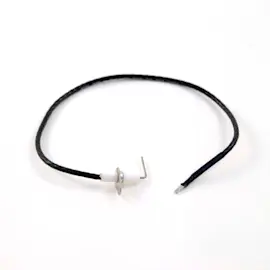
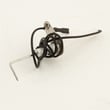
- If lighting becomes inconsistent, inspect and replace the igniter when needed (example: gas grill igniter 30400052).
- Keep the grill level; replace damaged feet if it rocks (example: gas grill leveling leg 30400087).
Why it matters
A gas grill can “feel” low quality when it is simply dirty, out of level, or has a worn igniter. Basic maintenance and a few targeted replacement parts usually restore fast ignition and even heat.
Last updated: January 2026