Owner’s manual



How to force GE washer to drain and spin?
To force your GE GTWS8350H1WS washer to drain and spin, select the Drain & Spin cycle, close the lid, and press Start. If the washer was paused with water in the tub, running Drain & Spin is the correct way to pump water out and extract it from the load (see the owner's manual).
- Press Power to wake the display.
- Turn the cycle selector to Drain & Spin.
- Make sure the lid is fully closed (the washer will not operate with the lid open).
- Press Start to begin.
- If you paused the cycle, press Start again to resume.
These checks solve the most common “won’t drain” and “won’t spin” situations on this style of GE top-load washer:
- Reset the electronics: unplug the washer for 2 minutes, plug it back in, then press Start.
- Confirm water can pump out: make sure the standpipe is not overflowing and the drain path is clear.
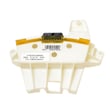
- Check the lid lock: the washer must sense the lid closed and lock to spin; a failed lock can stop spin.
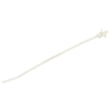
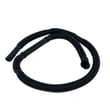
- Look for a kinked or damaged drain hose: replace if crushed, split, or leaking (use washer drain hose WH41X10319).
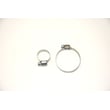
- If the tub is full and the pump hums but water does not move: inspect for a restriction; secure hoses with univ clamp WH1X2036 if you remove and reinstall any hoses.
| What you notice | What it usually means |
|---|---|
| Humming, then gurgling | Normal pump sound as it starts moving water and then draws air |
| Short pauses during spin | Normal; the washer may pause to remove soapy water more efficiently |
| “LID” scrolling or no action | Lid is open or not locking; close lid and press Start |
Using Drain & Spin protects the drive system and helps prevent an out-of-balance condition. It is also the fastest way to remove standing water after a paused or interrupted cycle, so clothes come out less wet.
Last updated: February 2026
What is the life expectancy of a GE washing machine?
A GE washing machine like model GTWS8350H1WS typically lasts 10 to 14 years with normal household use. Consistent maintenance (proper loading, periodic cleaning, and keeping water supply hoses in good condition) is what most often determines whether you land closer to 10 years or closer to 14.
A washer’s service life is usually driven by a few practical factors more than the brand name alone:
- Load size and frequency: frequent heavy loads shorten life faster than smaller, balanced loads
- Leveling and vibration: an unlevel washer can wear suspension and drive components early
- Water quality: hard water can increase mineral buildup and valve wear
- Detergent choice: using HE detergent helps prevent oversudsing and residue (common on ENERGY STAR units)
- Hose condition: aging fill hoses are a common failure point; GE recommends replacing hoses every 5 years (see the owner's manual)
We recommend these simple habits for GE top-load washers:
- Keep loads loosely distributed around the basket and avoid overloading
- Run a periodic cleaning cycle using a washer cleaner (per the owner's manual)
- Turn off water faucets when the washer is not in use to reduce leak risk
- Inspect fill hoses for bulges, cracking, or corrosion at the fittings
- Re-level the washer if it starts to bang or walk during spin
| Usage pattern | Typical life expectancy | What usually wears first |
|---|---|---|
| Light (few loads/week) | 12 to 14 years | Hoses, lid lock, inlet valve |
| Average (most households) | 10 to 14 years | Drain components, suspension, controls |
| Heavy (daily, bulky loads) | 8 to 12 years | Drive system, basket support, controls |
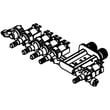
Knowing the expected lifespan helps you decide whether to repair or replace. If your GTWS8350H1WS is within the typical 10 to 14-year window, replacing a common wear item like a washer lid lock assembly WH12X20357 or a washer water inlet valve WH13X10058 can be a cost-effective way to extend service life.
Last updated: February 2026
How big is a 3.8 cu ft washer?
A 3.8 cu. ft. washer is a medium-capacity top-load machine; most models are about 27 to 28 inches wide, 26 to 28 inches deep, and 43 to 45 inches tall. For exact exterior dimensions and capacity details for your GE GTWS8350H1WS, check the owner's manual.
A 3.8 cu. ft. tub is designed for everyday family laundry and can handle many bulky items, but load size still depends on fabric type and how tightly items pack.
Typical fit examples:
- 2 to 3 bath towels plus mixed clothing
- A full set of sheets (most sizes)
- A light to medium comforter (bulky king comforters often need a larger capacity)
- Several pairs of jeans with shirts
When you measure your laundry area, plan for the washer cabinet plus clearance for hoses, lid swing, and vibration.
- Leave space behind the washer for water supply hoses and the drain hose
- Keep the washer level to reduce noise and walking during spin
- Avoid tight side-to-side installs; a little clearance helps with airflow and service access
- If your washer will not drain correctly, confirm the standpipe height is under about 6 ft (1.8 m)
| Spec | Typical range for 3.8 cu. ft. top-load washer |
|---|---|
| Width | 27 to 28 in. |
| Depth | 26 to 28 in. |
| Height | 43 to 45 in. |
Correct sizing prevents install headaches (tight fit, kinked drain hose, lid clearance issues) and helps you choose cycles and load sizes that clean well without overloading. On high-efficiency top-load washers like the GTWS8350H1WS, water levels can look lower than older washers and still clean effectively.
Last updated: February 2026