Installation guide
 Owner’s manual
 Error Codes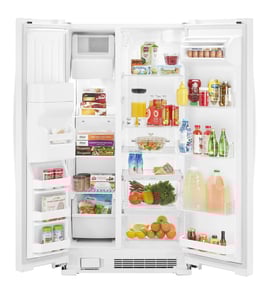



Is Frigidaire Gallery high end?
Frigidaire Gallery is not a true luxury, high-end line; it is Frigidaire’s premium mid-range tier with upgraded styling and features compared with basic Frigidaire models. For your Frigidaire FFHS2311LBSA side-by-side refrigerator, the Gallery label typically signals a step up in design and convenience features, not a luxury price class.
In most Frigidaire refrigerator lineups, you can think of the tiers like this:
- Frigidaire (base): core cooling and storage features
- Frigidaire Gallery: more feature-rich, more design-forward finishes and controls
- Frigidaire Professional: higher performance focus and more premium build/feature set
| Line | Positioning | Typical buyer goal |
|---|---|---|
| Frigidaire | Value | Reliable basics at a lower cost |
| Frigidaire Gallery | Premium mid-range | More features and style without luxury pricing |
| Frigidaire Professional | Premium | Higher-end performance and design |
When customers say “high end,” they usually mean a combination of:
- Premium materials and fit/finish
- Advanced temperature management (more sensors, tighter control)
- Quieter operation and better insulation
- Higher-capacity ice and water features
- Longer feature list (lighting, storage flexibility, dispenser options)
For model-specific operation and feature details, we recommend checking the FFHS2311LBSA owner’s manual.
Knowing the tier helps set expectations for parts, repairs, and features. A Gallery model like FFHS2311LBSA is designed to deliver a noticeable upgrade in everyday usability (ice and water, storage layout, controls) while staying in a mainstream price and service category.
Last updated: January 2026
How wide is a Frigidaire side by side fridge?
Most Frigidaire side-by-side refrigerators are about 36 inches wide; for your Frigidaire FFHS2311LBSA, confirm the exact cabinet width and required installation clearances in the FFHS2311LBSA owner's manual before measuring your opening.
Side-by-side models are commonly built to fit a 36-inch class opening, but the installed space needs to account for the cabinet plus clearance.
- Measure the cabinet width (left to right, not including the doors swung open)
- Measure door clearance so doors can fully open for drawers and freezer baskets
- Allow installation clearance for airflow: 3/8 inch at sides and top and 1 inch at the rear
- Confirm the opening is plumb and the floor is level (leveling affects door swing)
| Item to check | What it means | Typical value |
|---|---|---|
| Cabinet width | Body of refrigerator | ~36 in |
| “36-inch class” opening | Cutout space in cabinetry | ~36 in |
| Side/top clearance | Air circulation and fit | 3/8 in |
| Rear clearance | Air circulation and hookups | 1 in |
A refrigerator that is “36-inch wide” can still be hard to install if the opening is tight, the unit cannot tilt/roll into place, or the doors cannot open fully. The right clearance also helps maintain proper air circulation for consistent cooling.
If the refrigerator is wider than an entrance, the installation instructions allow for removing the refrigerator doors so you can move the cabinet through tighter spaces; follow the steps in the FFHS2311LBSA installation guide.
Last updated: January 2026
What is the most common problem with a Frigidaire refrigerator?
The most common Frigidaire refrigerator problem is a cooling complaint (warm fresh food section, warm freezer, or temperature swings). On the Frigidaire FFHS2311LBSA, the most frequent root causes are airflow restrictions (dirty condenser, blocked vents), door seal leaks, and evaporator fan or defrost-related issues.
- Confirm the temperature settings for both fresh food and freezer in the FFHS2311LBSA owner's manual.
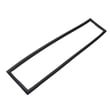
- Make sure doors close fully and the gasket seals all the way around (no gaps).
- Check for blocked air vents (packages pushed against vents can stop airflow).
- Clean the condenser area (dust buildup makes the compressor run longer and cool worse).
- Listen for the evaporator fan in the freezer; a failed fan often causes warm refrigerator temps.
- If the display is flashing or showing codes, use the Frigidaire refrigerator error codes reference to narrow the failure.
| Symptom | Most likely cause | What to do next |
|---|---|---|
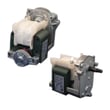
| Fresh food warm, freezer cold | Airflow problem (damper stuck, evaporator fan weak) | Check vent blockage; inspect fan operation; consider refrigerator evaporator fan motor 242077705 if the fan is not running |
| Both sections warm | Dirty condenser, condenser fan issue, control problem | Clean condenser; verify condenser fan runs; check for error codes |
| Frost buildup, poor cooling | Defrost system issue | Look for heavy frost on the evaporator cover; consider refrigerator defrost bi-metal thermostat 5303918214 if defrost symptoms match |
| Ice maker or dispenser problems | Water supply, filter restriction, ice path jam | Verify shutoff valve is open; replace filter; clear ice clumps |
Many “Frigidaire refrigerator problems” are actually water flow problems that affect the ice maker and dispenser.
- Replace the water filter on schedule (Frigidaire commonly recommends about every 6 months)
- Make sure the filter is fully seated and flush in the housing
- Purge air after filter changes
For this model, the correct filter is refrigerator water filter WF3CB. For step-by-step help, use how to replace the water filter in a Frigidaire refrigerator.
Cooling and airflow problems can make the refrigerator run longer, waste energy, and shorten the life of key components like the compressor and electronic control. Catching a dirty condenser, a leaking door gasket, or a failing fan early prevents bigger failures.
Last updated: January 2026
Where is the defrost timer located on a Frigidaire side by side?
On the Frigidaire FFHS2311LBSA side-by-side refrigerator, defrost is handled automatically; most units in this design do not use a customer-accessible mechanical defrost timer. For model-specific access points and service-safe disassembly, follow the FFHS2311LBSA owner's manual.
Many Frigidaire side-by-sides use an electronic control and defrost components rather than a stand-alone timer. If you are chasing a “no defrost” symptom, these are the most common areas to check:
- Temperature control and display area (control housing)
- Freezer rear panel area (evaporator section behind the panel)
- Defrost wiring and connectors near the evaporator
- Door switch operation (fans and some functions depend on it)
- Frost pattern and airflow restrictions (ice buildup behind the freezer panel)
Always unplug power before opening electrical compartments.
- Confirm the refrigerator is actually cooling; a defrost issue often shows as heavy frost and weak airflow
- Listen for normal cycling; fully automatic defrost cycles occur periodically and can last about 30 minutes
- Check door seals for gaps; warm air leaks can mimic defrost problems by causing excess frost
- Make sure vents are not blocked by food packages
If you find heavy frost behind the freezer’s rear panel, these parts are often involved in the defrost system diagnosis:
| Symptom | Common cause | What to inspect first |
|---|---|---|
| Frost blanket on freezer back wall | Defrost system not clearing ice | Defrost thermostat and wiring at evaporator |
| Freezer cold, fresh food warm | Airflow blocked by ice | Evaporator cover area and fan operation |
| Intermittent cooling, odd cycling | Control issue or sensor input | Control housing connections |
A common defrost-related replacement part for this model is the refrigerator defrost bi-metal thermostat 5303918214.
Finding the correct defrost control type (electronic control vs. mechanical timer) prevents unnecessary part swaps and helps you focus on the real cause, such as a failed defrost thermostat, airflow blockage, or a control issue.
Last updated: January 2026