 Error Codes


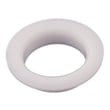
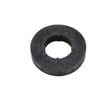
How to change the bottom seal on a Whirlpool dishwasher?
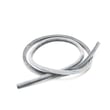
On the Whirlpool GU980SCGQ3 dishwasher, the “bottom seal” people mention is usually the door gasket that seals the tub opening. Replacing it is a straightforward remove-and-press-in job; use the correct gasket so the door closes evenly and stops leaks.
Before you start (safety and prep)
- Turn off power at the breaker (dishwashers can start unexpectedly).
- Let the unit cool if it recently ran a heated dry cycle.
- Open the door and inspect the full perimeter seal for tears, flattening, or gaps.
- Clean the tub lip where the seal sits; grease and detergent film can prevent sealing.
How to replace the door seal
- Open the door fully.
- Grab the old gasket at a corner and pull it straight out of the channel around the tub opening.
- Wipe the channel clean and dry.
- Starting at the top center, press the new dishwasher door seal WPW10509257 into the channel.
- Work evenly down both sides; do not stretch the gasket.
- Close the door for 10 to 15 minutes to help the gasket “set,” then run a short cycle and check for drips.
If the leak looks like it is coming from the bottom center
Sometimes the issue is not the door gasket; it is spray or overflow.
- Make sure the dishwasher is level and not leaning forward.
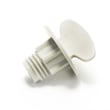
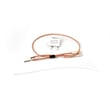
- Check the float moves freely; a stuck float can overfill (see dishwasher float assembly WP3376397).
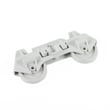
- Inspect the lower spray arm area for a worn seal or loose hardware.
Quick symptom guide
| What you see | Most common cause | What to check next |
|---|---|---|
| Drips at corners | Door gasket not seated | Re-press gasket into channel |
| Drips at bottom center | Overfill or spray deflection | Float, loading, spray arm |
| Water after cycle will not drain | Drain issue (not a seal) | Hose, filter area, drain path |
Why it matters
A properly seated door seal prevents leaks that can damage flooring and helps the wash system maintain pressure for better cleaning.
Last updated: February 2026
What could be wrong with my Whirlpool dishwasher?
If your Whirlpool GU980SCGQ3 dishwasher is acting up, the most common causes are a door leak (worn seal), drain problems (clogged hose or air gap), poor cleaning (spray arm or filter issues), or heating problems that leave dishes wet. We recommend matching the symptom to a quick set of checks before replacing parts.
Quick symptom checklist (start here)
- Leaking at the door: inspect the tub lip and door gasket for tears, flattening, or debris; consider replacing the dishwasher door seal WPW10509257.
- Not draining: check the sink/disposer connection, air gap (if used), and kinks or clogs in the dishwasher drain hose WP3374077.
- Not cleaning well: confirm the spray arm spins freely and holes are clear; inspect the dishwasher spray arm WP8268874 for cracks or blockage.
- Stops mid-cycle or overfills: make sure the float moves up and down freely; a stuck float can affect filling; inspect the dishwasher float assembly WP3376397.
- Not drying: verify rinse aid use and heated dry settings; heating circuit issues can also reduce drying.
What to check first (no parts needed)
- Power and controls: reset the control and retry a cycle using how to reset a Whirlpool dishwasher.
- Loading and detergent: avoid blocking the spray arm; use fresh detergent and correct amount.
- Water supply: confirm the shutoff valve is fully open and household water is hot.
- Drain path: clear the air gap and disposer inlet plug (new disposer installs are a common cause).
Common symptoms and likely fixes
| Symptom | Most likely cause | What we do next |
|---|---|---|
| Water on floor near door | Dirty or worn door gasket | Clean sealing surfaces; replace door seal if damaged |
| Standing water in bottom | Clogged drain path or hose | Clear blockage; replace drain hose if split/kinked |
| Dishes gritty or dirty | Spray arm not circulating well | Clean spray arm holes; replace spray arm if cracked |
| Won’t fill or overfills | Float stuck or switch issue | Free the float; replace float assembly if damaged |
Why it matters
Dishwasher problems often cascade: a small leak can damage flooring, and a partial drain or weak spray can leave detergent residue and odors. Catching the root cause early keeps your GU980SCGQ3 running efficiently and prevents repeat failures.
Last updated: February 2026
What does F3 mean on a Whirlpool dishwasher?
On the Whirlpool GU980SCGQ3 dishwasher, an F3 code points to a water-heating/temperature sensing problem. Most often, the dishwasher is not heating the wash water as expected or the control is seeing an abnormal signal from the temperature sensor circuit.
What to check first (fast, no parts)
- Reset power: turn the breaker off for 1 minute, then back on; run a short cycle.
- Confirm hot water supply: run the kitchen hot tap until it is fully hot before starting.
- Use rinse aid and the correct cycle options; some cycles heat longer than others.
- Check for a “stuck” float: lift and lower the float dome inside the tub; it should move freely.
- Look for standing water or slow drain; heating can be limited if the unit is not circulating/draining correctly.
Common causes of an F3 code
| Likely cause | What you may notice | What typically fixes it |
|---|---|---|
| Heater circuit issue | Water stays cool, poor cleaning | Test/replace heater or wiring (service-level) |
| Temperature sensor (NTC) reading unstable | Code appears mid-cycle, especially when hot | Check sensor circuit and connections |
| Control board relay issue | Intermittent heating, random errors | Control diagnosis (service-level) |
| Fill problem (not enough water) | Weak spray, detergent not dissolving | Check inlet valve, float, fill path |
Parts that are often involved (when symptoms match)
We only recommend replacing parts after basic checks and diagnosis.
- If the dishwasher is not filling properly, the inlet valve can be a suspect; see valve-inlt W10844024.
- If the unit is overfilling or falsely sensing water level, inspect the float system; see dishwasher float assembly WP3376397.
Why it matters
Dishwashers rely on correct water temperature for detergent activation, soil removal, and drying performance. When heating is limited or the temperature signal is erratic, the control can stop the cycle and post an F3 code to prevent poor results or overheating.
Helpful DIY reference
For code lookups and what to do next, use our Whirlpool dishwasher error codes guide.
Last updated: February 2026







