


How to reset Alliance washing machine?
To reset your Alliance washer model SWNBC2PP112TW01, we recommend doing a simple power reset: disconnect power for a few minutes, then restore power and restart a cycle. This clears many temporary control glitches without replacing parts.
Quick reset steps (safe first)
- Press Pause/Cancel (if your washer has it) to stop the cycle.
- Unplug the washer (or switch OFF the dedicated breaker).
- Wait 3 to 5 minutes.
- Restore power.
- Select a Rinse/Spin or Drain/Spin cycle and press Start.
If the washer still will not start or finish
A reset helps when the control is “stuck”, but repeated failures usually point to a drain, lid/door, or control issue.
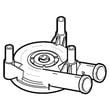
- If water is left in the tub, check for a drain restriction; a failing pump can also cause no-drain symptoms (see speed queen washer drain pump 205217P).
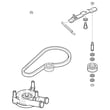
- If the unit is belt-driven and you hear motor noise but the pump does not move water, inspect the belt and pump drive components (see speed queen belt and pump kit - includes items 16 and 18 (38174 belt) RB150003).
- If the washer is dead (no lights), confirm the outlet and breaker; on some commercial setups, a power component can be involved.
- If the lid will not lock or the machine stops mid-cycle, inspect the lid/lock mechanism and wiring.
What a reset does (and does not do)
| Action | What it helps | What it will not fix |
|---|---|---|
| Power reset (unplug/breaker) | Temporary control glitches, stuck cycle logic | Broken drain pump, worn belt, failed lid lock, damaged wiring |
| Restart on Drain/Spin | Confirms drain and spin functions quickly | Underlying mechanical failures |
Why it matters
Resetting first prevents unnecessary part replacement and helps you quickly separate a one-time control hiccup from a real failure in the drain system, drive system, or lid/lock safety circuit.
Last updated: February 2026
What are the main parts of a washing machine?
The main parts of a washing machine (including the Alliance SWNBC2PP112TW01) are the water fill system, wash system, drain system, drive system, and controls. Together, these parts bring water in, move clothes through wash and rinse, pump water out, and manage cycle timing and safety.
Core systems and what they do
- Water inlet valves and hoses: let hot and cold water into the tub
- Wash basket and outer tub: hold the load and contain water
- Agitator or wash action components: move clothes through water and detergent
- Drive system (belt, motor, transmission/gear case): powers agitation and spin
- Drain system (pump and drain hose): removes water at the end of wash and rinse
- Controls (timer or control board, switches, wiring): run the cycle and monitor safety
Common SWNBC2PP112TW01 parts you may replace
These are examples of key components we commonly see replaced when symptoms show up (no drain, no spin, leaks, or noise):
- Speed queen washer drain pump 205217P
- Speed queen belt and pump kit - includes items 16 and 18 (38174 belt) RB150003
- Speed queen washer gear case 38165P
- Speed queen control lid lock assembly 37225P
Quick symptom-to-part map
| Symptom | Most likely system | Parts to check first |
|---|---|---|
| Won’t drain | Drain system | Drain pump, hose, clamps |
| Won’t spin | Drive system or lid lock | Belt/drive components, lid lock |
| Leaks | Fill or drain system, seals | Hoses, clamps, gasket |
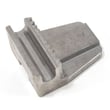
| Loud grinding during agitation/spin | Drive system | Drive block, gear case |
Why it matters
Knowing the main systems helps you troubleshoot faster and avoid replacing the wrong component. For example, a “won’t spin” complaint can be a lid lock issue, a belt issue, or a gear case problem, and each repair path is different.
Helpful DIY guidance
For step-by-step troubleshooting that applies to many washers, use troubleshooting a top load washer that wont drain or spin video and how to fix a washing machine.
Last updated: February 2026
Why is there water in the bottom of my washing machine?
Water in the bottom of your Alliance washer model SWNBC2PP112TW01 usually comes from a drain problem (slow or incomplete draining), a small leak at the pump or hoses, or oversudsing that pushes water where it should not go. Start by checking the drain path and pump area first.
Quick checks we recommend (fastest to most common)
- Look for a slow drain: If the tub stays wet after the cycle, the drain system is restricted.
- Inspect the drain hose: Make sure it is not kinked, crushed, or shoved too far down the standpipe.
- Check for oversudsing: Too much detergent can leave water and suds behind and cause minor leaks.
- Look underneath for drips during drain/spin: Leaks that show up mainly during draining often point to the pump or its connections.
- Check hose connections and clamps: A loose clamp can seep only when the pump is running.
Most likely causes and what they point to
| What you notice | Most likely cause | What to do next |
|---|---|---|
| Water remains after cycle, no obvious drip | Partial clog in drain hose or pump | Check hose routing; inspect pump inlet for debris |
| Puddle under washer during drain/spin | Drain pump leak or loose clamp | Inspect pump body and hose joints; replace pump if cracked |
| Water only with heavy suds | Too much detergent or wrong type | Reduce detergent; run a rinse/spin to clear suds |
| Intermittent seep at a hose joint | Clamp not tight or hose worn | Re-seat hose and clamp; replace worn hose/clamp |
Parts that commonly fix “water in the bottom” symptoms
If you find leaking at the pump housing or the washer will not fully drain, these model-compatible parts are common fixes:
- Speed queen washer drain pump 205217P
- Speed queen belt and pump kit - includes items 16 and 18 (38174 belt) RB150003
- Speed queen hose clamp F200204
Why it matters
Standing water can lead to odor, residue buildup, and repeat drain issues. Fixing a small pump seep or drain restriction early also helps protect the gear case and drive components from extra strain.
Helpful DIY guidance
For step-by-step troubleshooting of drain and spin problems, use: troubleshooting a top load washer that wont drain or spin video.
Last updated: February 2026