Owner’s manual
 Error Codes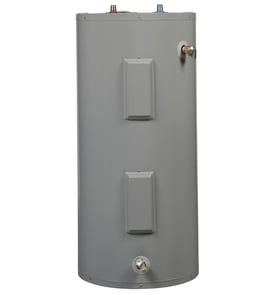




What is the normal lifespan of an electric water heater?
A typical electric water heater lasts 10 to 15 years. For your American water heater model E1F20US015V, regular maintenance (especially checking the anode rod and flushing sediment) helps you reach the upper end of that range; neglected tanks usually fail sooner.
Typical lifespan ranges
| Water heater type | Normal lifespan | What usually ends it |
|---|---|---|
| Electric tank (most homes) | 10 to 15 years | Tank corrosion after anode rod depletion |
| Gas tank (for comparison) | 8 to 12 years | Tank corrosion, burner or venting issues |
What we recommend to extend life
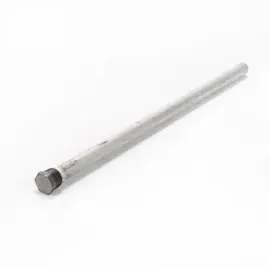
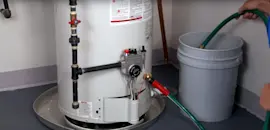
The E1F20US015V manual explains that the tank is protected by an anode rod that slowly depletes; once it is depleted, the tank begins to corrode and can eventually leak. Follow the inspection and maintenance guidance in the E1F20US015V owner’s manual.
- Inspect the anode rod about every 3 years; replace it if it is more than 50% depleted.
- Flush the tank periodically to reduce sediment that can overheat elements and reduce efficiency.
- Keep thermostat settings reasonable (many homes target about 120°F for comfort and scald prevention).
- Watch for early warning signs: rusty water, popping/rumbling, reduced hot water, or moisture at the base.
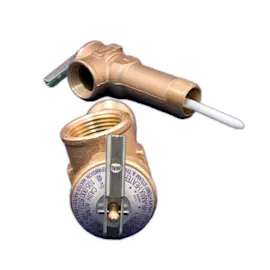
- Address small leaks and valve issues promptly to prevent corrosion and water damage.
Why it matters
Once the glass-lined tank starts corroding, repairs like a new heating element or thermostat can restore heating performance, but they cannot stop a failing tank. Staying ahead of anode-rod wear is the most effective way to protect the tank and maximize service life.
Last updated: January 2026
What does E1 mean on a water heater?
On the American water heater model E1F20US015V, E1 is a diagnostic alert from the heater’s controls indicating the unit is not operating normally and needs a basic safety check of power, water fill level, and temperature controls. Use the troubleshooting steps in the E1F20US015V owner's manual.
What to do first (safe checks)
- Turn OFF the circuit breaker, wait 1 minute, then turn it ON.
- Confirm the tank is completely full of water before power is applied (dry-firing can destroy an element).
- If the heater overheated, reset the high-limit control (red reset button) only after reinstalling covers and insulation.
- Check for water intrusion at the thermostat area; wet controls or insulation require professional service.
- Look for loose or burned wiring at the junction box and element terminals.
What E1 often points to
| Symptom you notice | What to check | Common part involved |
|---|---|---|
| No hot water | High-limit tripped, power supply issue | Thermostat/high-limit control |
| Lukewarm water | One element not heating | Heating element |
| Repeated shutdowns | Overheating, wiring problem, control issue | Thermostat wiring, high-limit |
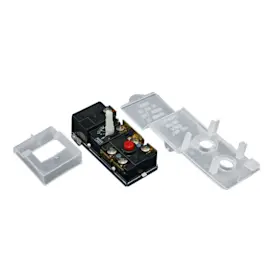
If testing shows the upper thermostat is faulty, the model-specific top t-stat 100108424 is a common replacement.
Why it matters
An E1 alert often shows up when the heater cannot regulate temperature correctly. Addressing it quickly helps prevent no hot water, nuisance shutoffs, and burned-out heating elements caused by energizing the unit before it is fully filled.
Related troubleshooting help
For code definitions and step-by-step diagnostics, use American electric water heater error codes.
Last updated: January 2026
How much should a 40 gallon electric water heater cost?
A 40-gallon electric tank water heater typically costs $400 to $1,000 for the unit, and $600 to $3,000 installed. Your American Water Heaters model E1F20US015V is a smaller, point-of-use style heater, so 40-gallon pricing is only useful if you are comparing to a different replacement size; confirm your heater’s capacity and electrical requirements in the E1F20US015V owner's manual.
Typical costs for a 40-gallon electric tank
- Unit only (standard efficiency): $400 to $700
- Unit only (longer warranty, better features): $600 to $1,000
- Installed total (common range): $600 to $3,000
- Permit/inspection (where required): added to labor
- Haul-away/disposal: often added as a line item
| Cost item | Typical range | What drives the price |
|---|---|---|
| Heater (unit only) | $400 to $1,000 | Warranty length, efficiency tier, brand |
| Labor (swap-out) | $200 to $1,500 | Access, shutoff condition, time on site |
| Common add-ons | $0 to $1,500+ | Pan, expansion tank, valves, electrical work |
What changes the installed price the most
- Electrical updates (breaker sizing, wiring, disconnect)
- Plumbing updates (shutoff valve, flex connectors, expansion tank)
- Code items (drain pan and drain line where required)
- Location/access (tight closet, attic, long piping runs)
- Condition of old connections (corrosion, seized fittings)
If you are repairing E1F20US015V instead of replacing
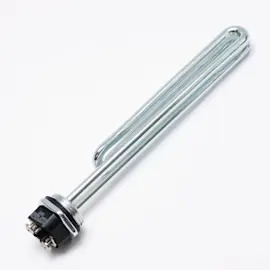
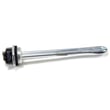
If your goal is restoring hot water on the existing unit, common service parts for this model include the element 100110052 (heating element) and the top t-stat 100108424 (upper thermostat).
Why it matters
Capacity and electrical specs drive both the purchase price and the installation scope. Matching the correct gallon size and voltage helps you avoid buying the wrong heater and paying for unexpected plumbing or electrical rework.
Last updated: January 2026